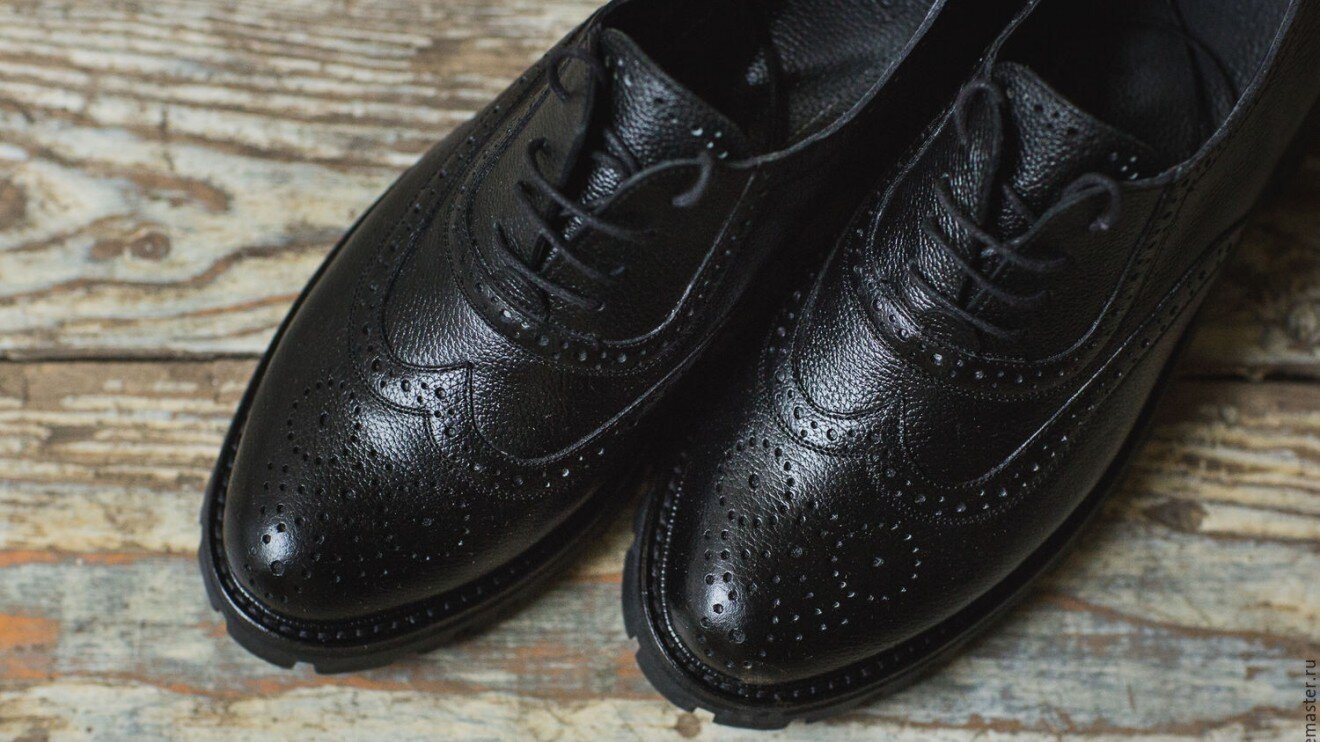
Inspectors (brogues) — a distinctive type of men’s shoe with decorative perforation, which became popular in Russia in the 1990s.
Brogues and «Inspectors»
In early-1990s Russia, imported brogues were often called «inspectors» — a garbling of the English word «spectator.» The original «spectator shoes» were two-tone brogues, usually in contrasting colors (black-and-white, brown-and-white), originally created in the nineteenth century as footwear for spectators at cricket matches.
In the post-Soviet space, the name morphed into «inspectors,» and the term gradually came to be applied to any shoe with the characteristic perforation. For businessmen and «New Russians» of the 1990s, this footwear became a symbol of success and Western style.
Brogues are shoes with decorative perforation, which may run along the seams, on the toe cap, and on the heel. This perforation can appear on oxfords, derbies, and other models. The process of adding decorative holes is called «broguing.»
Main Types of Brogues
- Full brogues — with W-shaped seams on the toe cap and perforation along all seams, plus a decorative pattern («medallion») on the toe.
- Semi-brogues — with straight seams on the toe cap and perforation along the seams and toe.
- Quarter brogues — perforation only along the seams, with no pattern on the toe.
In 1993, quality imported brogues, especially those made in Italy, were considered prestigious footwear and associated with successful businessmen and high-ranking officials, reflecting the class distinctions taking shape in post-Communist Russia.
Moccasins
Moccasins were originally the traditional footwear of North American Indigenous peoples, made from soft leather, usually deer or elk hide. In 1990s Russia, «moccasins» referred to something else entirely — light European-style leather shoes with a characteristic tongue insert over the instep and decorative stitching.
In the early 1990s, imported moccasins became a symbol of comfort and a Western lifestyle. Italian models were especially prized, standing in sharp contrast to the coarse domestic footwear of Soviet manufacture.
The modern moccasins popular at the time fell into several categories:
- Classic — with a tongue insert over the instep and decorative stitching;
- Loafers — with a distinctive strap over the instep;
- Top-siders — with side lacing, originally designed for sailors;
- Driving shoes — with a sole reinforced with rubber pebbling.
In 1993, moccasins were seen as a more casual, informal alternative to formal shoes. They symbolized a European style and comfort that was only just beginning to enter Russian daily life after decades of shortages of quality goods.
Shoes as a Status Symbol in 1990s Russia
In early-1990s Russia, after the fall of the Iron Curtain, quality imported shoes became not just an item of clothing but an important status symbol. Amid economic upheaval and total scarcity, Italian brogues or moccasins were seen as a symbol of success and membership in the newly forming elite.
Tellingly, garbled versions of the original names took root in everyday Russian usage of the time («inspectors» instead of «spectators»), reflecting a broader tendency of the era to absorb Western realities by adapting them to a homegrown understanding.
Imported shoes were often acquired during rare trips abroad or at clothing markets, where they were brought in by «shuttle traders» — small-scale entrepreneurs engaged in cross-border trade. Genuine Italian brogues or moccasins sometimes cost sums comparable to a month’s salary.