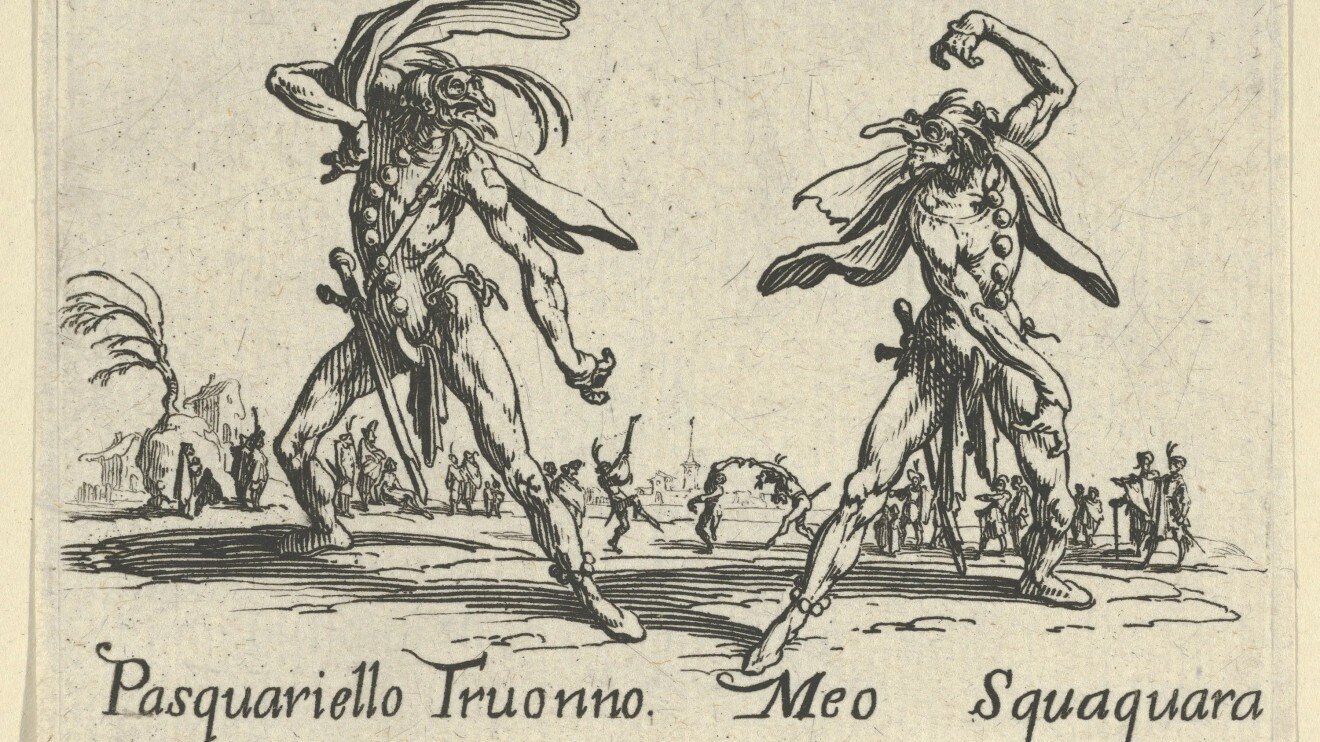
The mention of the picaresque novel in this 1990s context is no accident – this literary genre, born in sixteenth-century Spain, turns out remarkably relevant for understanding an era of upheaval and social convulsion.
What is a picaresque novel?
The picaresque novel (Spanish novela picaresca) is a literary genre that took shape in Golden Age Spain and survived in its classic form up to the late eighteenth century. At the center of the narrative are the adventures of the pícaro (Spanish for «rogue» or «scoundrel») – an adventurer and con man, usually of low social origin.
The classic picaresque novel is structured as a chronological string of episodes from the rogue-hero’s life, without a rigid overall plot. The narrative is told in the first person, which draws the reader, almost against their will, into sympathizing with the con man, understanding the logic behind his actions.
The pícaro as a literary type
The pícaro is a distinct social and literary type. As the great literary scholar Mikhail Bakhtin characterized it, the pícaro possesses «a peculiar privilege and trait – to be strangers in this world: they align themselves with none of the world’s existing ways of life, none of them suits them, and they see the underside and the falsehood of every one.»
- No fixed residence or social status
- Amorality justified by the necessity of survival
- A mocking attitude toward social institutions and rituals
- Individualism combined with an acceptance of «the rules of the game»
- An ability to see the lies and hypocrisy of the surrounding world
From Lazarillo to Ostap Bender
The first classic example of the genre is considered to be the Spanish novella Lazarillo de Tormes (1554), which describes a poor boy’s service to seven different masters, each embodying a particular social vice. The genre’s high-water mark came with Mateo Alemán’s Guzmán de Alfarache (1599).
In Russian literature, the picaresque tradition was carried forward by M.D. Chulkov, V.T. Narezhny (The Russian Gil Blas), and F.V. Bulgarin (Ivan Vyzhigin). The most vivid Russian pícaro of the twentieth century became Ostap Bender, from Ilf and Petrov’s novels – a charming swindler, the «great strategist,» who sees straight through Soviet reality and masterfully exploits its flaws for his own ends.
The picaresque and eras of upheaval
The picaresque genre is especially in demand during periods of social convulsion and the breakdown of established order. It’s no accident that in sixteenth- and seventeenth-century Spain the picaresque novel flourished against a backdrop of economic crisis, unemployment, and social decay. Legends of easy fortunes in the colonies bred contempt for productive labor, and the ranks of vagrants swelled with dropped-out students and discharged soldiers.
Russia in the 1990s in many ways resembled that historical moment: the collapse of the old value system, economic chaos, the rise of a new class of adventurers and «operators» for whom fraud became a way of adapting to a transformed reality.
The modern picaresque
In the twentieth and twenty-first centuries, picaresque motifs surface in works by authors of every stripe – from Thomas Mann (Confessions of Felix Krull, Confidence Man) to contemporary writers. The character’s remark that «all the picaresque novels get written in London now» reflects a real trend: in an age of globalization, adventurers and international con artists really do gravitate toward the world’s financial capitals.
The pícaro of our time is no longer a highwayman, but a sophisticated fraudster running complex financial schemes and drawing on international connections. Yet the essence remains the same: a person standing outside social institutions, exploiting their weaknesses for personal gain.
An interesting fact: Günter Grass, in his Nobel lecture, observed a defining trait of the pícaro: he «urinates on the pillars of power, shakes them loose, yet all the while knows he lacks the strength either to tear down the sanctuary or to topple the throne.» That description captures the rogue’s ambivalent nature precisely – destroyer and conformist at once.