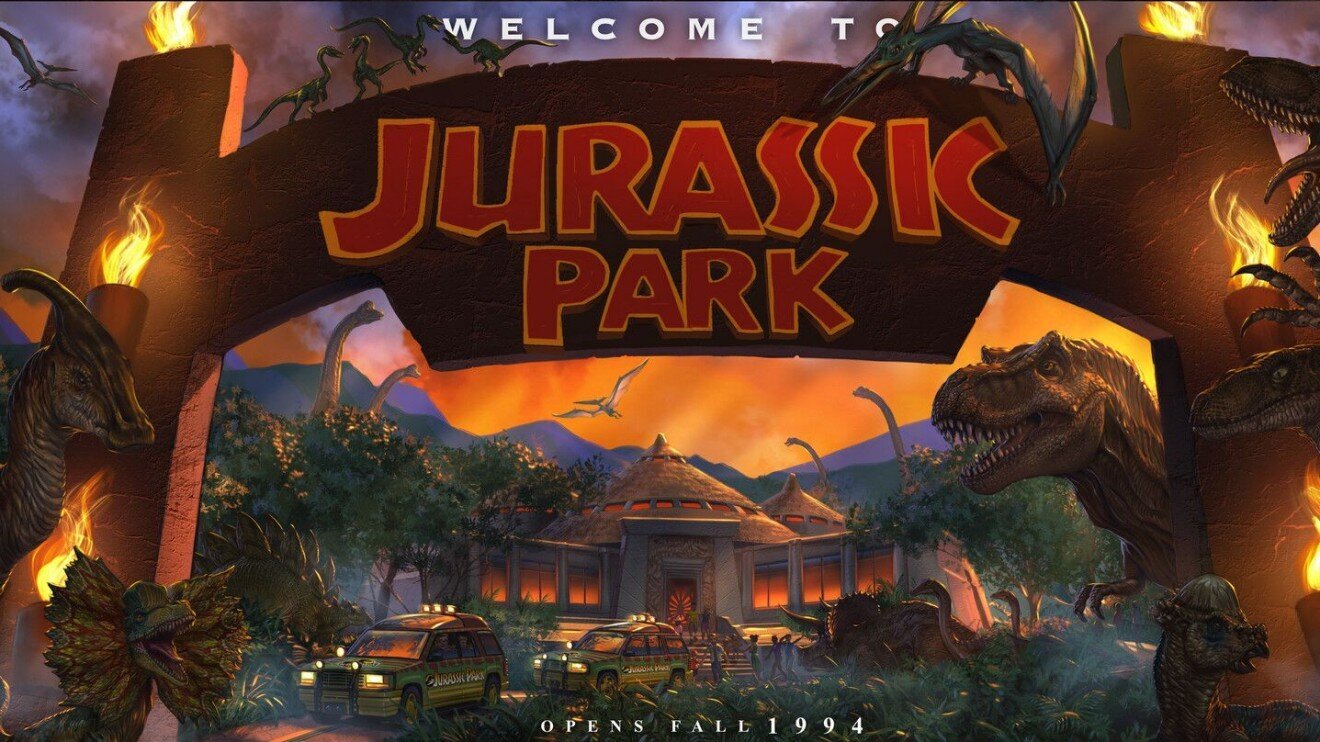
"Jurassic Park" is a 1993 science-fiction disaster film directed by Steven Spielberg, based on Michael Crichton's 1990 novel of the same name. The film became a cult cinematic event and launched one of the most successful media franchises in history.
The Moment in Time
In 1993, when the novel's events take place, "Jurassic Park" revolutionized the film industry with its groundbreaking blend of computer graphics and animatronics. Released on June 11, 1993, it instantly became a blockbuster, grossing over a billion dollars worldwide — an unprecedented sum for its time.
For Russian audiences of the early 1990s, the film held special appeal. In the era of perestroika and the opening of the Iron Curtain, Western films were flooding into the Russian market, often as pirated videocassettes. Hollywood's polished special effects and a gripping story about resurrected dinosaurs seemed like a genuine technical miracle against the backdrop of domestic cinema's crisis.
Plot and Premise
The film's central idea: billionaire John Hammond's attempt to build a theme park stocked with cloned dinosaurs on the tropical island of Isla Nublar. Using DNA extracted from ancient mosquitoes preserved in amber, scientists reconstruct the genetic code of extinct reptiles, filling in the gaps with frog DNA.
When a team of experts — paleontologists Alan Grant and Ellie Sattler, chaos-theory mathematician Ian Malcolm, and lawyer Donald Gennaro — arrives to assess the park's safety, everything goes wrong. Sabotage by programmer Dennis Nedry knocks out the security systems, and the dinosaurs break loose, turning the tour into a fight for survival.
Technological Achievements
The film marked a turning point for the industry by combining traditional animatronics from Stan Winston's studio with groundbreaking computer graphics from Industrial Light & Magic. The dinosaurs looked so real that audiences genuinely believed such creatures could exist.
Especially striking were the scenes with the Tyrannosaurus rex, the velociraptors, and the enormous herbivorous dinosaurs like the Brachiosaurus. The sound design, created by Gary Rydstrom, also became a classic — the T. rex's roar and the velociraptors' distinctive calls remain instantly recognizable to this day.
Cultural Impact
"Jurassic Park" wasn't just a box-office hit — it reshaped popular culture. The film revived interest in paleontology, turning dinosaurs from museum exhibits into pop-culture icons. Ian Malcolm's line "Life finds a way" became a catchphrase, and the image of velociraptors as cunning, murderous predators lodged itself firmly in the public imagination.
In 1990s Russia, the film circulated mainly on videocassette, both licensed and pirated. Recording quality often left much to be desired, but that hardly dulled the experience of watching it. For many Russian viewers, "Jurassic Park" became a symbol of a new age — an era when the best of Western cinema had finally become accessible.
The Franchise's Legacy
The first film's success launched a sprawling media franchise, including seven feature films (counting the "Jurassic World" trilogy), animated series, video games, comics, and countless tie-in products. The Crichton-Spielberg dinosaur universe continues to grow and draw in new generations of viewers.
The mention of a "Jurassic Park" videocassette in a 1993 setting captures the spirit of the era precisely — a time when home video was just entering everyday Russian life, and Hollywood blockbusters felt like a window onto a dazzling world of technological possibility and boundless imagination.