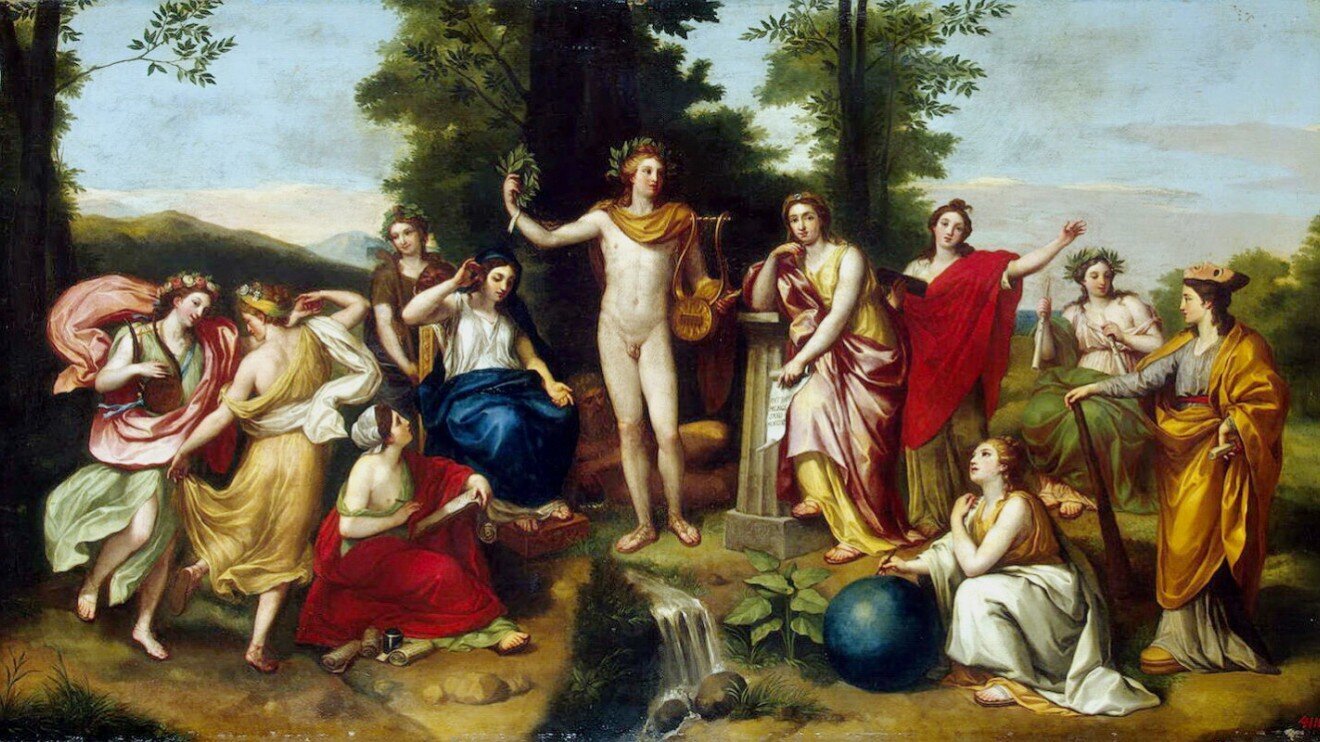
Academicist painters are representatives of a movement in the visual arts that arose in the seventeenth century and reached its height in the eighteenth and nineteenth centuries. Academicism took shape within art academies, the first of which was the Royal Academy of Painting and Sculpture in Paris, founded in 1648.
Origins and Development of Academicism
Academicism arose out of states’ efforts to control and systematize artistic education. National academies of art opened one after another across Europe: in Rome (1577), Paris (1648), Berlin (1696), Vienna (1705), St. Petersburg (1757), and elsewhere. These institutions set the canons of art and regulated the training of painters.
In Russia, academicism became the dominant movement after the founding of the Imperial Academy of Arts in 1757. Its first president was Count I. I. Shuvalov, followed from 1763 by I. I. Betskoy.
Core Principles and Stylistic Features
Academicism rested on clear principles:
- Fidelity to classical ideals — academicists regarded ancient art as the pinnacle of perfection and strove to imitate its harmony and proportion.
- A hierarchy of genres — academicism maintained a strict ranking of genres by importance: history painting was considered the highest, followed by mythological, religious, portrait, genre, landscape, and still-life painting.
- Technical perfection — academicists were marked by flawless execution, fine detail, carefully calibrated composition, and anatomical precision.
- Idealization — painters sought to depict not reality but an ideal, free of accident and imperfection.
Training at the academies followed a strict system: students first copied engravings and drawings, then plaster casts of ancient statues, and only afterward were they permitted to draw from life.
The Golden Age of Academicism
Academicism reached its peak from the late eighteenth through the first half of the nineteenth century. This was the era of monumental canvases on historical and mythological subjects. Academic art became official, enjoyed state support, and was regarded as the standard of taste.
Notable representatives of academicism include:
- In France — Jacques-Louis David, Jean-Auguste-Dominique Ingres, William-Adolphe Bouguereau
- In Russia — Anton Losenko, Karl Bryullov, Fyodor Bruni, Alexander Ivanov
- In Germany — Anton Raphael Mengs, Anselm Feuerbach
- In Italy — Pompeo Batoni, Andrea Appiani
Crisis and Transformation of Academicism
In the second half of the nineteenth century, academicism began to draw criticism for its conservatism and detachment from contemporary life. New artistic movements — Realism, Impressionism, Symbolism — challenged its established canons. A revolutionary moment came with the «Salon des Refusés» of 1863 in Paris, where works rejected by the official Academy Salon were exhibited.
Even so, academicism didn’t vanish entirely. It transformed into salon art and continued to exist alongside new movements into the early twentieth century. By the end of the nineteenth century, academicism had begun absorbing elements of other styles, becoming more eclectic.
The Legacy of Academicism
Despite the criticism, academicism left an important legacy in the history of art:
- A system of art education that, in modified form, still exists today
- High standards of technical craftsmanship
- A significant body of monumental works that adorn museums around the world
- A step-by-step methodology for teaching drawing and painting
In contemporary art history, attitudes toward academicism have become more balanced. Scholars recognize its historical value and artistic achievements while also acknowledging the movement’s limitations.
Studying academicism offers a better understanding of the evolution of art and the cultural context of an era in which the foundations of today’s ideas about art education and aesthetic value were formed.