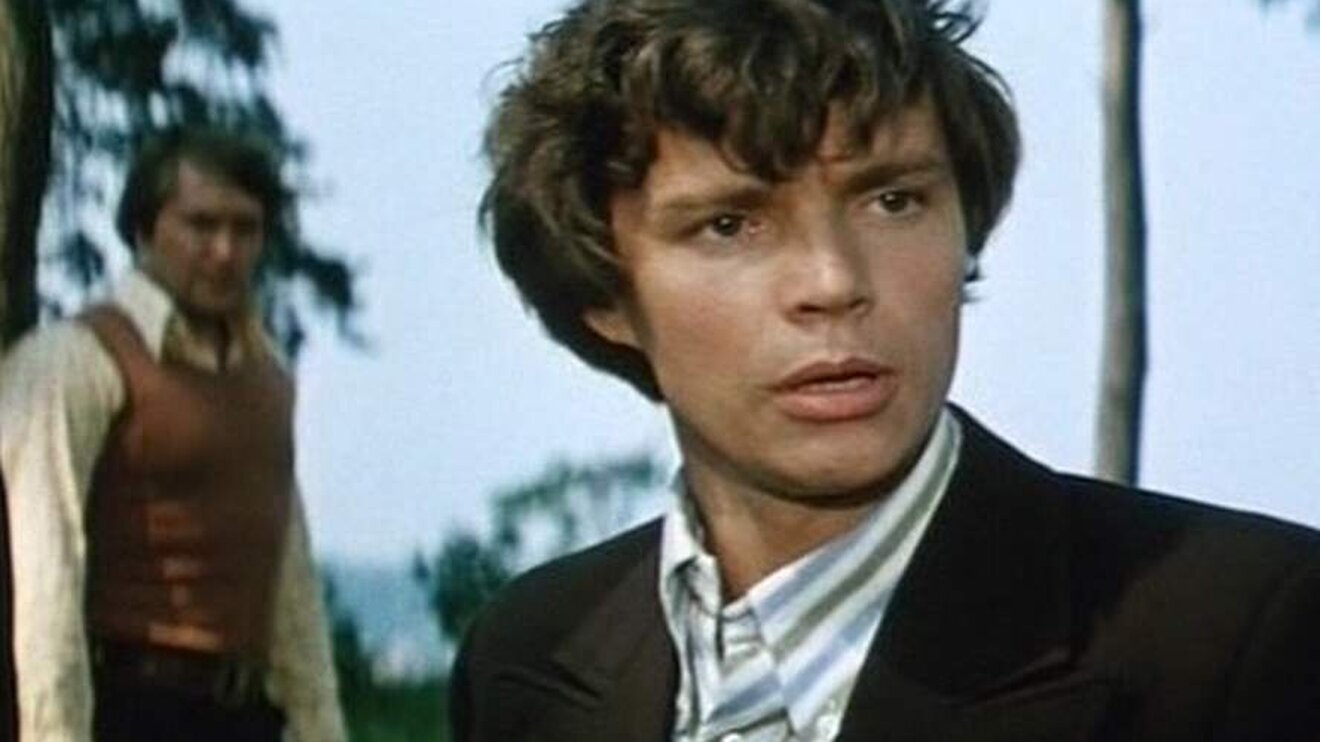
The novel references the Soviet detective film «No Right to Fail,» in which Lev Prygunov played Roman Seletsky — the «leader of a gang of hooligans.»
About the Film «No Right to Fail»
This Soviet detective film tells the story of a trial investigating the murder of Roman Seletsky in a hunting cabin. Young worker Boris Yunusov (Nikolai Merzlikin) is accused of the murder, with every piece of evidence and witness testimony pointing against him. But the people’s judge, Nikolai Alexandrovich (Oleg Zhakov), spots inconsistencies in the case and launches his own investigation, which ultimately proves the defendant’s innocence.
Lev Prygunov, as Roman Seletsky, created the image of a crime boss that contemporary audiences saw as an authentic depiction of the underworld. The actor didn’t resort to external effects — expensive clothes or showy behavior — which made his character more convincing and lifelike.
Principal Cast
- Oleg Zhakov — the people’s judge
- Nikolai Merzlikin — Boris Yunusov
- Lev Prygunov — Roman Seletsky
The Difference Between a «Hooligan» and a «Thug»
In Soviet reality, there was a sharp line between hooligans and members of the criminal underworld — the vory v zakone, or «thieves-in-law.» The distinction was fundamental, touching not only the nature of the crimes but an entire life philosophy.
The Hooligan
A hooligan is someone who commits offenses spontaneously, often under the influence of emotion or alcohol. Hooliganism is marked by:
- Impulsive actions
- No system or organization
- Disturbing public order
- Retained ties to «normal» society
- The possibility of reform
The hooligan remains on the fringe of ordinary human behavior; his actions can be explained by social or psychological causes.
The Thug (Thief-in-Law)
A blatar — a member of organized crime living by the special laws of the thieves’ world. A made criminal is marked by:
- Following the thieves’ code and traditions
- Belonging to a criminal hierarchy
- A full break with «honest» society
- A special language — «blatnaya fenya,» thieves’ cant
- Criminal status passed down through inheritance
The thug stands outside ordinary human morality; his worldview differs radically from accepted norms.
An Important Distinction
Made criminals themselves looked down on hooligans, considering hooliganism «too innocent, too chaste an affair for a thief.» They insisted that society distinguish between the two types of criminality, stressing their own «superiority» over mere disturbers of the peace.
The Hierarchy of the Criminal World
The thieves’ world had a strict hierarchy, dominated by hereditary thieves — those whose relatives (fathers, grandfathers, uncles, older brothers) already belonged to the criminal world. These people:
- Grew up in thieves’ traditions from childhood
- Possessed «crook’s blood» beyond question
- Made up the ruling core of the criminal world
- Held a decisive voice in «pravilki» — courts of honor
- Developed the shared laws of the criminal world
- Cultivated thieves’ cant — «blatnaya fenya»
- Kept outsiders from the core of the thieves’ world
- Passed status down through inheritance
Even outstanding robbers drawn from the ranks of «dekulakized» peasants or other social groups remained mere imitators, hangers-on. They could take part in crimes but were never allowed a say in the important decisions of the thieves’ world.
A Poetic Testament to the Era: Voznesensky on Vysotsky’s Clinical Death
The atmosphere of the time when «No Right to Fail» was made is vividly captured in Andrei Voznesensky’s poem «Optimistic Requiem» (1971), dedicated to Vladimir Vysotsky’s clinical death in 1970.
«For the repose of Vysotsky Vladimir,
on bended knee, Moscow
smoothed its Beatle-cut hair and struck up
his voice from beyond the grave.»
Voznesensky’s poem is important for understanding the cultural context of the time. The poet paints Vysotsky as the «chansonnier of All Russia,» stressing his ties to criminal-underworld romanticism:
«For the golden-tongued thief,
weep, Russia!
Whatever the times outside —
such is your messiah.»
Voznesensky calls Vysotsky a «golden-tongued thief,» reflecting how the singer was perceived as the voice of the criminal world, even though Vysotsky himself was never part of it. This shows how underworld romanticism seeped into Soviet culture, becoming part of the public consciousness.
The poem shows how the figure of Vysotsky bridged «high» and «low» culture, academic poetry and criminal-underworld romanticism.
The Symbolism of the Image
In the lines «carried his guitar over his shoulder, like a pair of halos,» Voznesensky creates a religious-criminal metaphor. The guitar becomes a symbol of a new kind of holiness — not the Church’s, but the people’s, tied to the margins of society.
The poet captures a paradox of Soviet reality: an officially condemned criminal-underworld culture becomes part of the popular consciousness, and its representatives become folk heroes.
The Cultural Significance of the Hooligan-Thug Image
The character of Roman Seletsky, as played by Lev Prygunov, became an important cultural phenomenon, since the actor managed to show not a romanticized criminal but a real person with a complex psychology. This mattered especially in the context of Soviet cinema, where criminal themes were often handled simplistically.
Artistic Truth
Prygunov rejected the outward trappings of «toughness» — expensive clothes, showy behavior. His character was convincing precisely for his ordinariness, which made him all the more unsettling to audiences.
Social Context
The film was made during a period when Soviet society was starting to speak openly about crime. The hooligan-thug figure became a way of processing that issue through art.
Influence on Culture
Prygunov’s performance influenced how criminals were portrayed in Soviet and post-Soviet cinema. His approach to the role became a model for many actors playing criminal characters.
Conclusion
The film «No Right to Fail» and the hooligan-thug figure as played by Lev Prygunov became an important part of the cultural heritage of the Soviet period. They captured a particular moment in the development of public consciousness, when criminal subculture was beginning to step out of the shadows and become a subject of artistic reflection.
The distinction between a hooligan and a thug, shown in the film and described in documentary sources, helps explain the social structure of the time and how the criminal world functioned. This knowledge matters for understanding the cultural context of the era and the processes that transformed Russian society in the decades that followed.
Literary Significance
Referencing this film in a novel about Russia in 1997 creates a cultural-historical perspective, showing how images from the past shape how the present is perceived. The figure of Lev Prygunov becomes a bridge between the Soviet and post-Soviet eras, a symbol of continuity in how criminal culture is understood.