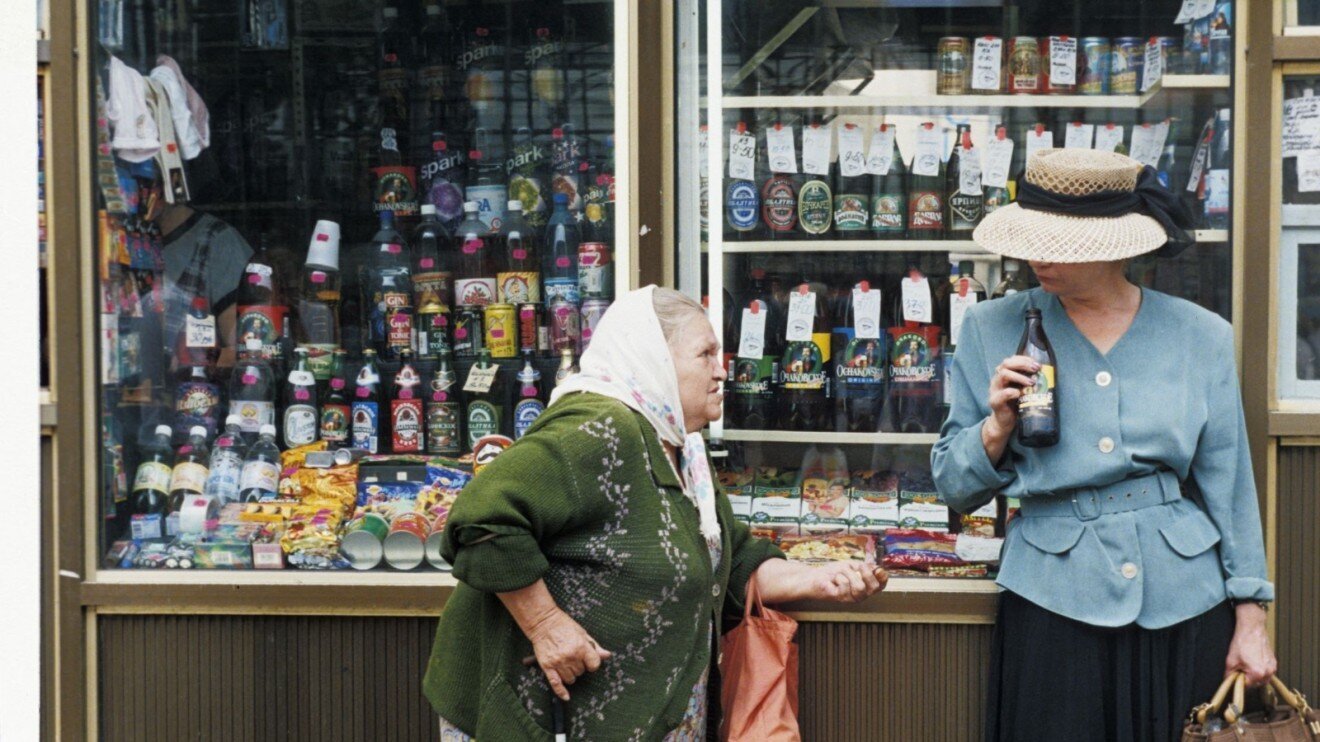
The novel mentions the «owners of station kiosks» — typical representatives of early-1990s Russian entrepreneurship. These small trading stalls became a symbol of the perestroika era and the birth of a market economy.
The Kiosk Phenomenon in the Early Post-Soviet World
By 1993, kiosks had already put down firm roots in Russian life. The first commercial kiosk in the USSR opened in 1987 in Andijan, and within a few years such stalls had flooded the streets of every major city. By the late 1980s, Moscow counted more than 500 «experimental» co-ops, many of them housed in exactly these small kiosks.
Kiosks were an answer to the acute shortage of consumer goods in Soviet retail. Unlike state stores, with their limited selection and inconvenient hours, private kiosks offered imported goods and stayed open practically around the clock. That gave their owners a massive competitive edge.
Station Trade and Its Quirks
The novel’s specific mention of station kiosks is no accident. Train stations, bus terminals, and other transit hubs proved ideal spots for trading stalls. Streams of people from every region converged there, many in need of quick purchases: everything from soft drinks to alcohol.
Owners of such kiosks often specialized in goods travelers wanted: alcohol, cigarettes, snacks, drinks. The alcohol trade was especially profitable, since demand for spirits was extremely high in the early 1990s, and the state retail network couldn’t keep up.
The Economic Reality of the Kiosk Business
The novel’s description of «blue and pink brick-sized wads of grimy banknotes bound with hair-curler elastics» captures the atmosphere of cash circulation at the time with real precision. In 1993, Russia was living through hyperinflation, and cash was rapidly losing its purchasing power. Kiosk traders really did often deal with large volumes of small bills, bundled together with whatever was on hand for convenience.
Many kiosk owners had no economics training and ran their businesses on instinct. They represented a new class of small entrepreneurs, sprung up almost from nothing out of Soviet reality. A lack of market-trading experience was made up for with enthusiasm and a willingness to take risks.
Product Range and Trading Specifics
A typical early-1990s kiosk’s stock included imported goods unavailable in state retail: Polish liqueurs, imported beer, Western cigarettes, chocolate bars, chewing gum. Alcoholic drinks made up a significant share of turnover, since they brought in the highest profit.
Kiosk owners had to sort out their own supply chains, which often led them to work with dubious suppliers. The line between legal and «gray» business was blurry, creating a distinctive atmosphere of entrepreneurial free-for-all.
The Social Role of Kiosk Traders
The kiosk traders of the 1990s made up a distinct social group. They were among the first people willing to risk private enterprise amid the collapse of the planned economy. Many had no starting capital and built their businesses from virtually nothing, risking everything for the chance to earn money.
In the public mind, the image of the kiosk trader was contradictory. On one hand, they supplied the population with essentials and imported delicacies. On the other, many saw them as speculators profiting off the shortages and chaos of the transitional period.
Historical Significance
Kiosks became one of the symbols of the 1990s, embodying both the hopes of a free market and the chaos of the transitional period. They played an important role in shaping Russian entrepreneurship, serving as a business school for thousands of people, many of whom later built larger commercial enterprises.
By the late 1990s, kiosks were gradually being displaced by chain stores, and in the 2000s and 2010s many were removed as part of city-beautification programs. Even so, their role in the history of Russia’s transition to a market economy remains significant.