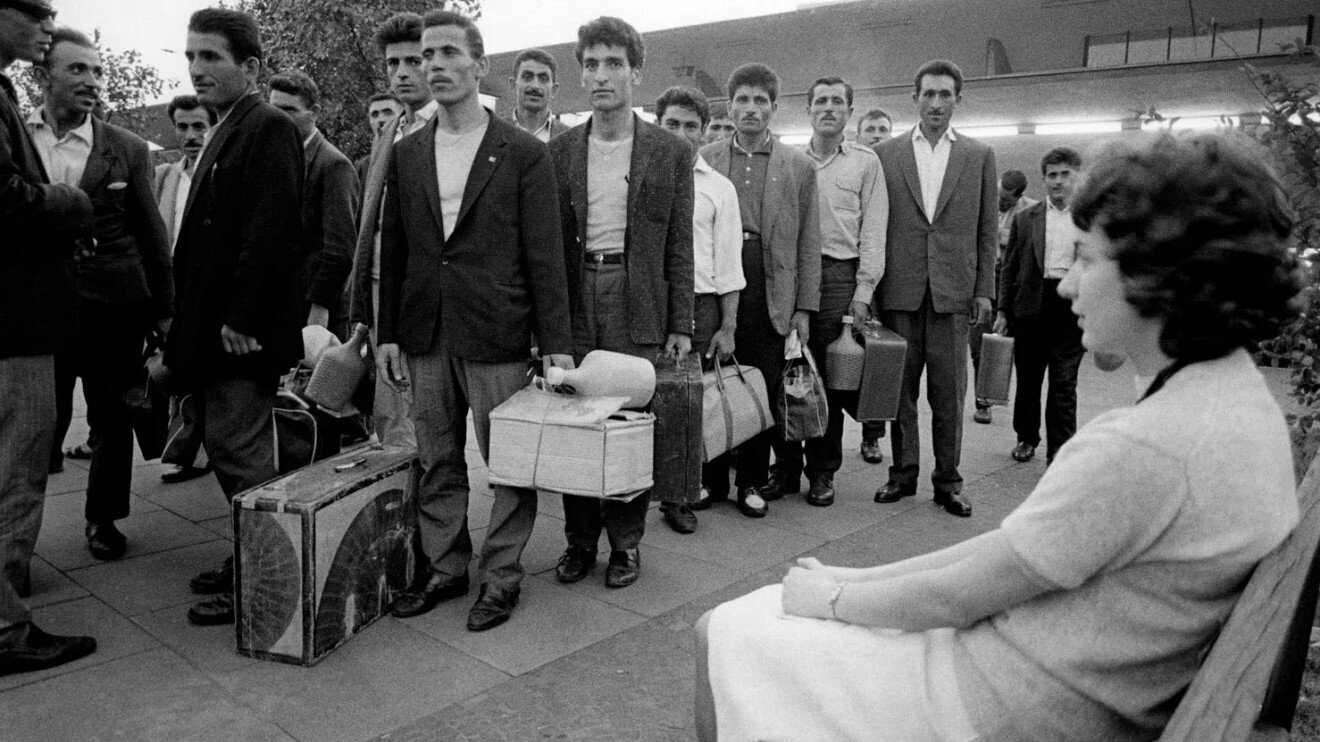
Limitchiki were a distinct category of residents in major Soviet cities, above all Moscow and Leningrad, that emerged in the 1960s-1980s. They were migrants from other regions of the USSR who received temporary residence permits (by "limit" quota, hence the name) to work at enterprises facing labor shortages.
The limit-residency system was created as a compromise between the capital's enterprises' need for labor and the authorities' desire to restrict the influx of population into major cities. Limitchiki could only obtain temporary residency on the condition of employment at specific enterprises, usually ones with harsh working conditions or low pay, unattractive to native residents.
The social status of limitchiki was low. They lived in dormitories, often in cramped conditions, and struggled to access many social benefits. After completing a set term of work (usually 10 years), a limitchik could obtain permanent residency and their own apartment, which was the main motivation for many migrants.
Society often held prejudices against limitchiki. They could be spotted by how they dressed, spoke, and carried themselves. Native Muscovites often looked down on them, and law enforcement officers paid them special attention when checking documents — something reflected in this episode of the novel.
The limit-residency system was effectively abolished in the early 1990s with the collapse of the USSR. However, the term "limitchik" survived in the language as a label for a newcomer not fully adapted to life in the capital.