-
Location: Located in the western Pacific Ocean, east of the Mariana Islands, near the Philippines and Japan.
-
Depth: Its deepest point, Challenger Deep, reaches 10,994 meters below sea level, making it the deepest known place on Earth.
-
Formation: Formed by subduction, as the Pacific tectonic plate slides beneath the Philippine plate. This geological process created the Mariana Trench, of which the deep is a part.
-
Discovery: First discovered by the British survey ship HMS Challenger in 1875, during the first global oceanographic expedition. Challenger Deep is named in the ship’s honor.
-
Pressure and inhabitants: Pressure at the bottom of the trench exceeds 1,000 atmospheres (more than 108 MPa). Despite the extreme conditions, various deep-sea organisms live there: bacteria, amphipods, sea cucumbers, and recently discovered fish species adapted to the enormous pressure and cold.
-
Features: Water temperature at the bottom is around 1-4°C. The trench shows elevated geothermal activity and hydrothermal vents. Microplastics and other pollutants have been found at great depth, pointing to human impact even in the ocean’s most inaccessible places.
-
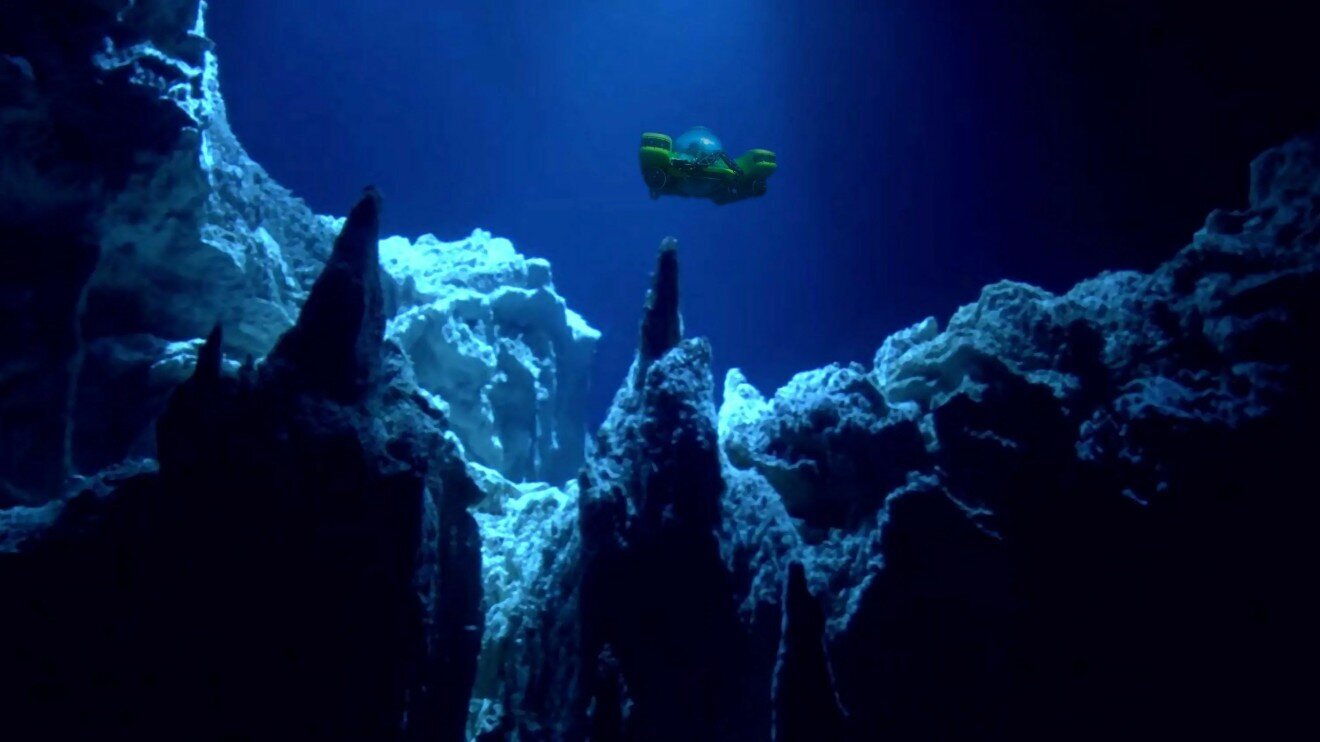
Explorers: The first dive was made by US Navy Lieutenant Don Walsh and Swiss engineer Jacques Piccard aboard the bathyscaphe Trieste in 1960. In 2012, director James Cameron reached the bottom in the single-person vessel Deepsea Challenger. In 2019, American explorer Victor Vescovo set a new depth record aboard the Limiting Factor.
-
Interesting facts: If Mount Everest were placed at the bottom of the trench, its peak would still sit 2 km below sea level. In 2023, the Chinese uncrewed bathyscaphe "Fendouzhe" set a new diving record. The trench’s ecosystem feeds mainly on organic matter sinking from above. The organisms living there have developed unique adaptations for survival, including special proteins and cell membranes to withstand the enormous pressure.
Mariana Trench