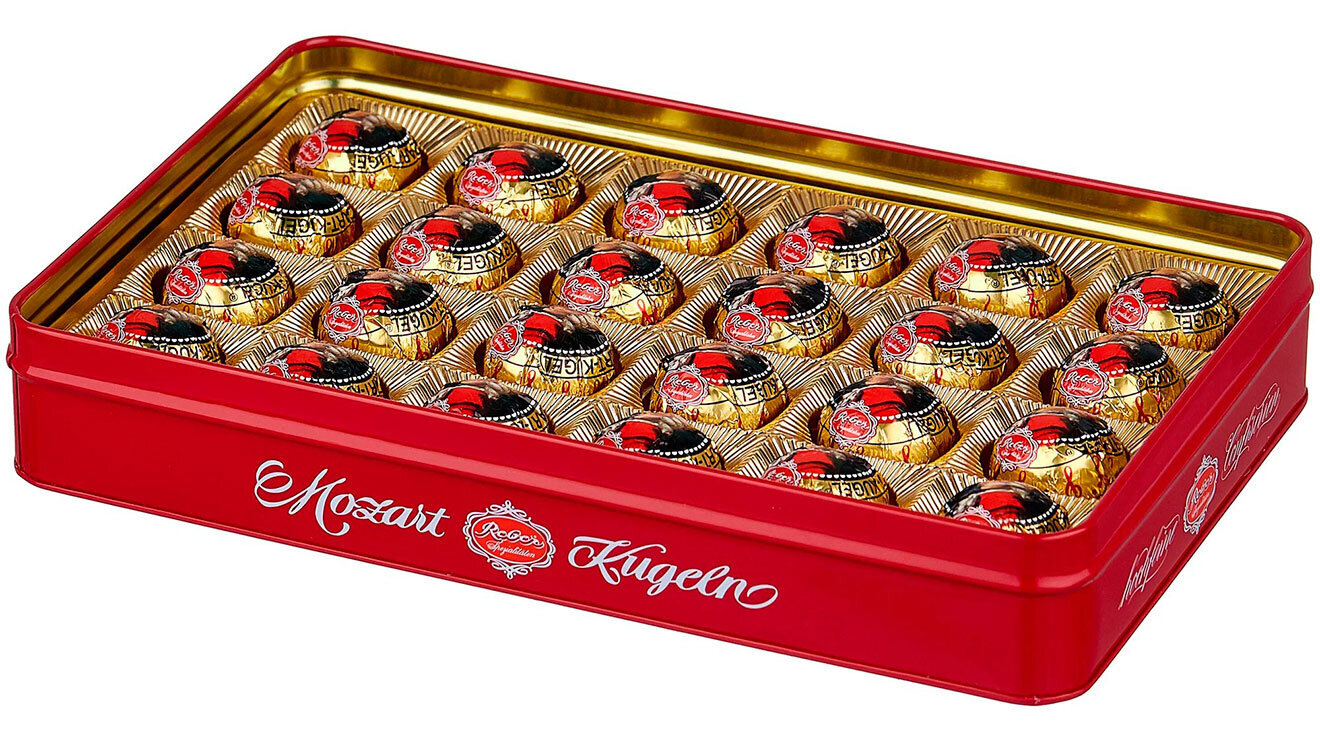
“Mozart candies” means Mozartkugeln (German for “Mozart balls”) — traditional round chocolate candies with a marzipan filling, invented by the Salzburg confectioner Paul Fürst. In 1890 he first put “Mozart candies” or “Mozart Bonbon” up for sale. Fürst created them specifically for the 100th anniversary of the great composer’s death; after the celebrations he renamed them “Mozartkugeln” (“Mozart balls”).
Confectioner Fürst never patented his recipe, and other confectionery companies soon began producing similar sweets under the same name. Over time their recipes changed slightly, but the basics remained the same. Fürst’s original “Mozartkugeln” are still made by hand in Austria to a 19th-century recipe, which underscores their uniqueness and authenticity.
Recipe: a ball is hand-formed from pistachio marzipan encased in nougat, then skewered on a wooden stick to be dipped in dark chocolate glaze. The stick, with the ball still on it, is stood upright so the candy can cool and harden. The stick is then removed, and the resulting hole is filled with chocolate glaze. The finished Mozartkugel is hand-wrapped in silvery-blue foil. According to the confectionery itself, about 1.4 million Mozartkugeln are made this way every year. In the climate-controlled café at the confectionery on Brodgasse and its branches, the candies stay fresh for about 8 weeks. The Original Salzburger Mozartkugeln, still hand-made to the original recipe, continue to be produced today at Fürst’s confectionery in Salzburg, sold in its shops and offered online. In the absence of clearly established copyright, numerous industrially produced versions from other companies, in both Austria and Germany, are also on the market.
In Russia, “Mozartkugeln” became popular in the 1990s, when mass shipments of European products, previously unavailable to most Russians, began arriving in the country. A culture of consuming European goods and products, especially from Germany and Austria, was a marker of novelty, special status, and participation in “high” Western culture. “Mozartkugeln” candies, considered a rarity, symbolized not just quality but European chic. The packaging featuring Mozart’s image, the unusual taste and texture of the candy, and its special reputation quickly caught people’s attention. Mozartkugeln even became a kind of symbol of prestige and wealth, since they were far from cheap for most Russians at the time.