Clearly, Valery Roslavsky was quoting the poet Mayakovsky:
Lilichka!
Instead of a letterTobacco smoke has gnawed the air away.
The room —
a chapter from Kruchonykh’s hell.
Remember —
beyond this window
for the first time
I stroked your hands, half out of my mind.
Today you sit here,
your heart in iron.
One more day
and you’ll throw me out,
cursing me, maybe.
In the murky hallway my trembling arm
will fumble long, unable to find its sleeve.
I’ll run out,
hurl my body into the street.
Wild,
gone mad,
cut through by despair.
Don’t do this,
my dear,
my darling,
let us say goodbye now.
Either way
my love —
a heavy weight, after all —
hangs on you
wherever you run.
Let me weep out, in one last cry,
the bitterness of injured complaints.
If they work an ox to death —
he’ll go,
and stretch out in the cold waters.
Besides your love,
for me
there is no sea,
and from your love not even tears can buy me rest.
Should the weary elephant want peace —
he’ll lie down, regal, on the scorched sand.
Besides your love,
for me
there is no sun,
and I don’t even know where you are, or with whom.
If you had tormented a poet this way,
he
would have traded his love for money and fame,
but for me
no ringing brings joy
except the ringing of your beloved name.
And I won’t throw myself down a stairwell,
and I won’t drink poison,
and I won’t be able to squeeze the trigger against my temple.
Over me,
besides your gaze,
no blade of any knife holds power.
Tomorrow you’ll forget
that I crowned you,
that I burned out my flowering soul with love,
and the whirling carnival of vain days
will scatter the pages of my little books…
Will the dry leaves of my words
make you stop,
gasping for breath?
Let me at least
spread out with one last tenderness
the path beneath your departing step.May 26, 1916
Petrograd
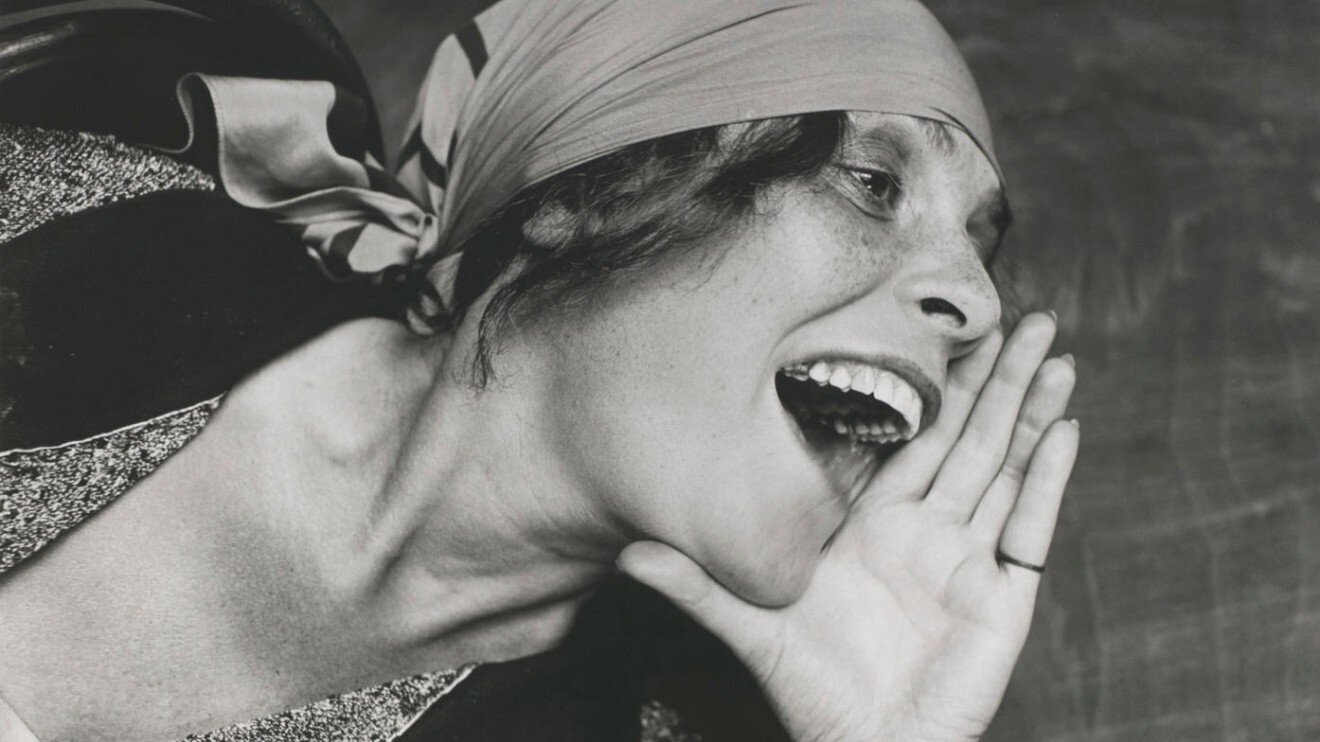
The picture, chosen to catch the eye, shows Lilya Yuryevna Brik, who posed for the “Books” advertising poster in 1924. The photograph was taken by Alexander Rodchenko, one of the founders of constructivism, advertising, and design in the USSR.
Brik, Lilya Yuryevna (1891-1978)
A Soviet prose writer, translator, and “muse of the Russian avant-garde,” one of the most influential and controversial figures in the literary life of the early-20th-century USSR.
Biography
Lilya Yuryevna Brik (born Lilya Urievna Kagan) was born October 30, 1891, in Moscow, into a Jewish family. Her father, Uri Abramovich Kagan, was a lawyer who defended the rights of Jews in Moscow; her mother, Elena Izrailevna, studied at the Moscow Conservatory. The girls received an excellent home education: they spoke Russian, German, and French, and played the piano.
Lilya studied in the mathematics department of the Higher Courses for Women, then at the Moscow Institute of Architecture, and studied sculpture in a studio in Munich. In 1912 she married Osip Brik, taking his surname, which she kept for the rest of her life.
Meeting Mayakovsky
Lilya Brik’s fateful meeting with Vladimir Mayakovsky took place in July 1915 at the couple’s Petrograd apartment on Zhukovsky Street. It was there that the poet first read his poem “A Cloud in Trousers” and asked permission to dedicate it to Lilya. On the first page appeared the inscription: “To Lilya Yuryevna Brik.”
“The usual dinner-table conversation went on, but everyone already understood: something irreversible had happened, still unclear whether good or bad, but undoubtedly significant, perhaps — great.”
From that moment began their fifteen-year love affair, which became one of the most famous in Russian literature. Mayakovsky settled next door to the Briks’ apartment, and later moved in with them entirely, forming a unique “threesome union.”
Creative Legacy
Many of Mayakovsky’s works are dedicated to Lilya Brik:
- The poems “About This” and “The Backbone Flute”
- The poems “To Everything” and “Lilichka!”
- Numerous lyric works
Brik took an active part in the poet’s creative life: she helped publish his works and organized a literary salon that became a gathering place for the creative intelligentsia of Petrograd and Moscow.
After Mayakovsky’s Death
After Mayakovsky’s suicide in 1930, Lilya Brik received rights to half of his creative legacy. She took part in publishing the poet’s complete works and created the first Mayakovsky museum in Moscow.
Political Connections
Rumors circulated in literary circles about the Brik family’s ties to the state security services. Archives did indeed turn up GPU identification cards issued to Osip and Lilya Brik, though researchers believe these were more likely formal documents obtained to secure foreign travel passports.
Censorship and Being Forgotten
From the late 1950s Soviet censors began systematically removing Lilya Brik’s name from publications about Mayakovsky. This amounted to a genuine “anti-Brik campaign”:
- In 1959 the book “New Facts About Mayakovsky” came under harsh criticism from the Communist Party Central Committee
- Any references to it in scholarly work were banned
- Brik’s name was struck from textbooks and monographs
- Things reached absurd extremes: in photographs, Lilya was retouched out from beside Mayakovsky
Personal Life
Besides her formal marriage to Osip Brik, Lilya had common-law relationships with Vladimir Mayakovsky, Vitaly Primakov, and Vasily Katanyan. Her biography is intertwined with the fates of many figures in the arts: Sergei Parajanov, Andrei Voznesensky, Maya Plisetskaya, Pablo Picasso, and others.
Lilya Brik was the sister of Elsa Triolet — the French writer and wife of the poet Louis Aragon.
Later Years
In her later years Brik lived in Peredelkino and kept up an extensive correspondence, including with writers who had fallen out of official favor. Shortly before her death she found the address of Tatyana Yakovleva — Mayakovsky’s “Parisian love” — and reconciled with her.
On August 4, 1978, at the age of 86, Lilya Brik took her own life with an overdose of sleeping pills. She was cremated in the same building as Mayakovsky. Per her will, her ashes were scattered in a field outside Zvenigorod, where a memorial boulder bearing the letters “LYuB” was later installed.
Historical Significance
Lilya Brik remains one of the most contentious figures in the history of Russian literature. To some she is the muse who inspired a great poet’s finest work. To others, a woman who used her closeness to Mayakovsky for personal ends. But one thing is beyond dispute: without her, Russian poetry would have been entirely different.