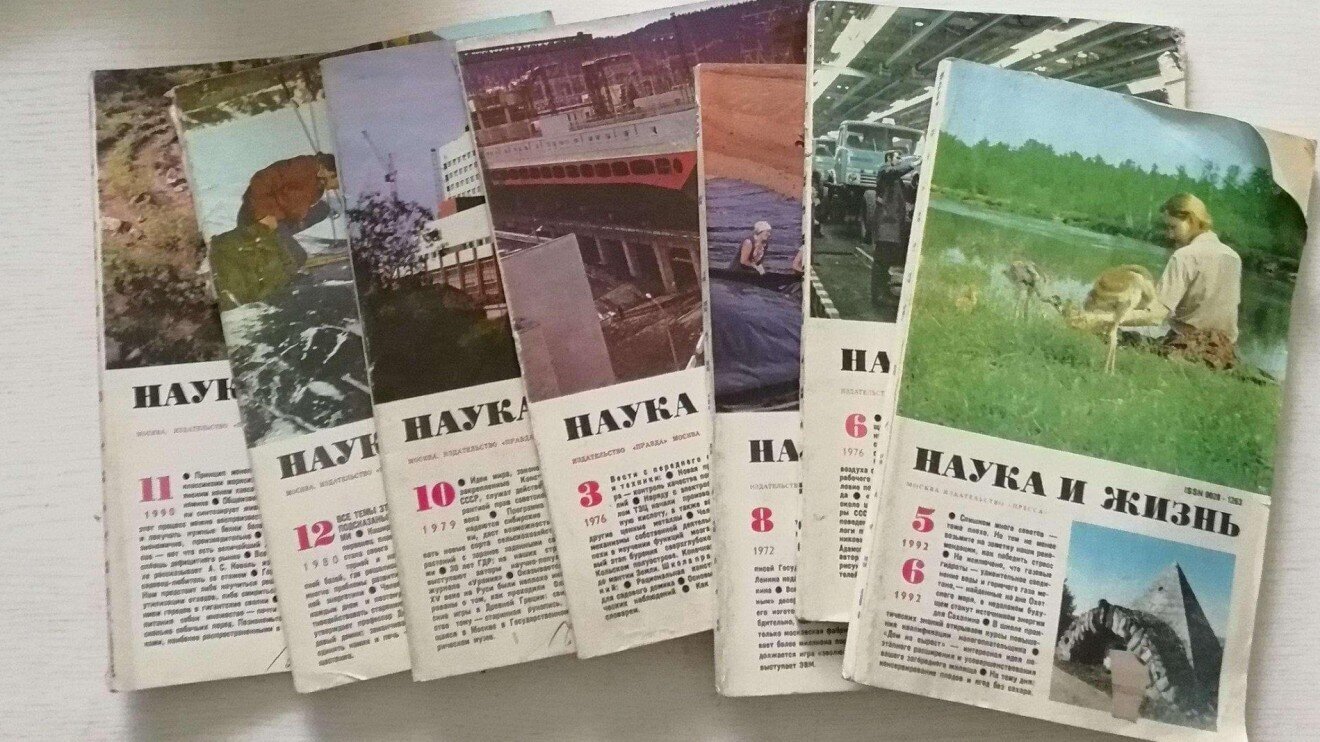
In the context of the events of 1993, the mention of the magazine "Nauka i Zhizn" ("Science and Life") carries special meaning. This publication was one of the most popular science magazines in the USSR and post-Soviet Russia, a symbol of the pursuit of knowledge and intellectual growth.
The magazine's history
"Nauka i Zhizn" is a Russian monthly popular-science illustrated general-interest magazine, tracing its history back to 1890. It was originally founded in the Russian Empire by M.N. Glubokovsky with the aim of popularizing science among the broader public. The magazine came out weekly, in a small print run of 16 pages, with an annual subscription costing 5 rubles.
After the revolutionary upheaval of the early 20th century, the publication resumed in 1934 under editor N.L. Meshcheryakov. From 1938, the magazine became an organ of the USSR Academy of Sciences, giving it special status and authority within the scientific community.
The magazine's golden age
"Nauka i Zhizn" truly flourished in the 1960s-80s. In 1961, under editor-in-chief V.N. Bolkhovitinov, the magazine shifted its focus, becoming more accessible to a broad readership. This move proved enormously successful — by 1980, a single issue's print run reached an astonishing 3 million copies, making it one of the most widely read magazines in the Soviet Union.
The magazine became a genuine window into the world of science and technology for millions of Soviet citizens. Its pages carried articles on the latest advances in physics, biology, space exploration, and medicine. Its sections "Little Tricks," "Science on the March," "Physics Workshop," and "For Astronomy Enthusiasts" were especially popular.
The crisis of the 1990s
The events of the early 1990s dramatically altered the magazine's fate. The collapse of the USSR, the economic crisis, and shifting reader preferences led to a catastrophic drop in circulation. Where the magazine had once printed in the millions during Soviet times, by the early 2000s its print run had fallen to under 50,000 copies.
In 1993, when the novel is set, the magazine was going through especially hard times. Financial troubles, cuts to government funding for science and education, and the country's broader crisis all took a direct toll on the publication's fate.
Symbolic significance
The mention that a character "ought to be leafing through Nauka i Zhizn" reflects the type of person associated with reading this magazine — people interested in science and technology, drawn to self-education and intellectual growth. In the chaotic atmosphere of 1993, as old values collapsed and new ones hadn't yet taken shape, such people often found themselves cast adrift.
The contrast between the peaceful pastime of reading a popular-science magazine and the brutal reality of criminal disputes, warehouses, and killings underscores the tragedy of an era in which the intelligentsia and the bearers of traditional Soviet values found themselves in a world alien to them.
The editorial office and its traditions
Since 1963, the magazine's editorial office was housed in a historic building at 24 Myasnitskaya Street, designed by the famous architect Fyodor Schechtel. The building itself was a symbol of cultural continuity — from pre-revolutionary Russia, through the Soviet period, into the new era.
In 1993, the magazine's editor-in-chief was I.K. Lagovsky, who had led the publication since 1980 and worked to preserve its traditions amid a radically changed reality.