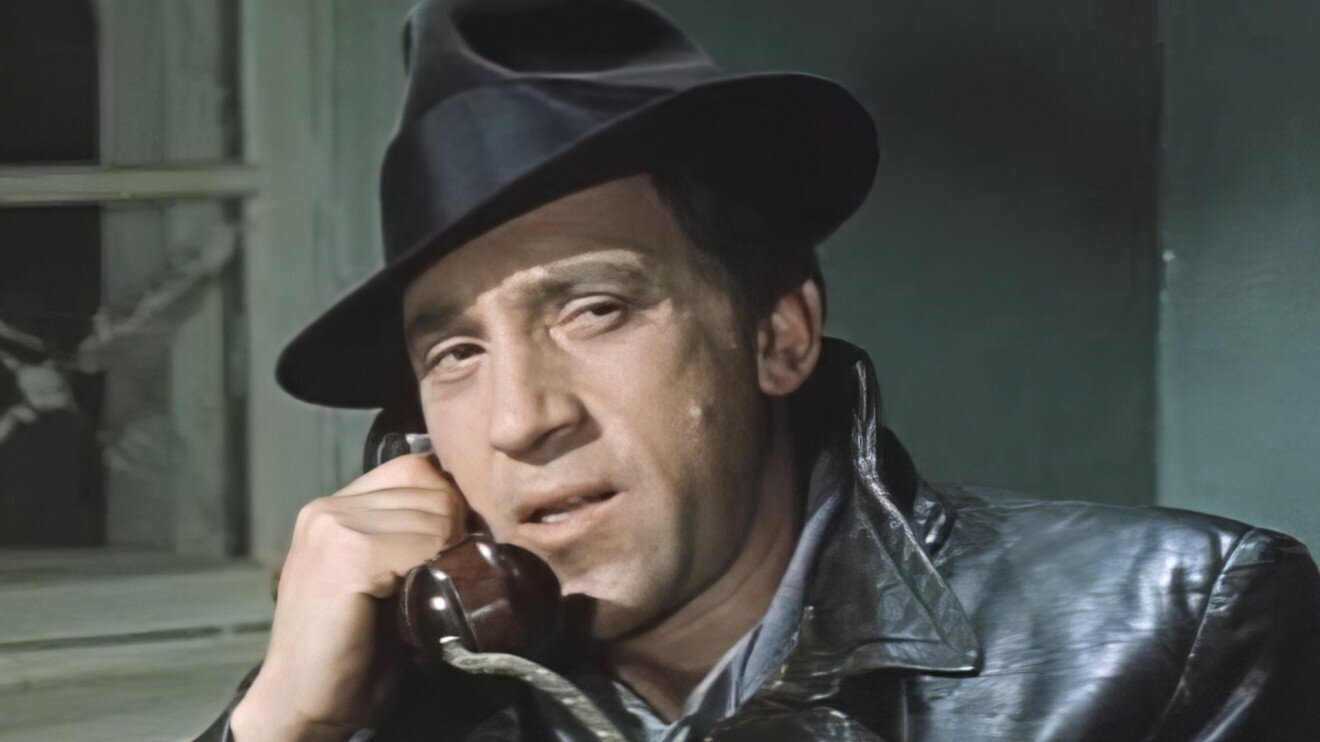
Colonel Zorin
Source: A trilogy of films from the 1970s
Actor: Vsevolod Sanayev
The image of a wise, thoughtful investigator, able to logically reconstruct the picture of a crime
Major Tomin
Source: "The Investigation Is Conducted by ZnaToKi"
Actor: Leonid Kanevsky
An improvising field agent, a master of disguise and undercover operations
Captain Zheglov
Source: "The Meeting Place Cannot Be Changed"
Actor: Vladimir Vysotsky
A charismatic postwar Moscow CID detective with a contradictory character
Cultural context
Colonel Zorin
Ivan Sergeyevich Zorin is the protagonist of a trilogy of films by director Andrei Ladynin. The last film, "Colonel Zorin's Version," came out in 1978. Zorin embodied the image of a cultured investigator, able to crack the most complex crimes through logical deduction and psychological analysis.
Characteristic traits of the character: thoughtfulness, methodicalness, an ability to analyze criminals' motives. In the 1978 film, Zorin faces off against the watchmaker Kozyrets in a psychological duel, using provocation to expose the killer.
Major Tomin
Alexander Nikolayevich Tomin is one of the three lead characters of the legendary TV series "The Investigation Is Conducted by ZnaToKi" (1971-1989), a criminal investigation inspector and specialist in undercover operations.
He was known for his flair for acting and his gift for disguise — often winning criminals' trust under various false identities. A wisecracker and improviser, but a serious professional. Unmarried, he lived with his mother on Bolshaya Syromyatnicheskaya Street.
Captain Zheglov
Gleb Georgiyevich Zheglov is the most contradictory and vivid of Soviet screen detectives, the hero of the film "The Meeting Place Cannot Be Changed" (1979), set in postwar Moscow in 1945.
As played by Vladimir Vysotsky, Zheglov became a cult figure — the head of a Moscow CID task force, a fighter against organized banditry. Known for the line "A thief belongs in prison" and for his willingness to operate on the edge of the law in pursuit of justice.
A recognizable image: riding breeches, boots, a flat cap. A contradictory character — a combination of a sincere drive for justice with methods that raise moral questions.
Significance in the context of the 1990s
Cultural memory
By 1993, these characters had become part of the collective memory of the Soviet person. Zhorik's imitation of the manners of these famous screen detectives shows how deeply these images had taken root in the popular consciousness and become the standard for detective work.
The mention of these characters in the novel's text reflects a nostalgia for Soviet cinema and the protagonist's attempt to find a foothold in familiar cultural touchstones amid the social upheaval of the early 1990s.
All three detectives represented different approaches to solving crimes: Zorin through logical analysis, Tomin through fieldwork, and Zheglov through intuition and psychological pressure.