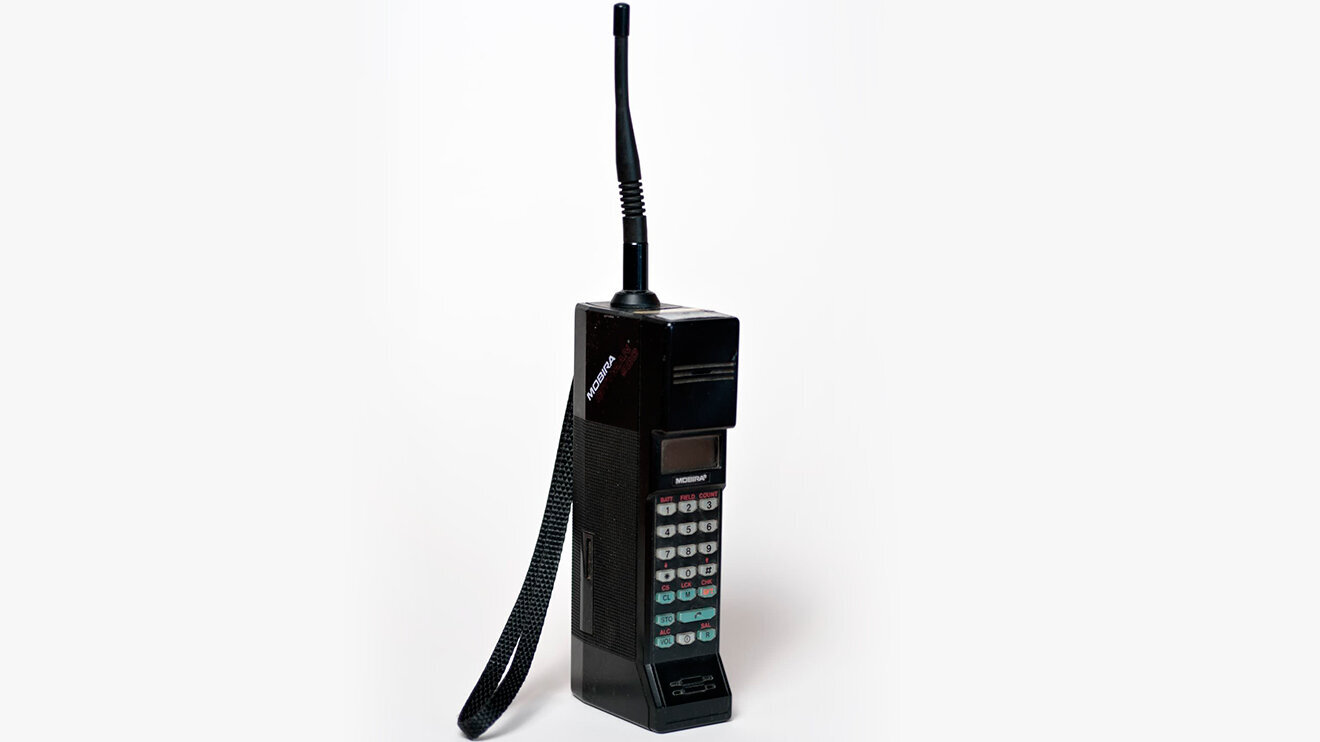
The novel mentions a «Nokia Mobira» mobile phone as a marker of high status and wealth. In early-1990s Russia, mobile communication was only just emerging and available to an extremely narrow circle of people — high-ranking officials, heads of major enterprises, and wealthy businessmen.
The «Nokia Mobira» was the series of the first portable mobile phones made by the Finnish company Nokia. Its best-known model was the Mobira Cityman 900, released in 1987. The phone weighed about 760 grams and measured 183×43×79 mm. For its time, this was considered compact, though by modern standards the device looks bulky.
The phone operated on the NMT-900 standard (Nordic Mobile Telephony), the world's first fully automatic cellular network. In Russia, the first NMT network was launched in 1991 by the company Delta Telecom in St. Petersburg. Moscow got its NMT-standard network in 1992 (operator Moscow Cellular Communications).
In early-1990s Russia, such a phone cost around $2,000-4,000, roughly the price of a car. On top of that came a steep connection fee (around $1,000-1,500) and a monthly subscription (about $50-100), not counting per-minute call charges.
An interesting fact
The Nokia Mobira Cityman earned the nickname "Gorba" in Finland after Soviet president Mikhail Gorbachev used the phone during a visit to Helsinki in 1989 to call Moscow. Photos of Gorbachev with the mobile phone circulated in the world press and became a symbol of the new Soviet leadership's technological change and openness.
Technical specifications
- Weight: 760 grams
- Dimensions: 183×43×79 mm
- Display: monochrome, up to 8 characters
- Battery: UL61, 9.6V, 1000 mAh, nickel-cadmium
- Standby time: up to 24 hours
- Talk time: about 1 hour
- Memory: up to 50 numbers
By 1993, when the novel's events take place, Nokia had already released several more modern models, but the "Mobira" remained a status device for the elite. The "Nokia 101" mentioned in the text (likely referring to the Nokia 1011) was a newer model, released in 1992. It was significantly more compact and ran on the GSM standard.
As the novel correctly notes, the mobile-phone world of the time actually had an inverted logic of prestige compared to other status markers: the smaller the phone, the more expensive and technologically advanced it was considered. So the compact Nokia 1011 was far more prestigious than the bulky "Mobira," despite arriving later.
In 1993 Russia, a minute of mobile calling cost around $1-2, putting it out of reach for most of the population. Owning a mobile phone was a powerful symbol of status, wealth, and belonging to the new business elite.