During the Afghan War of 1979–1989, the Soviet forces developed a system of coded designations for reporting casualties over the radio. These terms became part of the military slang of the Soviet-Afghan War veterans and are still used in the Russian army today. The coding system served to transmit critically important information quickly and precisely under combat conditions.
«Zero Twenty-One» (021): The Killed
Origin of the Term
The phrase «zero twenty-one,» or simply «021,» is a code from the slang of Soviet veterans who served in Afghanistan. This code was used in radio communications to report servicemen killed in action. The term «the zero-twenty-ones» was used as a noun for those killed in combat.
The exact origin of the code «021» is unknown, but several versions exist. One holds that it was the number of a form or document filled out when recording permanent losses. Another suggests the number was chosen arbitrarily to code information that shouldn’t be transmitted in plain language over the radio.
Use in Radio Communications
During and after combat engagements, unit commanders reported casualties over the radio using these established codes. A typical after-action report went something like: «Note down: three-hundreds — six, zero-twenty-ones — four.» That meant six wounded and four killed.
Using numerical codes instead of direct language served several functions. First, it was a form of psychological protection — abstract numbers were easier to process than the words «killed» or «dead.» Second, the codes made it harder for the enemy to understand exact casualty figures if they intercepted the radio traffic. Third, it was a military tradition of coding important information.
What the Term Meant to Servicemen
For Afghan War veterans, the phrase «no 021s in the platoon all last year» meant the unit had suffered no permanent losses — nobody died. That was a point of pride, a mark of competent command, good luck, and the unit’s combat skill.
Conversely, a high count of «zero-twenty-ones» after an operation meant a rough fight and heavy losses. Every unit in that statistic wasn’t just a number, but a fallen comrade, a fellow soldier, a friend. So even the coded term landed painfully.
Difference from "Cargo 200"
It’s important to understand the difference between the terms «021» and «cargo 200.» The designation «021» was used for the immediate reporting of the number killed in action or dead of wounds, directly in the combat zone. It was a term for radio traffic and verbal reports.
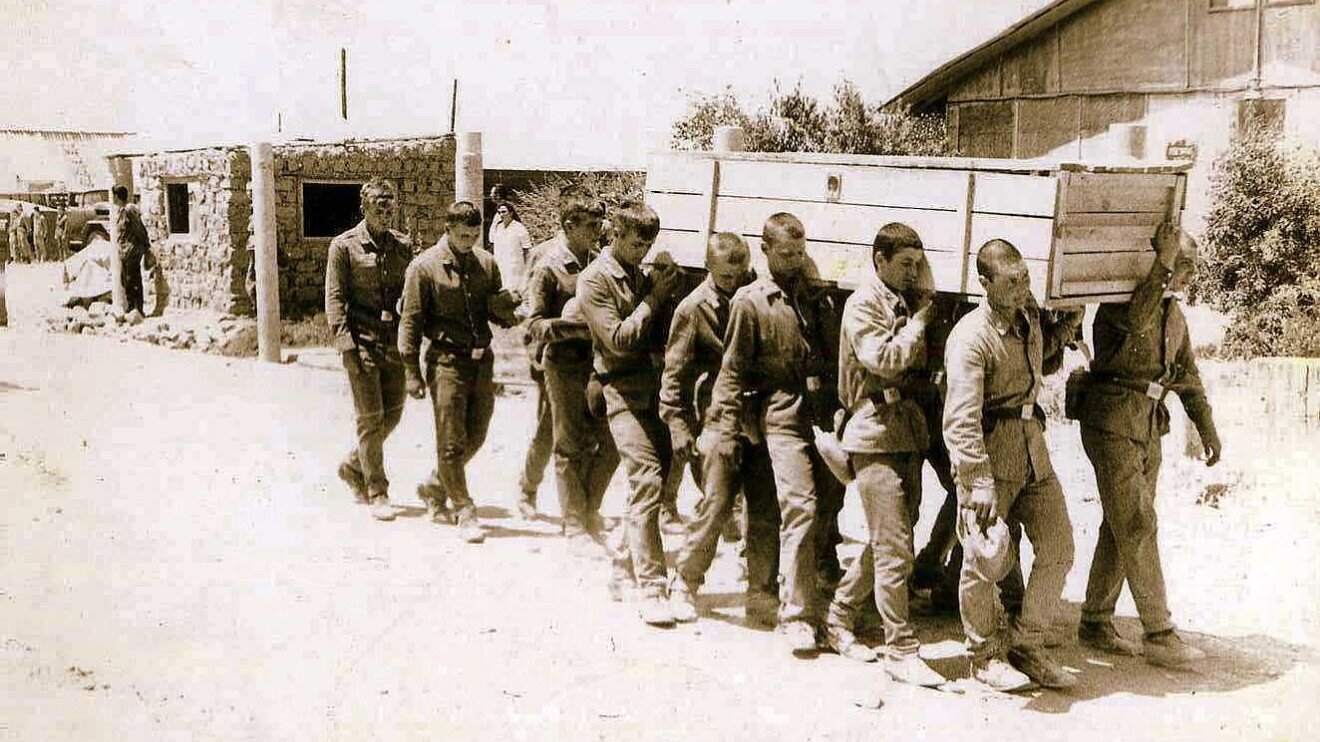
The term «cargo 200» referred to the bodies of the fallen once they were prepared and ready for transport. It was a logistical designation for shipping coffins with bodies back home.
"Cargo 200": Transporting the Fallen
How the Term Came About
The term «cargo 200» became widely known specifically during the Afghan conflict, though it was formally established earlier. In 1984, the USSR Ministry of Defense approved standards for military transport. A special manual specified that transporting a coffin with a fallen serviceman by military air transport, from the loading point to the destination, was accompanied by a baggage claim ticket for 200 kilograms.
That weight standard — 200 kilograms — gave the whole phenomenon its name. The mass was made up of the body’s weight, the wooden coffin, and the galvanized zinc coffin the wooden one was placed inside. The zinc coffin was then transported inside a nailed-together wooden crate for extra protection during shipping.
Alternative Origin Stories
There are other versions of how «cargo 200» got its name. One holds that it was the number of a USSR Ministry of Defense order regulating the procedure for transporting the bodies of fallen servicemen. Another suggests the number 200 referred to the number of a form filled out when shipping a body.
Interestingly, shipping a coffin with a fallen serviceman by rail came with a 300-kilogram claim ticket, due to the specifics of rail transport and packaging requirements. But that fact has nothing to do with the modern «cargo 300» designation for the wounded.
Procedure for Processing and Transport
A fallen serviceman’s body was first placed in a wooden coffin. The wooden coffin was then sealed inside a galvanized metal coffin — hence the expression «zinc coffin,» or just «the zinc.» The sealed zinc coffin was placed inside a wooden crate nailed together from boards. The whole assembly weighed about 200 kilograms.
«Cargo 200» was transported from Afghanistan to the USSR by military transport aircraft. Planes carrying the fallen landed at airfields, from where the bodies were distributed to their place of residence or burial. The transport was accompanied by strict paperwork and special procedures.
"The Two-Hundreds" in Everyday Speech
In servicemen’s everyday speech, the term took various forms: «cargo 200,» «the two-hundred cargo,» «the two-hundred.» The fallen were sometimes called «two-hundreds,» though that was less common than «021.» The phrase «becoming a two-hundred» meant dying.
For relatives and loved ones, receiving a «cargo 200» was terrible news. The sealed zinc coffins were never opened; burials were closed-casket. This bred rumors and speculation about the condition of the bodies, and whether the person in the coffin was really their relative.
"Cargo 300": The Wounded
Definition and Use
The term «cargo 300» or «three-hundreds» was used to designate the wounded at the site of military operations. In radio communications, it was the primary way to report the number of wounded. The phrase «three-hundreds — six» meant six wounded needing evacuation.
The designation «three-hundred» applied to a serviceman wounded in battle and evacuated from the combat zone. Transport carrying «three-hundreds» went straight to medical facilities — field hospitals, medical battalions, rear hospitals for treatment and rehabilitation.
Categories of Wounded
Wounds were classified by severity. The lightly wounded could return to duty after treatment at a medical battalion. Moderately wounded required hospitalization and extended treatment. The severely wounded needed serious medical intervention and were often evacuated to hospitals within the USSR.
All these categories were grouped under the code «300» for the initial casualty report. Details followed later, during medical triage and paperwork. What mattered was quickly relaying the overall wounded count to organize the medical evacuation.
Evacuating the Wounded
Evacuating the «three-hundreds» was carried out by medevac helicopters, armored personnel carriers, and specially equipped vehicles. The speed of evacuation often decided the outcome — whether the wounded survived or became a «021.» Medevac helicopters operated under extremely dangerous conditions, often under enemy fire.
In the field, medics and military doctors gave first aid to the wounded. The «three-hundreds» were then taken to medical battalions for triage. The severely wounded were sent on to hospitals with full surgical equipment.
"Cargo 400": The Shell-Shocked
Defining Concussion
The code «cargo 400» or «four-hundreds» designated the wounded who had suffered a concussion in battle. Singling out the shell-shocked as a separate category reflected the specific nature and severity of this kind of injury. The word «contusion» comes from the Latin for «bruise.»
In combat, concussion was most often caused by the blast wave from shells, mines, bombs, and grenades. An explosion sharply changes the thermodynamic conditions of the surrounding environment — temperature, air density, pressure. This shock wave affected the human body, causing multiple types of damage.
Types and Consequences of Concussion
Concussion could affect individual parts of the body or the whole organism. There were mild, moderate, and severe degrees. The consequences depended on the force of the blast wave, the distance from the epicenter, and the body’s position at the moment of the explosion.
Concussion could damage internal organs with no visible external injury. Brain concussions were especially dangerous, leading to loss of consciousness, amnesia, hearing and vision problems, and psychological disorders. Many shell-shocked veterans suffered the effects of the injury for years after the war.
Transporting the Shell-Shocked
Servicemen suffering from concussion needed emergency medical care and maximum rest during transport. Even a mild concussion could lead to complications if evacuated improperly. So the «four-hundreds» were evacuated with special precautions.
The shell-shocked were kept immobilized and shielded from noise and vibration. Transport was handled as gently as possible. At medical facilities, the shell-shocked were placed in isolated wards where the rest and quiet needed for recovery could be maintained.
"Cargo 100": Ammunition
Transporting Ammunition
The term «cargo 100» designated ammunition shipments. This covered small-arms, artillery, aviation, engineering, and naval munitions — components of weapons and military equipment needed to carry out combat missions.
Ammunition was moved by various means of transport: road, rail, air. Transporting ammunition meant following the strictest safety rules. Ammunition transport was marked with special signs, guarded, and monitored under special instructions.
Handling "Cargo 100"
Loading, unloading, and transporting ammunition required following a great many rules. Any violation could lead to detonation and mass casualties. Servicemen who worked with ammunition underwent special training.
In Afghanistan, delivering ammunition to forward positions was a dangerous task. Ammunition convoys were priority targets for the mujahideen. Blowing up an ammunition transport could wipe out an entire unit.
"Cargo 500": Refusers and Deserters
How the Term Emerged
Recently, another coded concept has spread — «the five-hundreds at war.» In military slang, «the 500s» are servicemen who refuse to carry out combat orders while in the combat zone.
These could be contract soldiers who refused an order and broke their contract. «Five-hundreds» also referred to deserters, traitors, and cowards among conscripts who abandoned combat areas without authorization. In this category, questions of conscience, duty, and military honor came to the forefront.
An Alternative Version
There’s a version claiming that, until recently, the military used «cargo 500» for shipments of medicine and medical supplies. But this version is less widespread, and the term is more often tied to refusers.
Other Coded Designations
"Cargo 600": Prisoners of War
The term «cargo 600» was used for transporting prisoners of war. Captured soldiers were moved on special transport with mandatory guard and in accordance with the treatment standards for prisoners of war set out in international conventions.
In Afghanistan, capturing mujahideen fighters was no easy task. Prisoners were interrogated for valuable intelligence, then held in special camps or handed over to Afghan government forces.
An Alternative Meaning
Some sources claim «six-hundreds» in the army refers to heavily drunk servicemen who misjudged how much they could drink and are temporarily unfit for duty. There is, however, information that unofficially, in conversation, that type of «cargo» was designated by a different number — 150.
"Cargo 700": Valuables
The designation «cargo 700» was assigned to important, materially valuable cargo transported to or from the combat zone. This category covered works of art, precious metals, cash, and documents of special importance.
In wartime, such cargo required special protection and oversight. Its transport was documented specially and accompanied by a reinforced escort.
"Cargo 800": Special Weapons
The code «cargo 800» referred to special types of transported weapons. «Eight-hundred» cargo could include various types of toxic agents, chemical and biological weapons, and various weapons of mass destruction.
Every action involving such cargo was under special oversight during processing and transport. Servicemen who worked with «cargo 800» had special training and clearance. Mishandling this kind of cargo could lead to catastrophic consequences.
The Psychological Dimension of the Coded Terms
The Function of Abstraction
Using numerical codes instead of direct terms served an important psychological function. Saying «two zero-twenty-ones» was psychologically easier than «two dead.» Abstract numbers created emotional distance, helping people keep their composure under stress.
For commanders who regularly had to report casualties, this linguistic form was a means of professional self-protection. It let them carry out their duties without being pulled into the emotional weight of loss every single time.
Part of Military Culture
The coded terms became an inseparable part of the military culture of Afghan War veterans. They entered memoirs, fiction, and films about the Afghan War. Terms like «021,» «cargo 200,» and «three-hundreds» are understood by everyone who went through the Afghan War, regardless of rank or branch of service.
After Afghanistan, these designations continued to be used in the Chechen campaigns and other conflicts involving Russian forces. They became part of the shared military terminology, passed down from one generation of servicemen to the next.
Significance in the Context of the Novel
The Hero’s Situation
In the excerpt from the novel, Anton Plotnikov describes a situation in which his unit was attacked due to negligence at a guard post. The hero himself took a shrapnel wound and lost consciousness. The phrase «call it zero twenty-one» means the hero considered himself dead — the wound was that severe.
This is a typical reaction for someone severely wounded, aware of how critical their condition is. Loss of consciousness from shock and blood loss, the sense of death being close — all of it made the hero think he’d become another «021» in the casualty statistics.
Realism of the Description
Using military slang, including the term «021,» lends the text authenticity. Rough soldier’s language, a commander’s self-blame, a description of negligence at a post and a sudden attack — all of it captures realistic elements of army life in Afghanistan.
The commander’s bitter self-criticism reflects a real recognition of his own responsibility for what happened. He admits he underestimated the danger, failed to properly oversee his subordinates, and let discipline slip at a combat position. The result: a sudden attack and heavy losses.
Conclusion
The system of coded designations that developed during the Afghan War represents a unique phenomenon in military linguistics. Terms like «021,» «cargo 200,» «cargo 300,» and others became a way of transmitting critically important information under combat conditions.
These designations served a practical function, allowing casualty data to be relayed quickly and precisely over the radio. They also served as a psychological defense mechanism, creating emotional distance between servicemen and the terrible reality of war.
For Afghan War veterans, these terms became part of a shared experience, a language that united everyone who lived through the war. Anyone who served in Afghanistan knew what the codes meant, no explanation needed. These words were part of the reality they lived and fought in for ten years of war.
After the Afghan campaign ended, the coded designations didn’t disappear. They continue to be used in the Russian army, passed down to new generations of servicemen. The terms became part of military tradition, a reminder of those who never came back, and of those who came back wounded or shell-shocked, but alive.