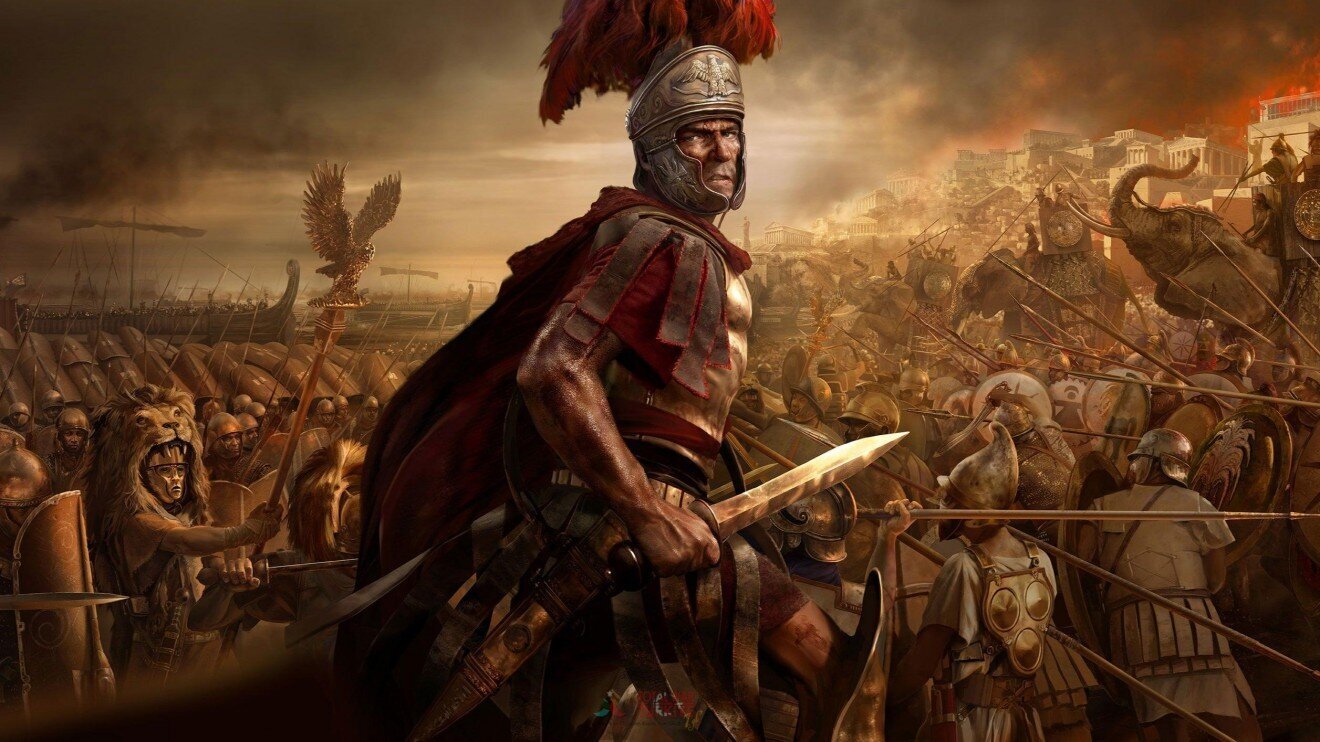
Rome’s military history is one of constant adaptation and refinement. Roman weaponry evolved over nearly 1,100 years, reflecting changing conditions, opponents, and military doctrines.
The Evolution of Arms
The irregular citizen militias of the early Republic differed enormously from the professional legions of the imperial period. The organizational evolution from phalanxes to maniples and cohorts was accompanied by significant changes in weaponry.
A crucial turning point came with the reforms of Gaius Marius at the end of the second century BC, which professionalized the army and standardized its equipment. Marius not only restructured the army but also improved the design of the pilum, adding a wooden pin that broke on impact.
Further changes came in the late empire — Diocletian’s reforms at the start of the fourth century AD once again transformed the military organization. As non-Romans from the frontiers and beyond the empire were recruited in growing numbers, the army gradually became "barbarized," which was reflected in its weaponry too. By this point, a legionary of the early Republic would hardly have recognized the "Roman" army.
Roman Pragmatism
Roman military superiority rested on pragmatism and a willingness to borrow the best from its enemies. The famous gladius was adopted from the Celtiberian tribes after the Second Punic War, when the Romans encountered highly effective Iberian warriors in Carthage’s armies.
As the historian Polybius wrote: "The Celtiberians surpass the rest of the world in the making of their swords; their points are strong and reliable, and they can strike with both edges. So the Romans abandoned their own ancestral swords after the war with Hannibal and adopted the swords of the Iberians."
The same approach was applied to other elements of equipment — chain mail (lorica hamata) was likewise borrowed from the Celtic tribes, known for their skill in metalworking.
Tactical Use
Roman weaponry was designed as a single integrated combat system. In battle, legionaries first hurled their pila to break up the enemy’s formation and immobilize opponents whose shields ended up pierced by the heavy javelins. Then, sheltering behind their scuta, the legionaries closed with the enemy and moved into close combat using their gladii.
The impression Roman weaponry made is attested by Livy’s account of the reaction of Philip V of Macedon’s army: "…when they saw the bodies hacked to pieces by the Spanish sword, with arms, shoulders, and everything else torn away, or heads severed from bodies with the necks completely cut through, or vital organs exposed, and other terrible wounds, they realized in general panic what kind of weapons, and what kind of men, they were going to have to fight."
Shields were used not only for defense but as offensive weapons too. At the Battle of Mevania in 308 BC, Roman troops, as Livy describes it, crushed the Umbrians: "They charged forward against the enemy… the fighting everywhere was done with shields rather than swords, men were knocked off their feet by the shields’ projecting bosses and blows delivered under the arms."
Mass Production
One of the Romans’ key advantages was an established system of mass-producing high-quality weapons. Unlike many ancient cultures, where weapons were often individually made and costly, the Romans built a standardized system of arms production that made it possible to quickly replace losses and arm new legions.
At the height of its power, every aspect of Roman warfare was conducted with a level of technical professionalism grounded in military science and constant refinement. It was this approach that let Rome build the most effective war machine of antiquity, capable of operating successfully in the most varied conditions — from the sands of Africa to the forests of Germania.