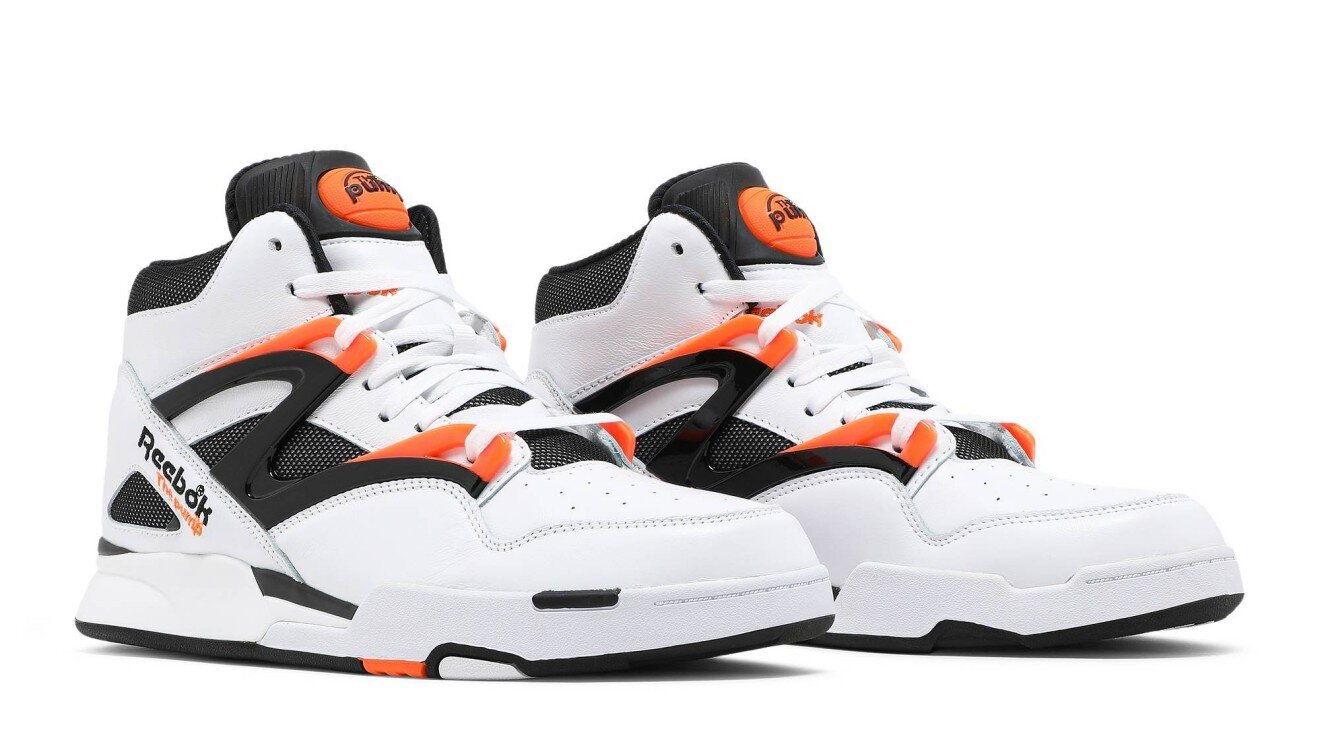
Reebok Pump sneakers were a genuine revolution in the world of athletic footwear in the late 1980s and early 1990s. This innovative product not only changed the way people thought about the functionality of athletic shoes, but became a cultural phenomenon of its time.
The history of its creation
Pump technology was developed by Reebok in collaboration with the Boston design firm Design Continuum. Work on the project began in 1987, when Reebok was looking for a way to compete with Nike's Air technology. Rather than copying its rivals, the company decided to create something fundamentally new.
The core idea behind Pump technology came from engineer Paul Litchfield and designer Paul Brown: an inflatable bladder built into the shoe, letting the wearer adjust the fit to their foot using a small pump shaped like a basketball, mounted on the shoe's tongue. Pressing the pump sent air into special chambers located in the shoe's upper, providing a snug fit and extra stability for the foot.
Fun fact: The development team originally considered using liquid instead of air to fill the chambers, but this made the shoe too heavy.
Its market debut
The first Reebok Pump model, The Pump, was released in November 1989 as a basketball shoe. The sneakers had a futuristic design and a revolutionary operating principle, immediately catching consumers' attention. A pair cost $170 — one of the most expensive athletic shoe models on the market at the time.
Despite the high price, Reebok Pumps became incredibly popular. More than 20 million pairs were sold in the first year, exceeding all of the company's expectations.
The golden age of popularity
Reebok Pump's peak popularity came in the early 1990s. Several factors contributed to this:
- Endorsement from famous athletes, such as basketball player Dominique Wilkins, who became the face of the ad campaign
- Striking advertising, including a famous commercial in which an athlete wearing Reebok Pumps jumps with such force that his head touches the basketball rim
- An expanding product line for different sports: tennis, fitness, running, and even golf
- Cultural influence from the hip-hop scene, where Reebok Pumps became a style staple
A landmark moment in Reebok Pump's history came at the 1991 NBA Slam Dunk Contest, when basketball player Dee Brown demonstratively pumped up his Pumps before his decisive jump, then performed a spectacular dunk with his eyes closed. This moment was replayed on television countless times, cementing the sneaker's status as a cult product.
Technological innovation
Over time, Pump technology evolved. Here are some of the key models and innovations:
Pump Graphlite (1990)
The first model to use carbon fiber in the midsole, making the shoe lighter and more durable.
Instapump Fury (1994)
A revolutionary design by Steven Smith, with a minimalist construction and a Pump system covering nearly the whole upper of the shoe.
Pump Omni Lite (1991)
A lightweight version of the original model, made famous by Dee Brown at the dunk contest.
Pump Bringback (2009)
An anniversary re-release of the original model, marking the 20th anniversary of Pump technology.
Cultural influence
Reebok Pumps became more than just athletic shoes — they became an important cultural symbol of their time. They were popular within hip-hop culture, appearing in music videos and films. In an era when brand-name sneakers were becoming a status symbol, the Pump held a special place thanks to its innovation and memorable design.
Pump technology had a significant impact on the athletic footwear industry, demonstrating that consumers were willing to pay a premium price for innovative features and eye-catching design. This paved the way for other experimental technologies in athletic footwear.
A modern revival
After a period of relative obscurity in the early 2000s, Reebok Pump sneakers experienced a revival of interest in the 2010s. Several factors contributed to this:
- A general trend toward retro style in fashion
- The growth of sneaker collecting as a hobby
- Strategic collaborations between Reebok and fashion brands and designers
- Re-releases of cult models, stirring nostalgia among consumers
Today, Reebok continues to release models with Pump technology, though now more as a tribute to its heritage than as a leading technological innovation. Even so, these sneakers remain a recognizable symbol of an era and an important part of the history of athletic footwear.
Legacy: The Reebok Pump remains an example of how an innovative product can transcend its own functionality and become a cultural phenomenon. Even more than 30 years after their debut, that little basketball-shaped pump remains an instantly recognizable symbol of an era when athletic shoes began to transform from mere functional items into objects of desire and collection.