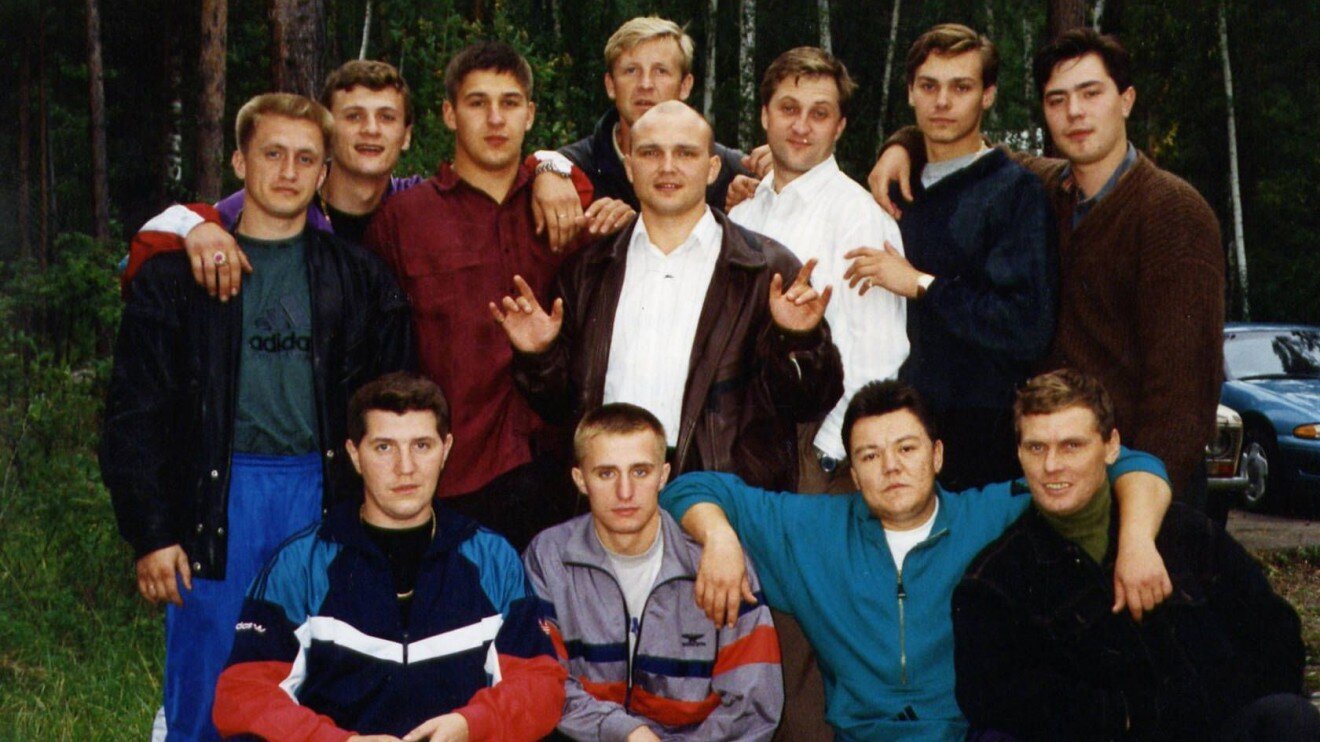
The Overall Hierarchical Structure of Moscow OPGs in 1993
Moscow’s organized criminal groups in 1993 were structures with a pronounced vertical hierarchy. The chain of command rested on principles of personal loyalty, territorial control, and a division of functions across different levels of the organization.
The Top Level
The top of the hierarchy consisted of those exercising strategic leadership over the group. Moscow’s 1993 criminal landscape had two main types of leadership: traditional thief-code leadership, and enforcement-based leadership.
Traditional thief-code leadership was held by men carrying the status of «vor v zakone» («thief-in-law»). This status was conferred at gatherings and required adherence to a specific code of rules known as «the concepts.» Thieves-in-law served as arbiters in disputes between groups, oversaw shared funds («obshchak»), and divided up spheres of influence. In 1993 Moscow, there were only a limited number of thieves-in-law, mostly of the older generation.
Enforcement-based leadership was represented by «avtoritety» («authorities») who held no thief-code status but controlled significant territory or lines of business. The authorities of 1993 were formed mainly from former athletes, veterans of the security services, and men with experience in local conflicts. Their legitimacy rested on their ability to maintain control over a territory or line of business, and on personal standing within the criminal milieu.
The top level made decisions about territorial expansion, dividing spheres of influence, entering conflicts or negotiating truces with other groups, and allocating financial flows.
The Middle Level
The middle level of the hierarchy performed management and coordination functions, and included several categories.
«Smotryashchiye» («overseers») exercised control over a given territory or line of business on behalf of a thief-in-law or an authority. An overseer for a district coordinated the activity of all criminal structures in that territory, resolved local conflicts, and monitored the flow of funds into the obshchak. An overseer for a line of business (markets, train stations, construction) performed similar functions within a given segment.
«Brigadiry» («crew bosses») ran the group’s structural subdivisions, known as brigades. A brigade was an operational unit of 5 to 30 people, specializing in a given line of activity or controlling a specific territory. The crew boss was responsible for carrying out assigned tasks, maintaining discipline within the brigade, and distributing material support among its members.
Standing at the middle level depended on length of time in the structure, personal relationships with the top level, the ability to generate financial income, and standing within the criminal milieu.
The Bottom Level
The bottom of the hierarchy was made up of the rank-and-file who directly carried out the group’s activity. This level was the most numerous and included several categories, differing in function, status, and terminology.
The bottom level provided the group’s physical presence in controlled territories, applied force when needed, collected money, provided security, and carried out one-off errands for the middle and top levels.
Belonging to the bottom level didn’t require a long track record in the criminal world, a criminal record, or any special status. The main criteria were physical build, a willingness to follow orders from higher levels, and loyalty to a specific group.
Foot Soldiers as a Category in the Hierarchy
Defining and Placing the Foot Soldiers
The term «pekhota» («foot soldiers,» or «infantry») in 1993 Moscow OPGs designated a category of people at the bottom of the hierarchy, performing the functions of rank-and-file operatives. The foot soldiers made up the numerical bulk of a group and handled its day-to-day tasks.
Their place in the hierarchy was defined by the following characteristics:
- Subordination to a crew boss or directly to an overseer. Foot soldiers had no subordinates of their own and sat at the very bottom of the chain of command.
- No authority to make strategic or tactical decisions on their own. Every action they took followed orders from higher up.
- No share in the group’s financial flows. Foot soldiers received a fixed rate of pay, set by the level above and unrelated to the volume of funds the group generated.
- No say in decisions made within the group. Their views weren’t taken into account when dividing up territory, planning operations, or resolving conflicts.
Functional Duties
Foot soldiers in 1993 Moscow OPGs carried out a broad range of functions, dictated by the group’s current needs.
Physical presence in controlled territories. Foot soldiers stationed themselves at markets, train stations, retail outlets, and construction sites, visibly demonstrating the group’s control over the area.
Muscle for the middle level’s dealings. Foot soldiers were present at meetings between crew bosses or overseers and business representatives, during the resolution of conflicts, and in negotiations with rival structures.
Collecting money from controlled sites. Some foot soldiers acted as collectors, regularly gathering the set payments from traders, entrepreneurs, and stallholders in the controlled territory.
Patrolling the territory. Foot soldiers moved through controlled areas, watching for rival groups showing up, spotting unauthorized commercial activity, and maintaining the group’s grip on the area.
Security functions. Some foot soldiers provided physical protection for middle- and top-level figures, guarded meeting places, and escorted leadership during movements.
Carrying out one-off errands. Foot soldiers delivered messages, moved objects around, and served as couriers between different levels of the hierarchy.
Formal Markers of Membership
Belonging to the foot-soldier category in 1993 Moscow OPGs was marked by certain formal signs.
Means of communication. Foot soldiers were issued a pager, which in 1993 was the main tool for operational communication in the criminal world. Having a pager signaled inclusion in the group’s command structure and readiness to act on incoming orders. A pager let a crew boss or overseer quickly summon the necessary number of foot soldiers to a given spot.
Weapons. Foot soldiers were issued edged weapons, mostly knives or shivs known in the criminal world as «zubilo» («chisels»). It was standard practice to issue one such weapon for every two foot soldiers, reflecting both the group’s frugality with resources and the foot soldiers’ status as the lowest rank. Firearms weren’t issued to foot soldiers, except for special operations carried out under the middle level’s direct oversight.
Material support. Foot soldiers received a fixed weekly payment. In 1993 Moscow groups, the standard rate was 100 U.S. dollars a week. That sum covered a basic standard of living and was an attractive prospect given the country’s economic situation. Payment was made in cash, with a crew boss overseeing its regularity.
Availability requirements. Foot soldiers were expected to remain ready to act on orders coming through their pager. Failing to respond or missing a summons was treated as a violation, carrying penalties up to expulsion from the structure.
Variations in Terminology for the Lower Ranks
Moscow’s 1993 criminal world had a range of overlapping terms for the bottom rung of an OPG’s hierarchy, each carrying its own particular shade of meaning.
Foot Soldiers (Pekhota)
The term «pekhota» was the most common designation for rank-and-file operatives within a group’s structure. It borrows from military terminology, where infantry refers to a branch of the armed forces fighting on foot and making up the bulk of an army.
In a criminal context, the term emphasized the mass, expendable nature of this category, the need for constant movement around the territory, and its subordinate place in the hierarchy. Foot soldiers had no specialization and performed the full range of bottom-level functions as current needs required.
Byki («Bulls»)
The term «byki» designated bottom-level members with an emphasis on their use of physical force. Bulls specialized in physical intimidation, escort work, and security. The term underscored the physical build of those holding this status.
In 1993 Moscow OPGs, bulls were mostly drawn from men with an athletic background: boxers, wrestlers, weightlifters, karate practitioners. Their sporting past provided the necessary skills and physical condition.
Bulls could hold slightly higher standing within the bottom level compared to ordinary foot soldiers, receive somewhat greater material support, and be called on for tasks requiring the use of force.
Boitsy («Fighters»)
The term «boitsy» was a neutral designation for bottom-level group members, without pointing to any specific function. It could be applied to the entire body of foot soldiers, bulls, and other bottom-level categories together.
The term stressed belonging to the group’s combat structure, readiness to take part in conflicts, and status as an active member of the organization, as opposed to people on its periphery.
Shesterki («Sixes»)
The term «shesterki» designated the lowest category within the bottom level. Sixes were those performing auxiliary functions: couriers, drivers, and people handling the everyday domestic needs of higher-ranking members.
The term carried a derogatory connotation and pointed to a subordinate standing. Its origin is traced to card games, where a six is the lowest-ranking card. Sixes weren’t issued weapons, their material support fell below the standard for foot soldiers, and their status within the criminal hierarchy was minimal.
Moving from the rank of six to foot soldier was seen as a promotion in status and required demonstrating loyalty, physical fitness, and a readiness to perform the full range of a foot soldier’s duties.
Torpedy («Torpedoes»)
The term «torpedy» designated a specialized category of operatives sitting at the border between the bottom and middle levels of the hierarchy. Torpedoes handled tasks requiring special preparation, elevated risk, or particular confidentiality.
In 1993 Moscow OPGs, torpedoes were drawn from men who had spent time as foot soldiers and demonstrated the necessary qualities: diligence, a cool head, and the ability to act independently within the scope of an assigned task.
Torpedoes received a one-off payment for completed tasks, exceeding the standard rate for foot soldiers. Torpedo status served as an intermediate stage of upward mobility, from foot soldier toward the middle level.
Mechanisms for Forming the Bottom Rank
Social Sources of Recruitment
The foot soldiers of Moscow’s 1993 OPGs were drawn from specific social categories with particular shared traits.
Former athletes made up a substantial share of the foot soldiers. The collapse of the Soviet system of athletic training led to a loss of funding for sports schools, the closure of training sections, and the end of stipends for athletes. People who had devoted years to athletic training possessed physical abilities and skills in demand within criminal structures, but had no other professional qualification or source of income. Groups actively recruited from contact sports: boxing, wrestling, karate, kickboxing.
Demobilized servicemen. The reduction of the armed forces, the withdrawal of troops from Eastern Europe, and the demobilization of veterans from local conflicts created a category of men with military training, weapons skills, and a psychological readiness to use violence, but no civilian trade and no prospects for employment. Groups saw this category as a source of disciplined, well-trained operatives.
Youth from troubled neighborhoods. Teenagers and young men who grew up in areas with high levels of crime, with ties to the criminal world through relatives or neighbors, saw joining a group as a path to socialization and a source of income. This category lacked special training but understood the norms of criminal subculture and was ready to perform bottom-level functions.
People in dire economic straits. The 1993 economic crisis, delayed wage payments at state enterprises, and high unemployment created a category of people for whom a weekly payment of 100 dollars was an attractive alternative to having no legal income at all. Age, education, and professional qualifications within this category varied widely.
Selection Criteria
Joining the foot-soldier ranks required meeting certain criteria applied by crew bosses when choosing candidates.
Physical build. A candidate needed the height, weight, and muscle to carry out tasks requiring force. Preference went to those with athletic training and hand-to-hand combat skills. Physical condition was assessed visually, and in some cases through a practical test in the form of sparring with existing brigade members.
Psychological readiness to use violence. A candidate had to show no psychological barriers to taking part in conflicts, the ability to act under stress, and a willingness to carry out orders involving force. This was tested through participation in minor conflicts under the supervision of experienced brigade members.
No ties to law enforcement. A candidate couldn’t have relatives in the police, the prosecutor’s office, or state security. This was checked through questioning the candidate and gathering information via informants within law enforcement structures. A criminal record wasn’t a barrier — in some cases it was seen as a plus, evidence of genuine standing in the criminal world.
A recommendation from a current group member. Preference went to candidates brought in by someone already in the brigade. The person recommending them took on responsibility for the new member’s behavior and oversaw their actions during the initial period.
Territorial ties. In territorially organized groups, preference went to those who lived in, or had long-standing ties to, the district the group controlled. Territorial belonging provided extra mechanisms of control through family and neighborhood connections.
The Induction Process
Joining the ranks of the foot soldiers didn’t require any formalized rituals or ceremonies. The process included several stages.
Meeting the crew boss. The candidate was brought by their sponsor to meet the crew boss of the brigade they were joining. The crew boss conducted an interview, covering the candidate’s background, physical capabilities, and reasons for joining.
A trial period. The candidate was assigned simple tasks under the supervision of experienced brigade members. The length of the trial period varied from a few days to a few weeks, depending on the crew boss’s assessment of the candidate’s performance.
Issuing the marks of membership. Once the trial period ended with a positive assessment, the candidate received a pager, an edged weapon, and their first weekly payment. Receiving these items meant formal inclusion among the foot soldiers.
Explaining the rules. New foot soldiers were briefed on the basic rules of the structure: the obligation to respond when paged, a ban on unauthorized action without the crew boss’s order, a ban on contact with law enforcement, and the duty to carry out every order received.
Upward Mobility
Opportunities for Advancement
The foot soldiers sat at the bottom of the hierarchy, but the system wasn’t entirely closed. Opportunities for upward movement existed, though realizing them depended on a combination of factors.
Moving into the torpedo category. A foot soldier who, over time, showed diligence, a cool head, and the ability to act independently could be tapped for special assignments. Successfully completing several such assignments secured torpedo status, which came with better pay and a modest rise in standing within the hierarchy.
Being named head of a group of foot soldiers. In large brigades numbering several dozen foot soldiers, a crew boss might appoint a senior man to coordinate a group of 5–10 people. This senior man relayed the crew boss’s orders, made sure foot soldiers showed up when paged, and handled the initial division of tasks. The position sat between foot soldier and crew boss.
Being made responsible for a stretch of territory. A foot soldier might be put in charge of a specific piece of controlled territory: several retail outlets, a single market, a construction site. This person kept regular tabs on the area, collected the set payments, resolved minor conflicts, and reported to the crew boss on the situation. This function blended the executive work of a foot soldier with the managerial functions of the middle level.
Building one’s own group. When a group expanded its controlled territory or lines of business, it needed to form new brigades. A foot soldier who showed organizational ability and assembled a group of loyal operatives could be granted crew-boss status over a new brigade. This path required a long tenure within the structure, the right connections, and a demonstrated track record.
Factors Influencing Advancement
Upward mobility depended on several factors.
Length of time in the structure. A long tenure as a foot soldier demonstrated loyalty, reliability, and the ability to follow the group’s rules. Tenure was a necessary, but not sufficient, condition for advancement.
Personal relationships with a crew boss or overseer. Building trust with middle-level figures increased the odds of being given more responsible tasks. Personal ties formed through joint assignments, demonstrations of loyalty, and involvement in resolving difficult situations.
Special skills. Having in-demand skills raised a foot soldier’s value. These included foreign languages, experience working in law enforcement or the security services, driving skill, technical knowledge, and negotiating experience.
The ability to generate income. A foot soldier who identified new sources of revenue for the group, brought new sites under its control, or proved effective at collecting the set payments raised their value to the structure.
Conduct in critical situations. How a foot soldier acted during conflicts with rival groups, during detention by law enforcement, or in situations threatening the group was an important factor in evaluation. A willingness to take responsibility, a refusal to cooperate with law enforcement, and the ability to act under risk all raised one’s standing.
Limits on Upward Mobility
Opportunities for advancement existed but were limited by structural factors.
The number of middle-level positions. The number of crew-boss and overseer slots in a group was set by the scope of territory and lines of business under its control. The middle level expanded only through territorial expansion or diversification of activity. In a stable situation, middle-level positions were filled, and openings arose only through death, arrest, conflict with the level above, or a move to another group.
Preference for those with a criminal record. When filling middle-level positions, preference went to those with prior convictions, experience in prison, and connections in the criminal world. These factors were seen as confirming genuine standing in the underworld and lowering the risk of cooperation with law enforcement.
Age limits. Advancement to the middle level usually happened between ages 25 and 35. Those under 25 were considered insufficiently experienced; those over 35 still at the foot-soldier level were seen as not having shown the qualities needed for promotion.
Education level. Middle-level positions tied to overseeing commercial activity and negotiating with businesspeople required a basic education and the ability to negotiate. A foot soldier lacking these qualities had limited prospects for advancement.
Territorial or ethnic ties. In groups organized along territorial or ethnic lines, advancement to the middle level was largely available only to those belonging to that territory or ethnic group. Outsiders might remain at the foot-soldier level, but their access to the middle level was restricted.
Alternative Trajectories
Some foot soldiers didn’t seek upward mobility within the criminal hierarchy at all, treating time in the group as a temporary stage.
Saving money for a legal business. A weekly payment of 100 dollars let someone, over months or years, accumulate a sum sufficient to open a retail stall, buy a car for private taxi work, or start some other form of small enterprise. Leaving the structure required the crew boss’s approval and was possible only if there were no outstanding conflicts or unmet obligations.
Moving under the group’s protection as a businessman. A foot soldier who opened their own venture in territory controlled by the group would shift into the category of people making regular protection payments. Prior time within the structure could secure more favorable terms, but didn’t exempt them from payment.
Migrating to another region. After a stint in Moscow’s groups, some foot soldiers moved to other regions, using the experience and connections they’d gained to join local criminal structures or form their own groups in less competitive territory.
Finding work in private security. The experience gained in a group, physical training, and skills with force were in demand at the private security firms and corporate security services springing up in 1993. Moving into legal security work required a clean break with the group and could only happen with leadership’s consent.
Risks and Obstacles
Upward mobility carried risks that limited the number of people who reached the middle level.
Conflicts within the group. One foot soldier’s advancement could be seen by others as unfair, breeding envy and sparking conflict. Internal conflicts undermined a brigade’s effectiveness and could lead to a split.
Increased scrutiny from law enforcement. Moving to the middle level meant greater responsibility and a higher likelihood of criminal prosecution. Crew bosses and overseers were priority targets for police operational units.
Conflicts with rival groups. Those holding middle-level positions became targets in conflicts between groups. Physically eliminating a crew boss or overseer was one way of weakening a rival structure.
The need to make decisions. The middle level required the ability to make decisions in difficult situations, take responsibility for subordinates’ actions, and resolve conflicts. Not every foot soldier had these qualities, and some preferred to remain in an executor’s role.
Conclusion
The foot soldiers within the structure of Moscow’s 1993 organized criminal groups made up the bottom of the hierarchy, serving as the mass of rank-and-file operatives. They were drawn from social categories that found themselves in dire economic straits, or that possessed skills in demand within the criminal world.
The foot soldiers’ place in the hierarchy was marked by subordinate status, no say in decision-making, fixed pay, and a wide range of duties carried out on the orders of higher levels. The formal markers of belonging to this rank were a means of communication (a pager), an edged weapon, and regular weekly payments.
Terminology for the bottom level included a number of overlapping designations — foot soldiers, bulls, fighters, sixes, torpedoes — each reflecting particular nuances of function and status within that lowest rung.
The system wasn’t entirely closed; mechanisms of upward mobility existed, letting some foot soldiers move up to the middle level or pursue alternative paths out of the criminal world. That mobility was limited by structural factors: the number of middle-level positions, selection criteria, and the risks that came with a rise in status.
The foot soldiers made up the numerical majority of these groups and carried out the bulk of the work needed to establish and maintain control over territories and lines of business.