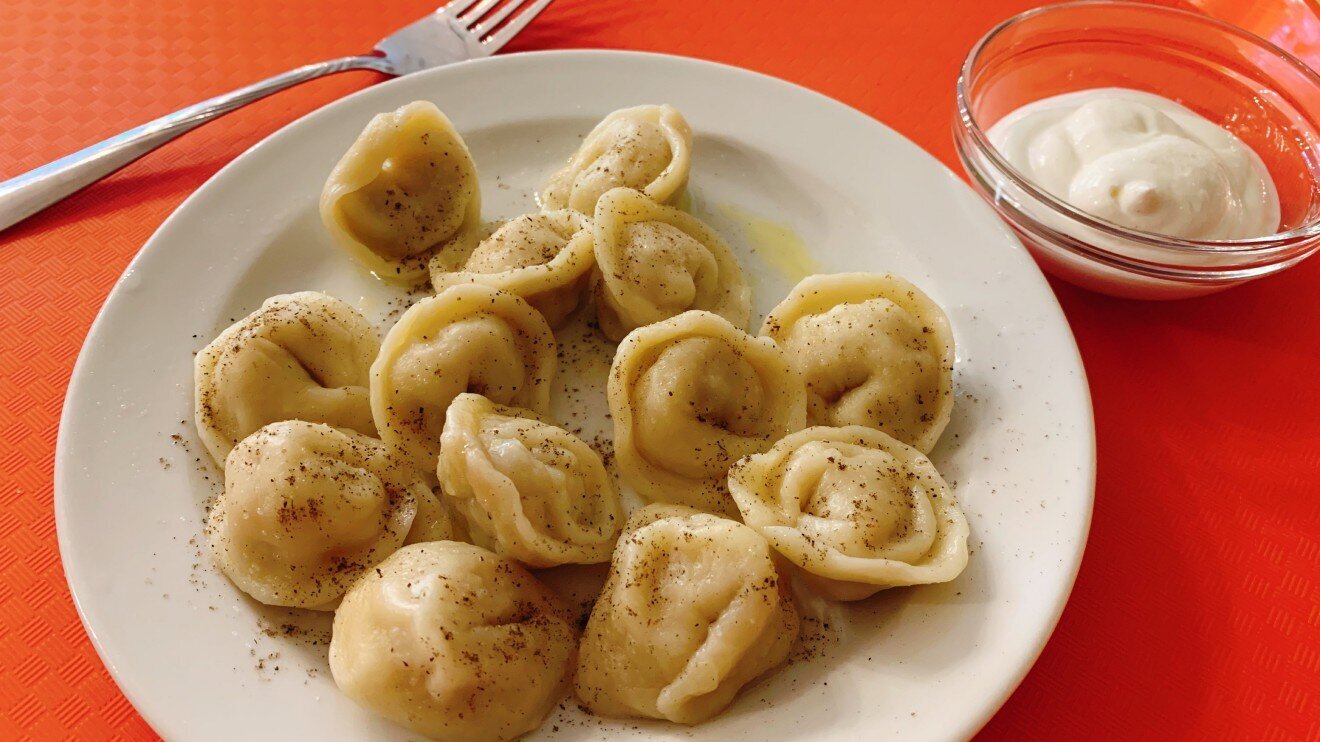
Pelmeni houses were a distinct type of Soviet public catering establishment, specializing in serving pelmeni (dumplings). In 1980s-90s Moscow, pelmeni houses were a popular spot for a quick, inexpensive bite.
In the early 1990s, an entire network of pelmeni houses operated across the capital. Especially well known were the establishments on Dzerzhinsky Street (now Bolshaya Lubyanka) near Sretensky Monastery, in Kamergersky Lane (then Art Theater Passage), on Lubyansky Passage, on Tsvetnoy Boulevard, on Sadovnicheskaya Street, and on Bolshaya Dorogomilovskaya ("Siberia").
Some pelmeni houses, such as the ones on Lubyansky Passage and in Kamergersky Lane, stayed open until two in the morning, making them popular with taxi drivers and night owls. By 1993, many of these establishments had already closed or been converted into other kinds of venues, but some were still operating.
Interior and service
Most pelmeni houses were "stand-up" establishments — food was meant to be eaten standing at tall round tables. Underneath the tabletop there was usually a small shelf for bags or other personal items. The interior was defined by simplicity and function: linoleum floors, white tile on the walls, tables made of stainless steel or plastic.
Service was minimal: a customer ordered and paid for their pelmeni at the register, got a receipt, handed it to the worker at the serving counter, and received their portion. The atmosphere was democratic — you could find people from every social stratum here, from students to taxi drivers to members of the intelligentsia.
The pelmeni-house menu
The menu at a pelmeni house was concise. The main dish — pelmeni — came in a few varieties:
- Regular pelmeni (with meat, usually beef or a beef-and-pork mix)
- "Siberian" pelmeni (larger, with onion added)
- Fish-filled pelmeni were sometimes offered as well
Pelmeni were served in portions of 15–20 pieces, in metal plates or bowls. They were prepared in advance — most often from mass-produced frozen semi-finished dumplings, stored in large red-and-white cardboard boxes.
A range of accompaniments was offered with the pelmeni:
- Sour cream
- Vinegar (plain, or with hot pepper added)
- Mustard
- Butter
- Ground black pepper
- Salt
As sides to the pelmeni, the menu often included:
- Salads (usually vinaigrette and "Stolichny" salad)
- Fruit compote or berry drinks
- Tea
- Bread (black and white)
- Pastries (pirozhki, sweet buns)
Some pelmeni houses also offered other dishes of Russian cuisine — shchi, borscht, or cutlets with mashed potatoes — but pelmeni remained their core specialty.
The pelmeni house on Herzen Street
The pelmeni house on Herzen Street (now Bolshaya Nikitskaya), mentioned by the novel's protagonist, was a well-known spot among Muscovites. Located not far from the city center, it stood out for its relatively good food quality compared to other similar establishments. It was often frequented by students from nearby universities, employees of surrounding institutions, and passersby.
By 1993, when the novel is set, many Soviet pelmeni houses were gradually declining or transforming into new kinds of venues. Some, however, kept their old format, becoming a peculiar sort of island of nostalgia for a fading era. The character's mention of "the dive on Nogin" (Nogin Square, now Slavyanskaya Square) reflects how such establishments were regarded at the time — already seen as something outdated, out of step with new trends, yet still indispensable for a quick, cheap bite to eat.
By the mid-1990s, most of Moscow's traditional pelmeni houses had been closed or reformatted into a new kind of cafe or restaurant, in keeping with changing tastes and economic realities.