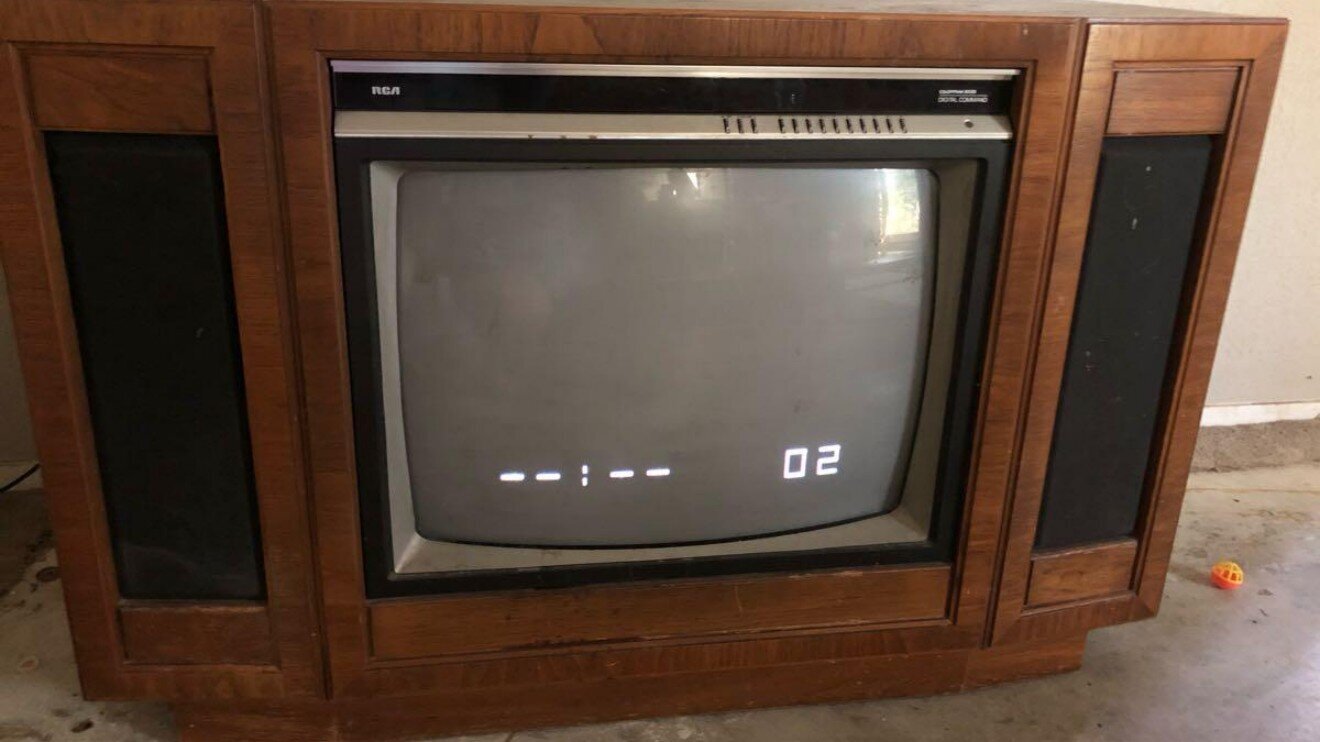
In the 1980s, while Soviet viewers made do with creaky Rubin and Elektron sets, the American market was ruled by the RCA Colortrak 2000 — the last symbol of U.S. technological supremacy before the Japanese invasion. The model became iconic not just for its quality, but because its very circuitry seemed to embody the whole philosophy of the era: brightness, excess, and a naive faith in the eternity of the analog signal.
Technical Features
The Colortrak 2000 was produced in 19-inch (for kitchens), 25-inch (the living-room standard), and rare 27-inch (for status-conscious interiors) screen sizes. Its key innovations:
- Automatic color adjustment (the Colortrak system) — did away with manually fiddling with the hues;
- Bulletproof electronics — an average service life of 10–15 years;
- A wood cabinet (on top-tier versions) — a nod to 1970s furniture aesthetics.
Why It Matters for the Novel
In one scene, Roman Peskov, a former engineer, fixes a set just like this one for a «new Russian» oligarch — and through that image, a contrast emerges between:
- American abundance (the Colortrak as a symbol of everything unattainable in the USSR);
- Post-Soviet reality (the television breaks down at the exact moment Yeltsin’s speech comes on);
- An irony of fate — by the mid-1990s, RCA is already bankrupt, and its technology is being copied by Chinese manufacturers.
«Peskov poked a screwdriver into the Colortrak’s board, realizing he wasn’t just fixing a television — he was fixing a museum piece. Somewhere in Tokyo, Sony’s engineers were laughing.»
Historical Context
By the mid-1990s, these televisions were being tossed out en masse at American dumps (replaced by «flat» Sony Trinitrons), but in Russia they were still considered «elite», thanks to:
- The thick glass of the picture tube (associated with quality);
- The absence of a «Made in China» label;
- Nostalgia for the «decadent West.»
A Note for the Site
The RCA Colortrak 2000 is mentioned in the novel as a metaphor for lost illusions. In the mid-1990s, the characters still believe that the «real thing» is a heavy American television with wood paneling, even as the world has already moved on to digital technology. Details like the automatic color-adjustment system (which didn’t even work in Russia, given differences in broadcast standards) underscore the absurdity of transplanting Western status symbols into Russian reality.
Fact: RCA’s last factory closed in 1986 — back when Roman was still in school.