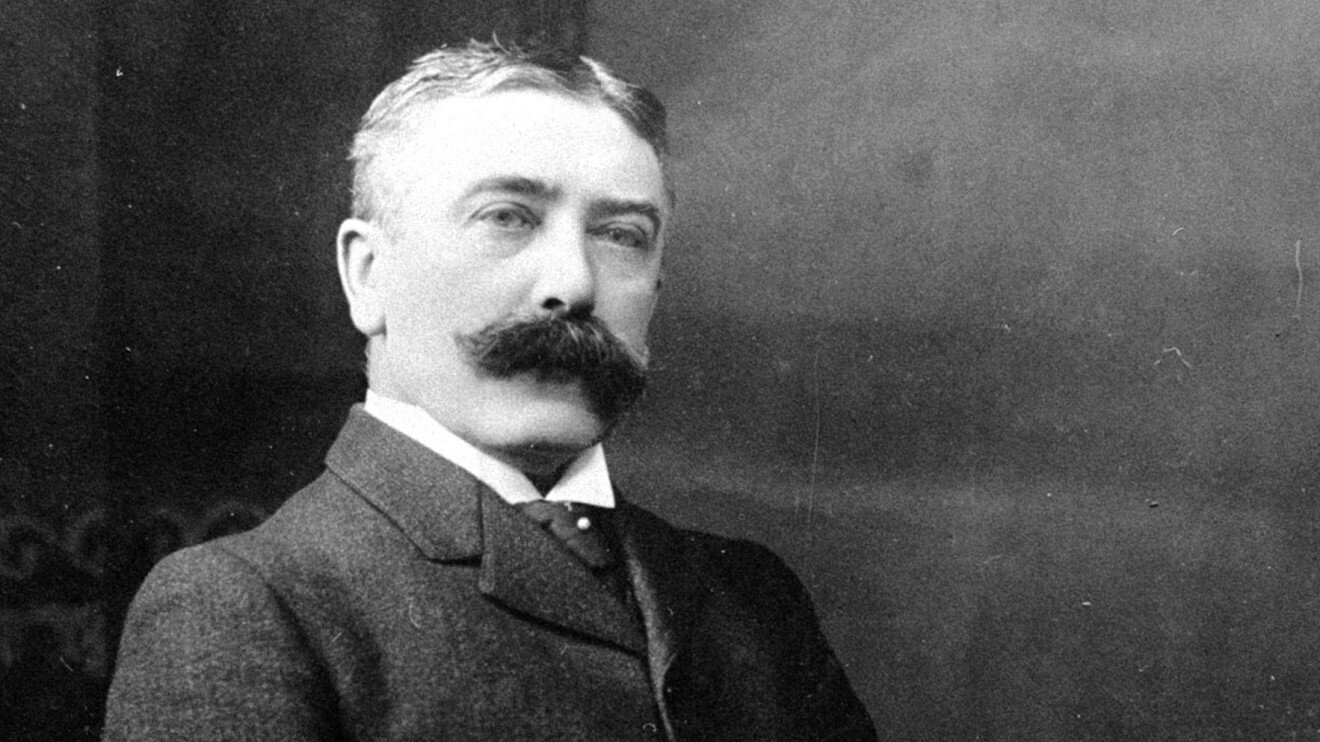
Fundamentals of structural linguistics
Structural linguistics is a school of language study that examines language as a system of interrelated elements. Its core principle: meaning arises not from individual units, but from their relationships within the system. The founder of this approach, Swiss linguist Ferdinand de Saussure (1857–1913), set synchronic analysis — the study of language at a given moment — against traditional historical linguistics.
Saussure's key concepts
- Langue vs. parole: Langue is the social system of signs; parole is its individual use.
- Synchrony vs. diachrony: Analyzing the state of a language (synchrony) takes precedence over studying its evolution (diachrony).
- Signifier and signified: A linguistic sign is the link between an acoustic image (the signifier) and a concept (the signified).
- Value: The meaning of an element is defined by its place within the system (for instance, "night" only has meaning in opposition to "day").
Influence on 20th-century scholarship
Saussure's ideas, laid out in the posthumously published "Course in General Linguistics" (1916), laid the foundation for:
- Semiotics — the study of sign systems (from road signs to myths).
- Structuralism — a method of analyzing culture through binary oppositions.
- Mathematical linguistics — the formal modeling of language.
Development in the USSR and the 1990s
In the USSR, structural linguistics developed from the 1950s onward, thanks to the work of Vyacheslav Vs. Ivanov and Vladimir Uspensky. By 1996:
- Moscow State University's Department of Structural Linguistics (founded 1960) had been renamed OTiPL (the Department of Theoretical and Applied Linguistics).
- Methods of structural analysis were being applied in computational linguistics and machine translation.
- The concept of "language as a system" had shaped the study of semantics and syntax.
Criticism and legacy
Despite criticism (for example, for ignoring social context), Saussure's ideas remain foundational to modern linguistics. His thesis on the systematic nature of language explains why a structuralist philologist (like the novel's character Kalkin) could see in language not merely words, but a network of relations — a tool for analysis, and even for business.