Stout is a dark top-fermented style of beer whose name comes from the English word «stout,» which originally meant «proud» or «brave,» and from the fourteenth century onward, «strong.» Stout gets its characteristic dark color and rich flavor from roasted malt, produced by charring barley grain.
The history of stout is inseparable from porter – a dark brown beer first mentioned in 1721. Stronger versions of porter were called «stout porter,» and over time the term «stout» came to stand on its own for dark beer. Interestingly, the word «stout» was first officially used to describe a beer by Guinness in 1820, though the company had been brewing since 1759.
The main types of stout
Dry (Irish) stout is the best-known type, represented above all by Guinness. It has an unsweetened, fairly dry flavor and is served with a nitrogen widget to create its characteristic creamy head.
Milk stout contains lactose, which doesn’t ferment with the yeast and gives the beer sweetness. In the past it was even recommended to nursing mothers as a nutritious drink.
Oatmeal stout is brewed with the addition of oats (up to 30%), lending the beer a particular smoothness and creamy texture thanks to their high protein and lipid content.
Russian imperial stout is a strong style (around 10% ABV), created in the eighteenth century specifically for export to the court of Catherine the Great. It’s known for its high density and intense flavor.
There are also chocolate stout (with notes of dark chocolate), coffee stout (made with coffee or heavily roasted malt), oyster stout, and even dessert stout, which mimics the taste of sweets.
Murphy’s Irish Stout: a «chocolate river» from Cork
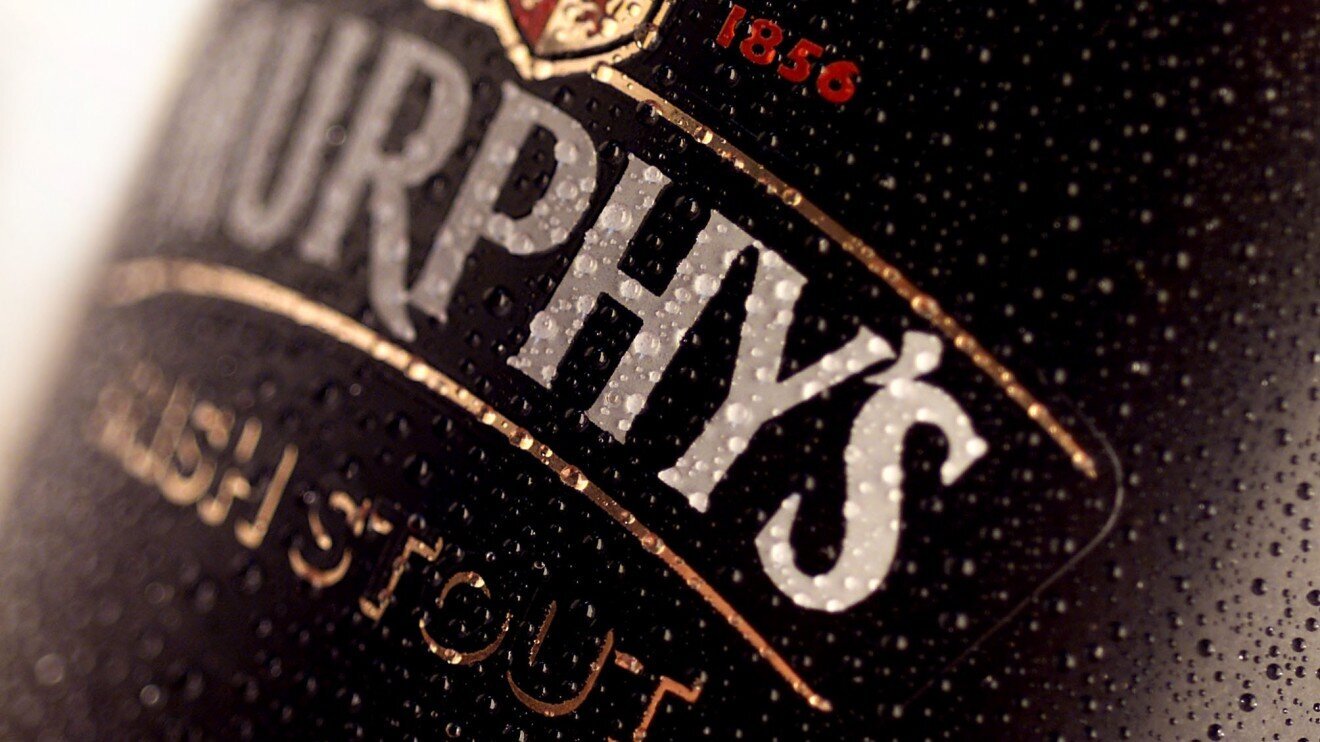
Murphy’s Irish Stout is one of the classic examples of Irish dry stout, brewed in County Cork since 1856 to the original recipe of the Murphy’s brewery. It holds a special place among Irish stouts, competing with the famous Guinness and the lesser-known Beamish.
Compared to its main rivals, Murphy’s is lighter in color and slightly sweeter in flavor. Its thick black color is often compared to «a strong cappuccino,» and its characteristic tasting notes include caramel, malt, and a pronounced coffee finish. The combination of roasted barley and caramel notes creates associations with chocolate flavor – not for nothing did one reviewer call Murphy’s «a distant relative of chocolate milk.»
Like other modern Irish stouts, canned Murphy’s comes fitted with a nitrogen widget – a special device that creates the characteristic creamy head when the can is opened. Critics note, though, that Murphy’s foam, while forming an attractive «cap,» turns out less long-lasting and dense than Guinness’s.
By the 1990s Murphy’s was available in more than seventy countries worldwide, and consumption of this stout was growing faster than other styles. In early-1990s Russia, Murphy’s was an exotic drink, a symbol of joining Western pub culture and quality beer.
The «chocolate river» metaphor in the novel’s text captures not just Murphy’s color but its soft, enveloping texture, conducive to sinking into thought – precisely the quality good stouts are prized for by lovers of contemplative time spent in pubs.