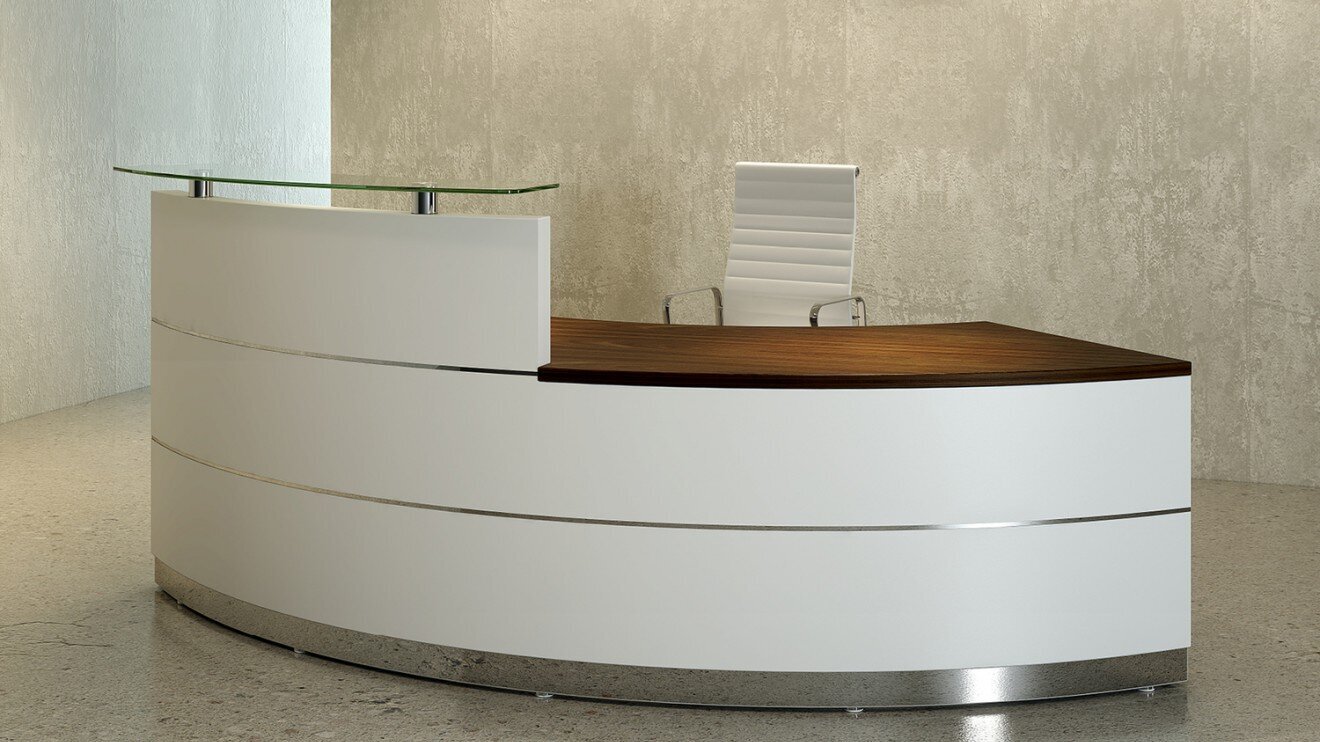
In the early 1990s, the concept of a "reception" (front desk) was an absolute novelty for Russian society. This English word entered Russian usage along with the first international hotels, foreign companies' offices, and new Russian businesses oriented toward Western standards of doing business.
From checkpoint to reception desk
In the Soviet era, access control at institutions was handled by a propuskaya (checkpoint) — typically a small booth at the entrance, staffed by a guard or attendant. Its main job was issuing passes to visitors, checking documents, and general order-keeping. The atmosphere at these checkpoints was often formal, even severe — visitors were treated more as a potential threat than as welcome guests.
The reception desk represented a fundamentally different approach. Instead of a barrier between an organization and its visitors, it was a zone of hospitality. A nicely designed counter, staffed by a smiling employee ready to help and provide information. It was a symbol of openness and customer focus — concepts that were only just starting to take root in Russian business culture.
The rise of the receptionist
The receptionist profession was also new to Russia. Unlike a Soviet checkpoint attendant, a receptionist had to do more than control access — they had to create a positive impression of the company. The requirements for candidates were unusual for the time: knowledge of foreign languages, a presentable appearance, communication skills, and computer literacy.
The receptionist became a symbol of the new era — a job that required education and polish but didn't confer high social status. Many young people, especially women with language skills, saw the position as a way into the new economy, and a chance to gain work experience in a modern setting.
Functions and significance
The reception desk in early-1990s Russian offices served many functions: greeting visitors, answering phones, scheduling meetings, handling paperwork. In hotels, receptionists handled guest check-in, room bookings, and guests' day-to-day requests.
But the reception desk's main significance was symbolic. It showed that an organization operated by international standards, valued its clients, and was willing to invest in creating a comfortable environment. For many Russians of the time, a nicely designed reception desk with polite staff was their first taste of Western business culture.
Technological novelties
New technologies arrived in Russia alongside the reception desk: multi-line phones, fax machines, the first computers. Receptionists were often the only office employees who knew how to operate this equipment, which added to their importance.
Over time, the reception desk became an inseparable part of the Russian business world. What seemed like a curiosity in 1993 became the standard for any self-respecting company within a few years. The shift from the stern checkpoint to the welcoming reception desk reflected broader changes in Russian society — a move from closedness to openness, from formality to service, from Soviet to international business culture.