Introduction
In 1998, Europe’s car-rental market was going through a period of steady growth. Rising tourism, developing transport infrastructure, and travelers’ need for mobility drove consistent demand for short-term car rentals. Despite the absence of modern online services, booking by phone, fax, or through travel agencies was widespread.
Key Features of the 1998 Car-Rental Market
Tourism Growth and Demand
The late ’90s marked a boom in tourist activity across Western Europe. Europeans increasingly traveled to neighboring countries, while foreign tourists flocked to the continent in large numbers. Renting a car became a practical solution for getting around freely.
The Rise of Phone and Fax Booking
Before the internet became widespread, most customers booked cars through:
- Phone calls to rental offices
- Fax with an order form
- A travel agency
Leading International Companies
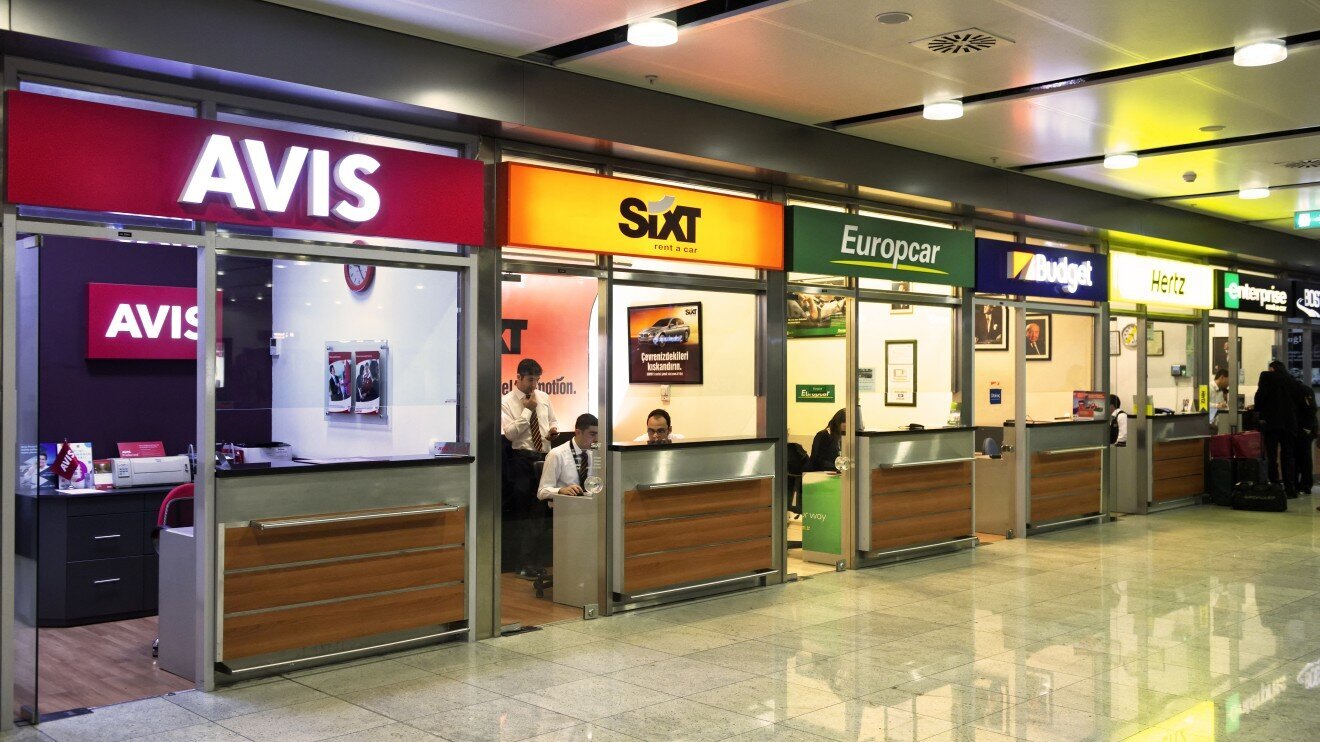
Hertz
Hertz was one of the largest companies in 1998, present at nearly every major airport and train station. It offered everything from compact cars to executive models. Its strength was reliability and consistent service standards.
Avis
The Avis network was actively expanding across Europe, offering attractive deals for business clients. Its broad branch network let customers rent a car in one city and return it in another.
Europcar
Europcar, a brand of European origin, competed actively in the French and German domestic markets. In 1998, the company offered some of the most flexible rental terms.
Budget
A more affordable alternative to Avis and Hertz. The focus was on budget-conscious tourists, offering a simple choice of cars at competitive prices.
Sixt
Sixt was a key player in the German market. The company actively pushed innovation, offering new BMW and Mercedes models, betting on quality and premium service.
National Players in Individual Countries
France: Rent A Car
A French company with a well-developed network of branches in provincial towns. It focused on rentals near train stations.
Germany: Buchbinder
A national player with competitive prices. In 1998, it actively expanded its fleet of small, compact cars.
Italy: Maggiore
A well-known Italian company with a broad fleet — from Fiat to Alfa Romeo. It drew customers in with flexible rental terms.
Spain: Goldcar
The company focused mainly on tourists arriving at the coast. Simple booking and attractive prices were its main advantages.
Pricing and Rental Terms in 1998
Car Classes and Rates
The main car classes:
- Economy (Fiat Punto, Renault Clio)
- Standard (Volkswagen Golf, Opel Astra)
- Premium (BMW 3 Series, Mercedes C-Class)
Hidden Fees and Insurance
- Theft and damage insurance — not included by default
- A fee for returning the car in a different city
- Taxes and local fees in some countries (France and Italy, for instance)
The Rental Process, Step by Step
Required Documents
- Driver’s license (an international one preferred)
- Passport
- Credit card
Payment Methods
Most companies accepted only credit cards. Cash was rarely used, and only when renting through an agency.
Return Procedures
- A full tank of gas — a mandatory condition for return
- An inspection of the car’s condition
- Signing a handover report
The Role of Travel Agencies
Package Deals
Tour operators often bundled car rental into the price of a tour package. This was convenient for tourists traveling through several cities.
Partnership Programs with Rental Companies
Agencies earned commissions for rentals booked through international networks and offered discounts for early booking.
Problems and Customer Complaints
Common Complaints
- Unclear rental terms
- Problems getting the deposit back
- The car provided not matching the booked category
Deposit-Return Problems
In 1998, customers frequently complained about delays in getting their deposit back, especially when paying with a foreign card.
Differences Between Eastern and Western Europe
Infrastructure Development
Western Europe had a dense network of branches and a large fleet of cars. Eastern Europe had a more limited selection, especially outside major cities.
Availability of International Brands
In Poland, Czechia, and Hungary in 1998, international brands were only just beginning to expand. Local companies, or branch offices of major brands at airports, were more common.
How Cars Were Booked in 1998
Fax, Phone, In-Person Visit
Before the internet era, the rental process looked like this:
- Call the rental office
- Send a fax with the request
- Receive confirmation
- Pick up the car in person at the rental location
The Rise of Online Forms
Companies like Avis and Hertz began testing website booking, but it was still a novelty, not available to everyone.
A Comparison of the Major Companies
- Hertz — expensive, but reliable
- Avis — corporate clients and international reach
- Europcar — flexible terms across Europe
- Budget — cheap, simple, convenient
- Sixt — the premium segment in Germany
How the Brands Evolved After 1998
Which Brands Disappeared
- Some local companies were absorbed (National Car Hire in the UK, for example)
Which Became Leaders
- Sixt expanded into the international market
- Europcar absorbed several brands
- Hertz continued its global expansion
Tips for Renters in 1998
How to Avoid Overpaying
- Clarify the fuel policy
- Check whether insurance is included
- Document any damage at pickup
What to Confirm in Advance
- Availability of child seats
- Whether crossing borders is allowed
- Office hours
Frequently Asked Questions
- 1. Could you rent a car without a credit card? — In most cases, no.
- 2. How much did an economy-class rental cost per day? — On average, 25 to 40 euros.
- 3. Were companies open on weekends? — Yes, but with reduced hours.
- 4. Could you cross borders in a rental car? — Yes, but with prior permission.
- 5. Was there a mileage limit? — Yes, on cheaper rates; unlimited on premium ones.
- 6. Did they provide GPS? — Very rarely — paper maps were more common.
Conclusion
By 1998, car rental in Europe was already a well-established service with clear rules and a large number of players. Despite the technological limits of the time, tourists and business travelers had a wide choice of both international and local rental companies. These players formed the foundation of a market that, with the arrival of the internet and digitalization, would become even more accessible and convenient.