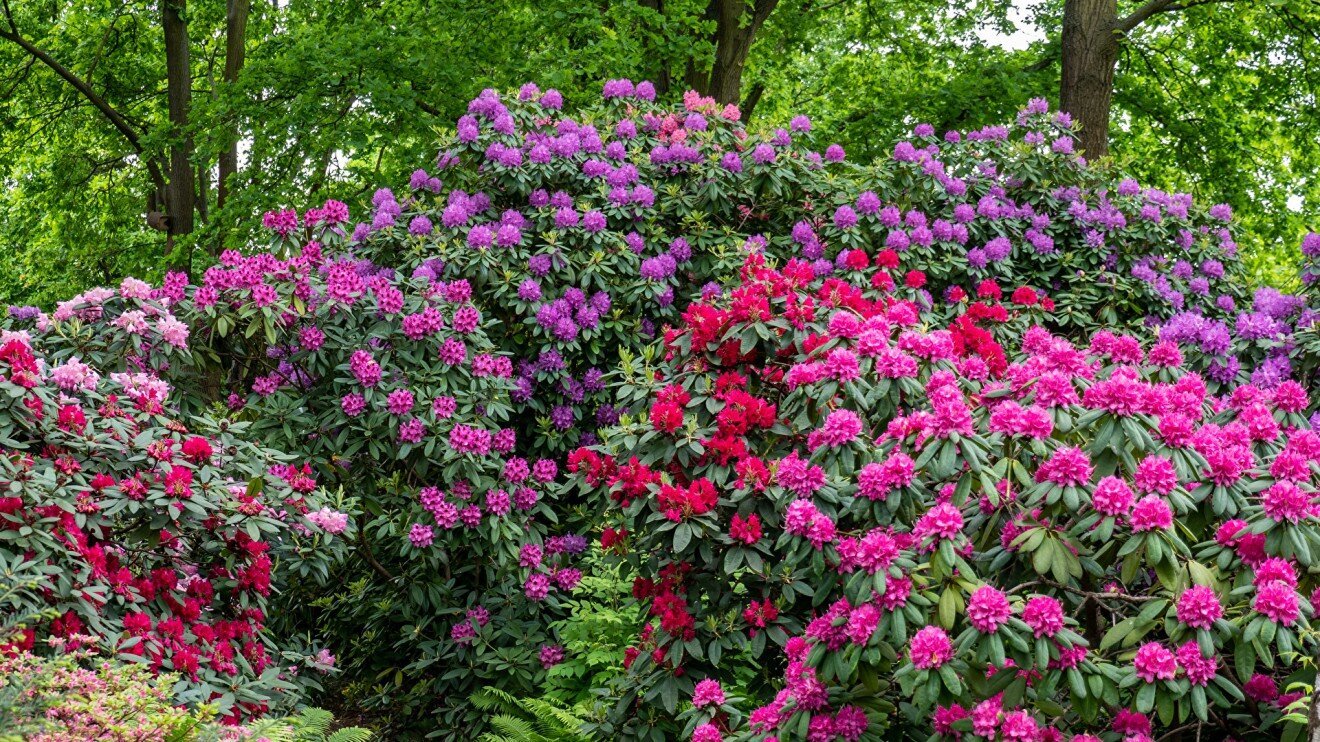
The rhododendron is one of the most striking and popular ornamental shrubs in the world. Its lush blooms and wide range of forms and shades have made it not only a garden favorite but a cultural symbol in many corners of the world.
Origin and Description
The rhododendron belongs to the heath family (Ericaceae) and includes more than 1,000 species, ranging from small shrubs to large trees. The name comes from the Greek rhodos (rose) and dendron (tree), literally «rose tree.»
- Range: Rhododendrons grow naturally across Asia, North America, and Europe, especially in mountainous regions with a humid climate.
- Leaves and flowers: Rhododendrons can be evergreen or deciduous. The flowers, the plant’s main draw, form large clusters and come in a wide range of shades: white, pink, red, purple, yellow.
Cultural Significance and Symbolism
-
In Asia:
The rhododendron is a symbol of beauty and elegance. In China, it’s called the «azalea tree» and considered a symbol of spring. In Japan, rhododendron flowers are associated with purity and calm. -
In Western Culture:
The rhododendron is popular in landscape design, and its lush blooms are seen as a symbol of luxury and wealth. -
Folklore and Mythology:
In some cultures, the rhododendron is associated with magic and mystery. In the Himalayas, for instance, there’s a belief that these plants grow in places of power and help heal the soul.
Rhododendrons in Gardening
Rhododendrons have proven a real find for gardeners, thanks to their striking appearance and ability to grow in a wide range of climates.
-
Growing Conditions:
- Soil: Acidic, rich in organic matter, and well-drained.
- Climate: Rhododendrons like humidity and cool summers.
- Light: They prefer partial shade, since direct sun can damage the leaves.
-
Popular Garden Varieties:
- Rhododendron ponticum (Caucasian rhododendron) — an evergreen shrub with purple flowers.
- Rhododendron simsii (Indian azalea) — a dwarf species suited to indoor growing.
- Rhododendron luteum (yellow rhododendron) — striking yellow flowers with a strong fragrance.
-
Use in Design:
Rhododendrons are ideal for hedges, rock gardens, or decorating the shores of ornamental ponds.
Useful Properties
The rhododendron is used not only as an ornamental plant but also in folk medicine.
-
Medicinal Properties:
The leaves of some species contain essential oils and antioxidants. Decoctions made from the leaves are used to strengthen the immune system, relieve inflammation, and treat headaches. -
Toxicity:
It’s important to remember, though, that many rhododendron species are toxic to people and animals. Honey collected from this plant’s flowers, for instance, can be toxic.
Interesting Facts
- The Himalayas are home to entire forests of rhododendrons, which turn into a genuine sea of color when they bloom.
- In the United Kingdom, rhododendrons are considered an «invasive species,» since they can crowd out native flora.
- The rhododendron is the national flower of Nepal, where it’s called «lali gurans» and appears on the country’s emblem.
Conclusion
The rhododendron is more than just a beautiful plant — it’s a symbol of natural harmony and abundance. Its bright flowers delight the eye, and its hardiness lets it thrive in all kinds of settings around the world. Even so, anyone growing this plant should keep its particular needs and care requirements in mind, to enjoy its beauty for years to come.