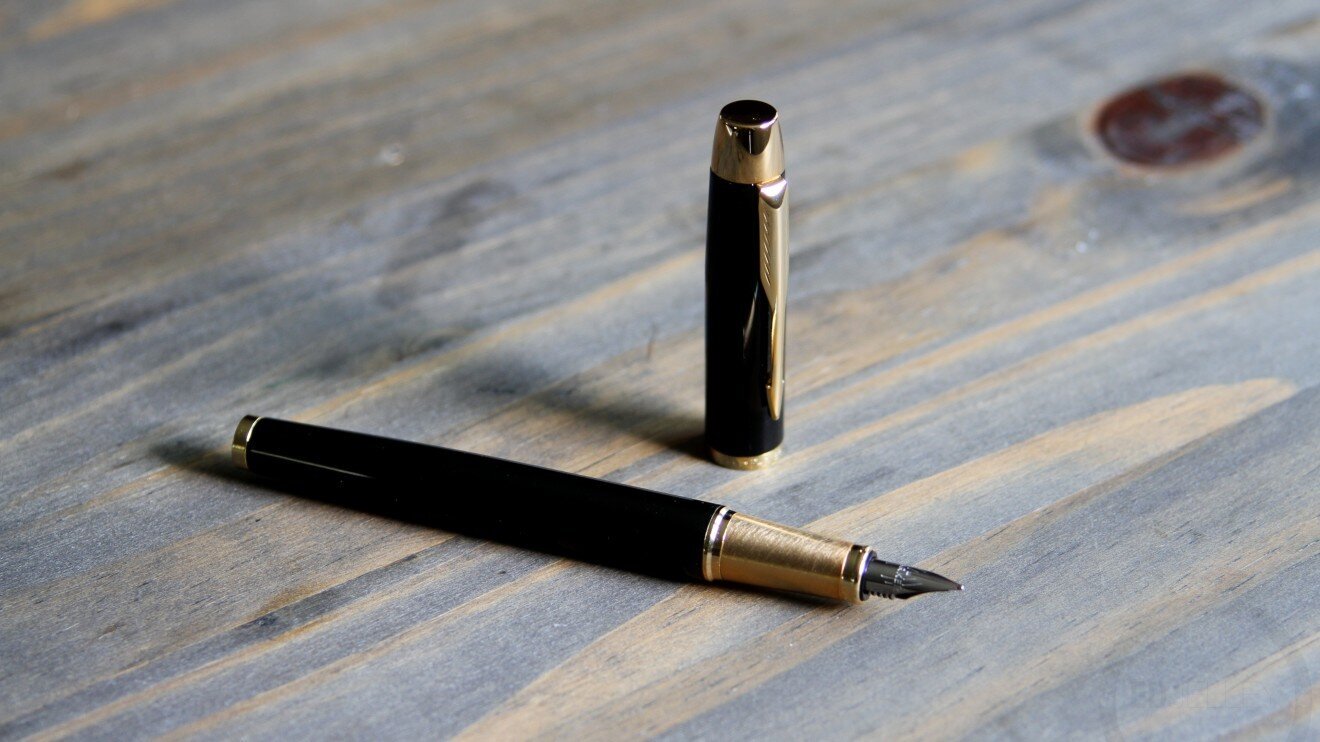
Background: Parker Pen Company is an American manufacturer of luxury writing instruments, founded in 1888. By 1997 the Parker brand had already symbolized prestige and quality in the world of writing instruments for over a century.
Company history
Parker Pen was founded in 1888 by George Safford Parker in Janesville, Wisconsin. Parker had previously worked as a sales agent for the John Holland Gold Pen Company and received his first pen-related patent in 1889.
The company’s first commercial success came in 1894 with a patent for the «Lucky Curve» ink-feed mechanism, which prevented ink from leaking by drawing it back into the pen’s body when not in use. The first successful model, the Parker Jointless, was released in 1899.
The golden era: the 1920s–1960s
From the 1920s through the 1960s, before ballpoint pens became widespread, Parker ranked first or second in the world in writing-instrument sales. In 1931 the company created the fast-drying Quink ink, which eliminated the need for blotting paper.
The company’s peak of fame came in 1941 with the release of the Parker 51 – the most popular fountain pen in history. Over thirty years of production it brought the company more than $400 million in revenue. The Parker 51 got its name in honor of the company’s 51st anniversary in 1939, when the pen’s development was completed.
The legendary Parker Jotter
In 1954 Parker released the Jotter ballpoint pen, with its original nylon body and distinctive inverted-«V» clip. The model became a genuine hit – more than 750 million Jotters have been sold over the years.
A unique feature of the Jotter was its T-Ball (from tungsten) ballpoint refill with a textured surface that significantly reduced slippage and improved writing quality on smooth paper. This technology later became widely used across the writing-instrument industry.
Parker as a status symbol
By the 1990s Parker pens had firmly established themselves as a symbol of success and status. The company produced a wide range of models – from the affordable Vector and Jotter lines to the elite Duofold and Sonnet collections.
Popular models of the 1990s
- Parker Jotter – the classic ballpoint
- Parker Vector – the affordable line
- Parker Sonnet – premium class (from 1993)
- Parker Duofold – the elite collection
- Parker 25 – a popular model until 1999
Price range
In the 1990s, Parker pens could be bought across a wide price range – from $6 for a basic Jotter to $20 and up for special editions and premium models.
Presidential pens
Parker gained particular fame through its use by American presidents. Starting with John F. Kennedy, who favored the Parker Jotter for signing bills and as gifts, every president up to Bill Clinton used Parker pens for official ceremonies.
Lyndon Johnson set a record by ordering 60,000 Parker pens in one of his first years as president. He would use up to 75 pens to sign a single major document, tracing separate parts of his name with each pen, then give all the pens away to allies and supporters along with small printed certificates.
Global manufacturing
By the 1990s Parker had manufacturing facilities around the world: in Canada, the United Kingdom, Denmark, France, Mexico, the United States, Pakistan, India, Germany, Brazil, and Argentina. This allowed the company to supply its products to nearly any corner of the globe.
Change of ownership
In 1993 Parker was acquired by the Gillette Company, which already owned the Paper Mate brand – the best-selling disposable ballpoint pen. The merger created a powerful writing-instruments corporation.
Design and quality features
Parker pens were always distinguished by several characteristic features:
- Recognizable design – elegant lines and the signature arrow-shaped clip
- Quality materials – from durable plastic to precious metals
- Reliability – many models carried a lifetime guarantee
- Status – a Parker pen was a mark of success and good taste
Context of the time
In 1997 a Parker pen truly wasn’t «that grand a gift» in cost terms – basic models were relatively inexpensive. But for provincial executives it represented significant value as a symbol of status and belonging to the business elite.
Receiving a Parker pen as a gift meant being marked out as a serious business partner – something especially important amid Russia’s still-forming market relations.
Technical features
Parker pens were renowned for their technical solutions:
Fountain pens
The «Lucky Curve» ink-feed system, gold nibs of varying widths, cartridges and piston fillers.
Ballpoint pens
T-Ball refills with a tungsten ball, improved ink flow, standardized sizes.
Rollerballs
Water-based liquid ink, smooth writing, replaceable refills.
Collectible value
Many Parker models have become collectors’ items. Especially prized are:
- Early Parker 51 models
- Limited Duofold series
- Rare Parker 25 color variants (especially with orange trim)
- Presidential sets and commemorative editions
Cultural significance
Parker pens became an inseparable part of 20th-century business culture. They symbolized:
- Professionalism and seriousness of intent
- Commitment to quality and tradition
- International status and recognition
- Education and cultural standing
- Readiness for long-term relationships
- Respect for business ethics
Conclusion
By 1997 Parker pens represented a unique blend of affordability and prestige. Despite the relatively low cost of the basic models, they retained a reputation as a quality, status-conveying accessory. For many people, especially in the provinces, receiving a Parker pen as a gift was a mark of special attention and respect.
That duality – affordability paired with retained prestige – made Parker an ideal corporate gift, capable of making an impression without requiring significant expense. That is precisely why Parker pens were so often used in business relations as a symbol of partnership and mutual respect.