Historical Background
Sevenoaks School was founded in 1432 by William Sevenoke, Lord Mayor of London and a friend of King Henry V. That makes it the second-oldest non-denominational school in the United Kingdom, after Oswestry (1407).
The school was established as a grammar school under the founder’s last will and testament, intended to give free classical education to local boys, without religious restriction. Interestingly, William Sevenoke himself was, according to historical sources, a foundling, which may have shaped his decision to create a charitable school.
Status and Reputation
By the end of the 20th century, Sevenoaks School had become one of Britain’s leading private schools. Located in the picturesque town of Sevenoaks, in the county of Kent, about 30 kilometers southeast of London, the school holds a distinctive place in the British education system.
Key Characteristics
- Co-educational for boys and girls (since 1976)
- A boarding school with day pupils as well
- Ages 11–18
- About 1,200 students
- Roughly equal numbers of boys and girls
Academic Program
One of Sevenoaks School’s distinctive features is its academic program. In 2006, it became the first major British school to switch entirely from A-levels to the International Baccalaureate (IB) program.
The decision was revolutionary for British education and underscored the school’s international orientation. The IB program is considered more demanding and comprehensive than the traditional British A-levels, making Sevenoaks graduates especially attractive to prestigious universities worldwide.
Academic Achievements
According to independent studies based on government statistics, in 2012 Sevenoaks School ranked first among all British schools by A-level and IB results, outranking such storied institutions as:
- Westminster School (17th place)
- St Paul’s School (22nd place)
- Harrow School (34th place)
- Winchester College (73rd place)
- Eton College (80th place)
Cost of Attendance
Sevenoaks School is one of the most expensive private schools in the United Kingdom. Annual boarding fees exceed £42,000, putting it within reach only of very wealthy families.
That high cost reflects not just the school’s prestige but the quality of what it offers: small classes, individual attention for every student, excellent facilities, and a wide range of extracurricular activities.
Educational Innovation
The school has long been known for its innovative approach to education. In the 1960s, under headmaster Kim Taylor, Sevenoaks pioneered «New Math» — an approach to teaching mathematics that made the subject less abstract and more engaging for students.
The school also introduced a unique tradition: every Wednesday, the last lesson of the day was set aside for sixth-form lectures, usually on current events. Speakers over the years have included prominent public figures, among them union leaders, boxer Henry Cooper, philosopher A.J. Ayer, and astronomer Patrick Moore.
An International Character
Sevenoaks School has a strongly international orientation. Children from many countries study here, including from influential political and business circles around the world.
The school is a former member of the G20 Schools group — an elite association of twenty of the world’s leading schools — underscoring its international status and prestige.
Key Facts
- Founded:
- 1432
- Location:
- Sevenoaks, Kent, England
- Type:
- Private boarding school
- Students:
- ~1,200
- Ages:
- 11–18
- Cost:
- £42,000+ per year
The School’s Status
One of the most prestigious and expensive schools in the United Kingdom, drawing children from influential families worldwide.
Notable Alumni
Over its long history, Sevenoaks School has produced many outstanding figures who’ve found success in a wide range of fields. Alumni, known as «Old Sennockians,» hold important positions in politics, business, science, the arts, and beyond.
Politics and Diplomacy
- Jonathan Evans — former Director General of MI5
- Sir Jonathan Stephens — senior civil servant
- Peter Thomson — former President of the UN General Assembly
- Christopher Prout — Baron Kingsland, Conservative politician
Science and Academia
- Simon Donaldson — mathematician, Fields Medal laureate
- Sir Jonathan Bate — academic, biographer, and critic
- Mark Brouard — professor of chemistry
- Tom McLeish — theoretical physicist
Arts and Entertainment
- Daniel Day-Lewis — actor, Academy Award winner
- Paul Greengrass — director and screenwriter
- Adam Curtis — documentary filmmaker
- Charlie Higson — comedian and writer
Business and Technology
- Thomas Heatherwick — designer
- Paddy Lowe — motorsport engineer
- Jill McDonald — former CEO of Halfords
- Sonny Mehta — former head of Alfred A. Knopf
Campus and Infrastructure
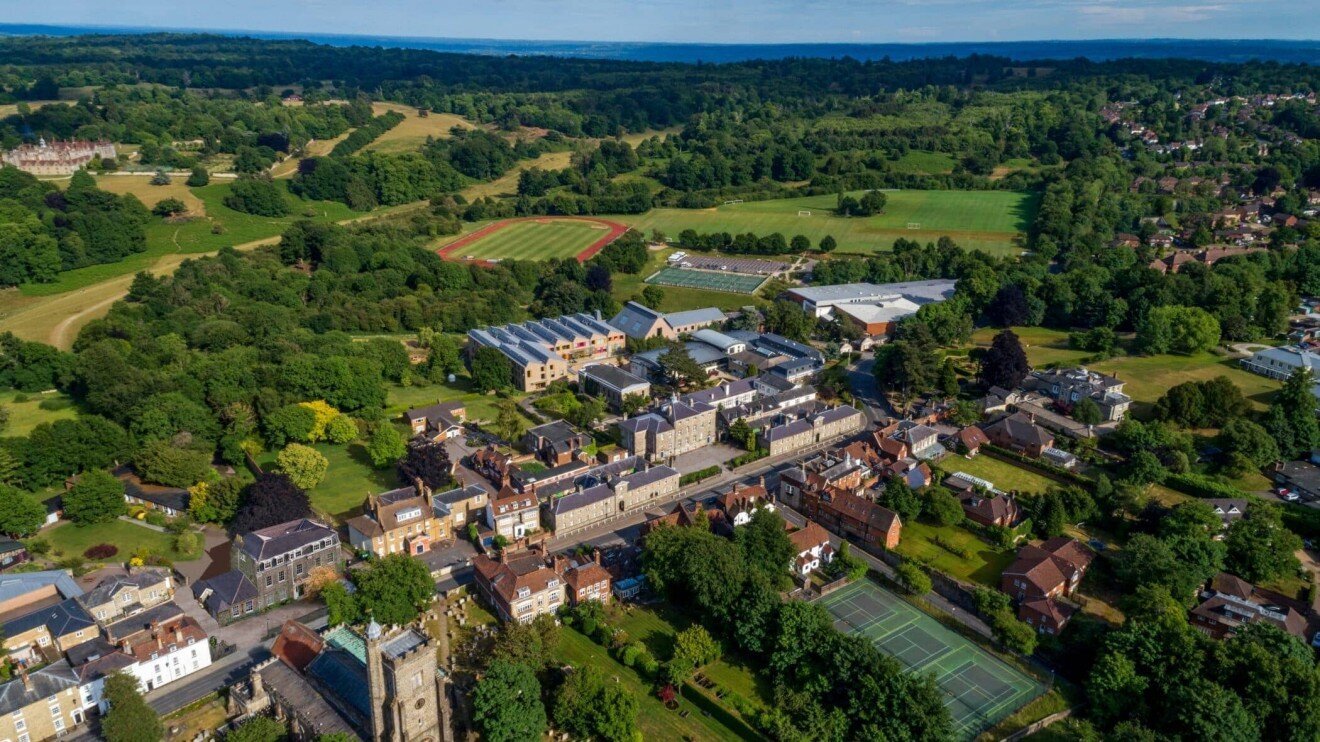
The school sits in the historic center of the town of Sevenoaks, on grounds that combine historic buildings with modern facilities. The school’s main building, Old School, was built in the early 18th century in the Palladian style, designed by Lord Burlington.
Historic Buildings
- Old School — the main 18th-century building
- Park Grange — mid-19th century
- Girls International House — around 1700
- Claridge House — 18th century
- Manor House — late 18th century
Modern Facilities
- The Space — performing arts center (2010)
- Science and technology center (2018)
- Sennocke Centre — sports complex
- Johnson’s Library
Modern Amenities
The sports center includes a pool, a tennis center, a climbing wall, squash courts, a gym, and a dance studio. The £13-million performing arts center, The Space, has won several architecture awards, including an RIBA award.
The House System and Extracurricular Life
Like many British boarding schools, Sevenoaks uses a house system to organize school life. This fosters a sense of belonging and healthy competition among students.
The school offers a broad range of extracurricular activities, including sports, art, music, drama, and various interest clubs. Special emphasis is placed on developing students’ leadership skills and international mindset.
Sports Programs
Traditional British sports (rugby, cricket, tennis), as well as modern disciplines. Many alumni have gone on to success in professional sport, including Olympic sailing champions.
Cultural Significance
Sevenoaks School has been mentioned in literature repeatedly over the centuries. The school appears in the works of various authors, from William Shakespeare (the school is believed to be the model for the «grammar school» in «Henry VI») to contemporary writers.
The school is also linked to notable historical figures. For instance, one of the first Chinese students in England, Huang Ya Dong, was educated here, underscoring the school’s long-standing international ties.
Literary Connections
The school is mentioned in the works of Daniel Defoe, John Wesley, Ian McEwan, and others. Charlie Higson used Sevenoaks as the model for a fictional boarding school in his 2010 novel «The Dead.»
Modern Challenges and Development
Like many elite schools, Sevenoaks School faces questions about educational access and social fairness. Its high fees make it accessible only to very wealthy families, sparking debate about the role of private education in modern society.
Even so, the school continues to develop and adapt to modern demands. It actively invests in new technologies and teaching methods, supports exchange programs with international partners, and strives to prepare students for the challenges of a globalized world.
Recent Achievements
As of 2025, the school ranks in the top 5 in the UK for the International Baccalaureate program and in the top 15 worldwide, confirming its academic excellence and international standing.
Sevenoaks School remains one of the most prestigious educational institutions in the United Kingdom, a symbol of elite education and a gateway to a successful career across many fields. Its graduates form part of the British and international elite, carrying forward traditions laid down nearly six centuries ago.