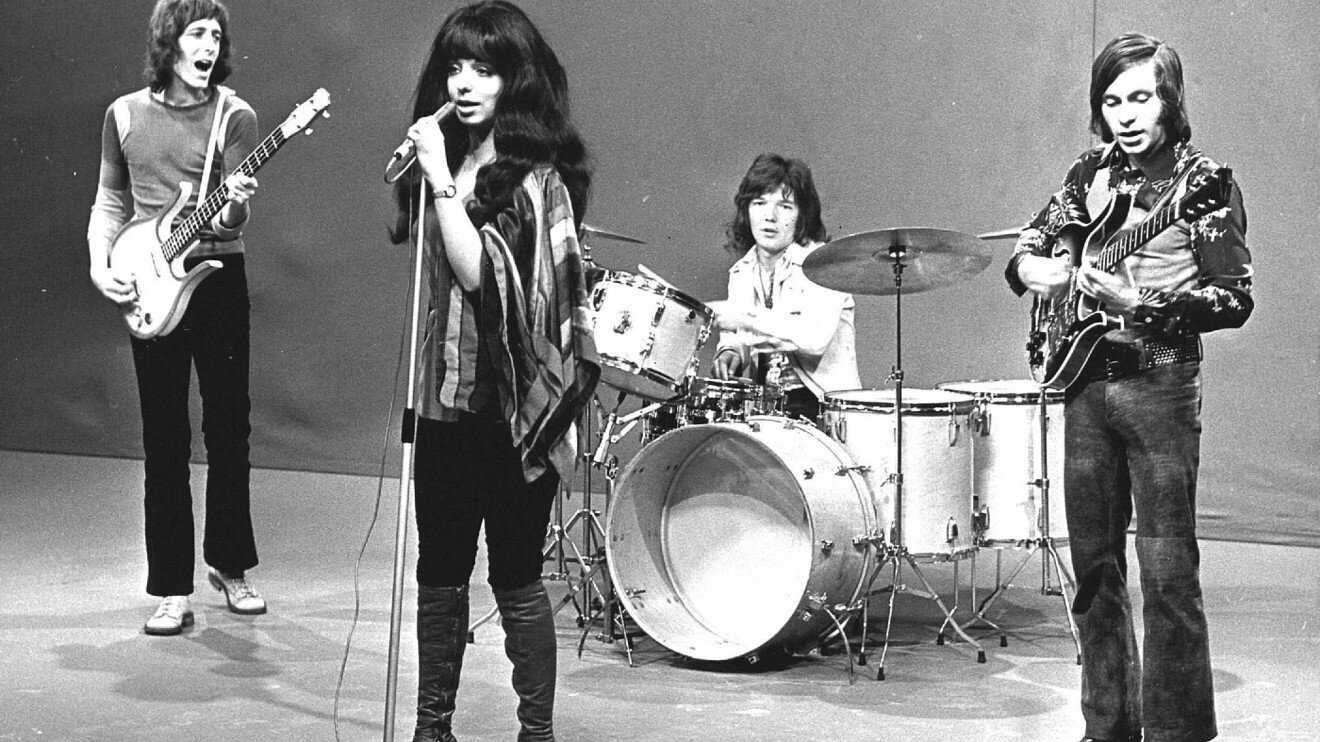
"Shizgara" was the name Soviet audiences gave to "Venus" by the Dutch rock band Shocking Blue, released in 1969. The nickname arose from the phonetic resemblance to the phrase "she’s got it" from the song’s chorus. Soviet listeners, without any knowledge of English, heard that phrase and rendered it by ear as "shizgara."
The band Shocking Blue was formed in The Hague, Netherlands, in 1967 by guitarist Robbie van Leeuwen. The group originally performed with a male vocalist, but real success came only after singer Mariska Veres joined in 1968. A petite woman with an exotic look (half Hungarian, half Roma) and a powerful voice, she became the band’s calling card.
«Venus» became an international number-one hit, topping the charts in the US, Belgium, France, Italy, Norway, and many other countries. It remains the only time a Dutch band has reached number one on the American Billboard Hot 100. More than 7.5 million copies of the single were sold worldwide.
In the USSR, the song made its way in through Western radio broadcasts and quickly became a cult favorite, despite the absence of any official release. «Shizgara» was seen as a symbol of Western culture and freedom, and its melody was recognizable even to those who understood none of the lyrics.
In 1986, the British group Bananarama recorded a cover of «Venus,» which also became a worldwide hit. In 2021, the original Shocking Blue version found new popularity after being featured in the film «Men in Black: International.»
Shocking Blue broke up in 1974 and reunited in various lineups over the years, but the band came to a final end after singer Mariska Veres died of cancer in 2006, at the age of 59.