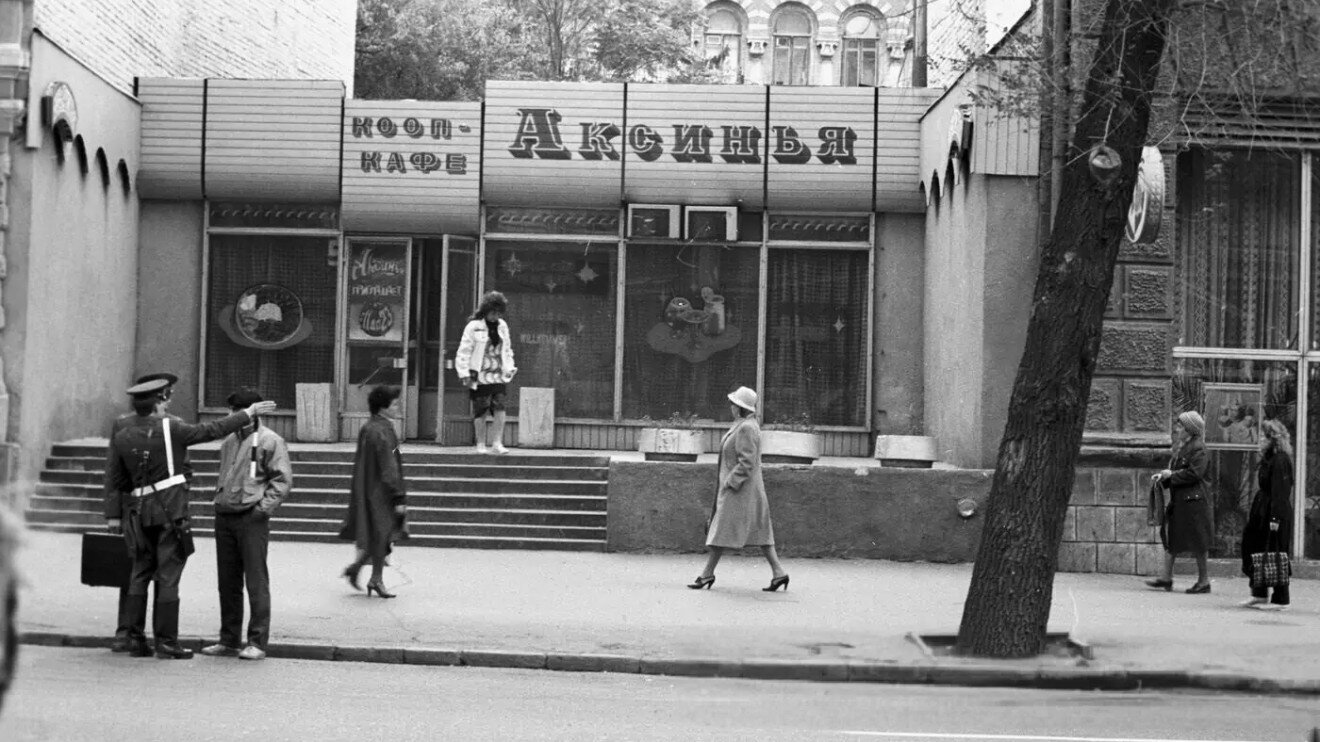
Cooperative restaurants became a vivid symbol of perestroika and the emerging free enterprise of the late-1980s to early-1990s USSR. Their appearance was directly tied to the passage of the Law "On Cooperation in the USSR" on May 26, 1988, which, for the first time in decades, legalized private entrepreneurial activity.
For Soviet citizens accustomed to dreary canteens and a shortage of quality food, cooperative restaurants seemed like a genuine revelation. In these establishments one could try dishes unfamiliar to the average Soviet person, enjoy a level of service and atmosphere radically different from the institutional feel of state-run dining establishments.
A special place in the history of the cooperative movement belongs to the restaurant "Kropotkinskaya, 36," which opened in 1987 in central Moscow at the address of the same name. It was one of the capital’s first cooperative restaurants, appearing even before the official passage of the Law on Cooperation, as part of an experimental program. Its founder was Andrei Fyodorov, a former chef at the elite restaurant "Praga," who decided to strike out on his own.
"Kropotkinskaya, 36" quickly won popularity among Muscovites and visitors to the capital. The restaurant stood out for its sophisticated menu, featuring European dishes unavailable at ordinary Soviet establishments. The interior struck visitors with the freshness of its design and its atmosphere of Western comfort.
Prices at cooperative restaurants were significantly higher than at state canteens and cafes, putting them out of reach for most Soviet citizens. The average check at such an establishment could equal a rank-and-file engineer’s or teacher’s monthly salary. Even so, cooperative restaurants thrived — they were frequented by members of the emerging entrepreneurial class, the creative intelligentsia, foreigners, and anyone who wanted to feel part of the new era.
For many patrons, cooperative restaurants became more than just a place to eat — they were a symbol of the changes sweeping the country. New ideas were discussed there, business connections were made, and a culture of business took shape that was foreign to the Soviet mentality.
Owners of such establishments faced no shortage of difficulties: a lack of quality ingredients, bureaucratic obstacles, extortion by racketeers, and distrust from the authorities. Even so, cooperative restaurants kept opening and operating, growing ever more popular.
By the early 1990s, Moscow already had more than a hundred cooperative restaurants, and the country as a whole had several thousand. They became an important part of the emerging market economy and a harbinger of changes yet to come.
After the collapse of the USSR in 1991, the cooperative movement matured into full-fledged private business. Many cooperative restaurants transformed into modern food-service enterprises or closed, unable to withstand the competition. Even so, their role in transforming the gastronomic culture and entrepreneurial mindset of citizens of the former USSR is hard to overstate.
Today, cooperative restaurants are remembered with nostalgia as a symbol of a pivotal era, when the country stood on the threshold of sweeping change, and people felt, for the first time in a long while, the taste of freedom — culinary freedom included.