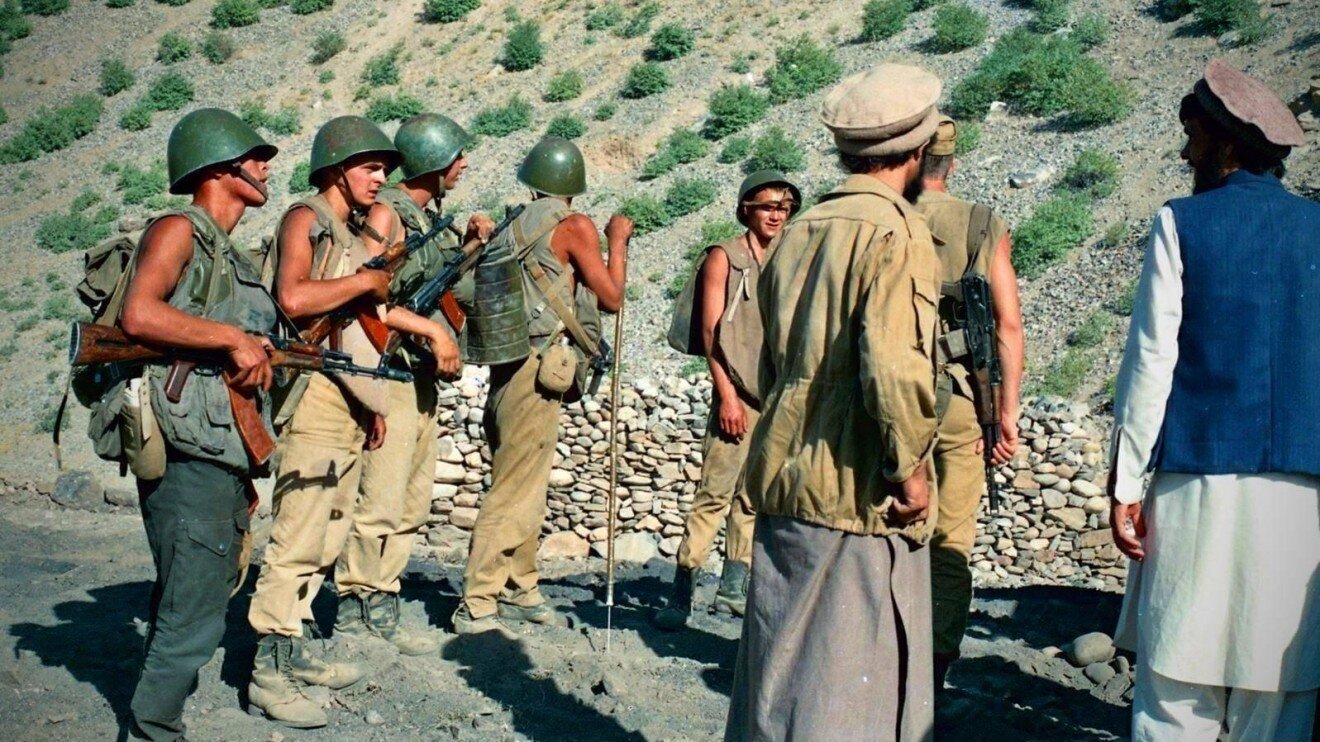
«Shuravi» is a term used in Afghanistan to refer to citizens of the Soviet Union, as well as Soviet military personnel who were in the country during the occupation from 1979 to 1989. The word became widely known in the context of the Afghan War and is still associated with that period of history.
Origin of the Term
The word «shuravi» comes from the Persian word shura, meaning «council,» linked to the term «Soviet Union.» The suffix «-vi» is used in Dari and Pashto to form adjectives denoting belonging to something. So «shuravi» literally means «Soviet.»
The term quickly entered common use among Afghans to refer to anyone representing the USSR — from soldiers and specialists to engineers and doctors working under Soviet aid programs.
Why Did the Term Catch On?
- Simplicity and versatility: It was easier for Afghans to use a short, memorable word than to say the full name «Soviet Union» or address USSR citizens by nationality (Russian, Ukrainian, Kazakh, and so on).
- The political and military context: After Soviet troops entered in 1979, the Afghan population associated all USSR citizens with the military presence, making «shuravi» an everyday term.
- Informal spread: Soviet Army soldiers and the Afghan interpreters who accompanied them also used the word, cementing it in everyday use.
How the Term "Shuravi" Was Used
In official speech
In official documents or statements from the Afghan government, the term «shuravi» was rarely used. Instead, they referred to «allied forces» or the «USSR alliance.» But in informal conversation, Afghan officials, staff at Soviet institutions, and even Soviet specialists themselves used the word freely.
In everyday life
- To refer to Soviet Army soldiers, whom Afghans saw in cities and villages.
- For USSR civilian specialists: engineers, doctors, teachers involved in Soviet projects in Afghanistan.
- Sometimes the word carried a negative tone, especially in regions where active fighting bred resentment among locals.
«Shuravi» and Attitudes Toward the USSR
A Friendly Perception
Before 1979, relations between the USSR and Afghanistan were mostly friendly. The Soviet Union actively helped develop infrastructure, building roads, hospitals, and schools. Many Afghans, especially in large cities, considered «shuravi» friends and helpers.
Shifting Attitudes During the War
With the start of the war, the term «shuravi» came to be seen differently:
- In circles loyal to the Democratic Republic of Afghanistan’s government, the word kept a neutral or even positive tone.
- In provinces where fighting raged between the mujahideen and Soviet forces, «shuravi» became associated with occupiers, and the word took on a negative tone.
The Image of "Shuravi" in Afghan Culture
The term «shuravi» entered Afghan folklore, literature, and wartime storytelling. It became a symbol of a complicated period, when the Soviet Union left a lasting mark on the country’s history.
- Afghan stories often mention various episodes of contact with «shuravi» — from military clashes to everyday scenes, like trading food or medicine.
- In modern Afghanistan, the term retains its historical coloring and is used to refer to people and events tied to the Soviet presence.
Conclusion
The term «shuravi» emerged as a derivative of the word «Soviet» and became a symbol of the era of the Soviet-Afghan War. It carries the memory of a complicated relationship between the USSR and Afghanistan, from friendship and cooperation to conflict and confrontation. Even decades later, the word «shuravi» remains an important part of Afghan historical memory, a reminder of a time when the Soviet Union played a pivotal role in the country’s fate.