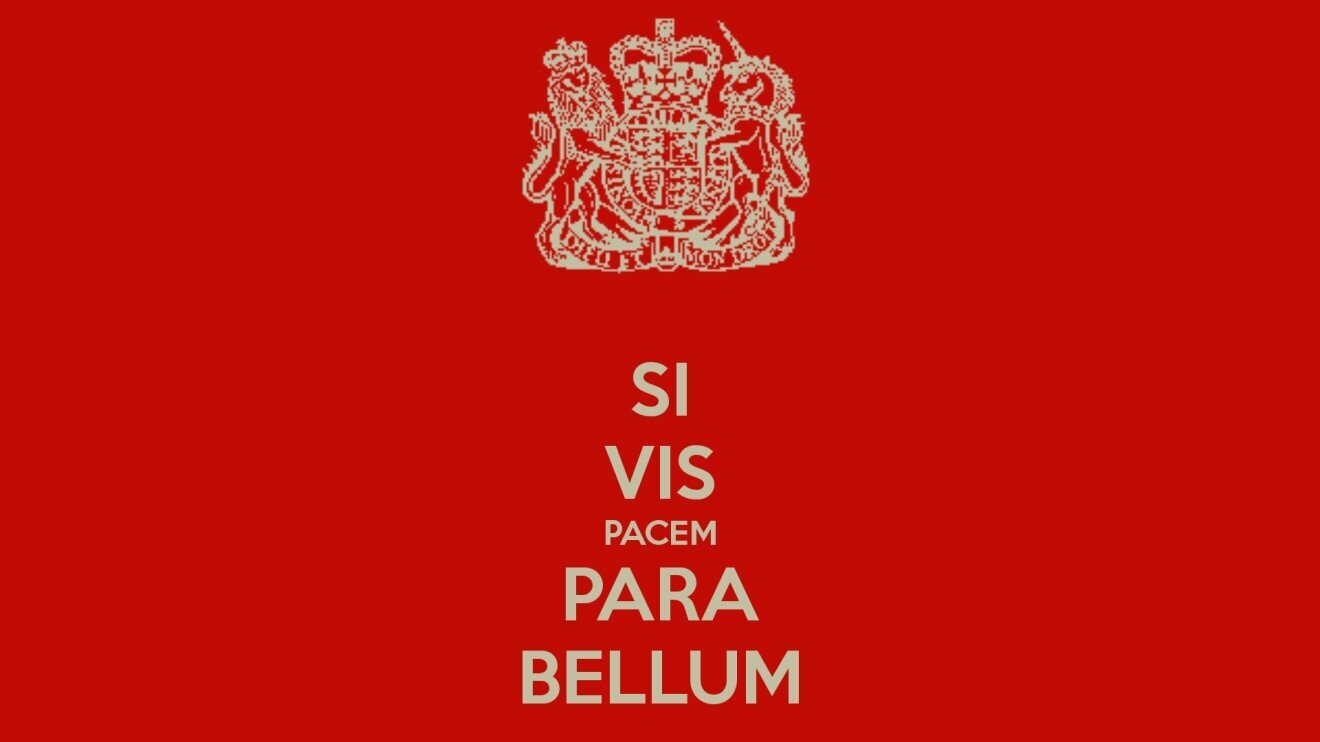
The Latin maxim Si vis pacem, para bellum («if you want peace, prepare for war») is one of the best-known military-philosophical maxims, one that has shaped approaches to national security and geopolitics for centuries.
Origin and historical background
The phrase belongs to the Roman military writer Vegetius, who in his fifth-century treatise De Re Militari («A Summary of Military Matters») formulated the idea this way: «Let him therefore who desires peace prepare for war; let him who wants victory train his soldiers diligently; let him who wishes for a favorable outcome fight relying on skill and knowledge, not on chance.»
But the roots of the idea reach further back still. A similar thought was voiced as early as the fourth century BC by Epaminondas, the famed Theban general who crushed the Spartans at Leuctra. According to Cornelius Nepos, Epaminondas said: «Peace is born of war, and so those who wish to enjoy a lasting peace must harden themselves in battle.»
The philosophical core of the idea
Si vis pacem, para bellum captures a paradoxical but logically sound idea: the best way to avoid war is to be ready for it. The concept rests on an understanding of human nature and the mechanics of international relations:
- The psychological angle: a would-be aggressor will think twice before attacking a well-prepared opponent
- Strategic balance: military strength creates a balance of power that heads off conflict
- Diplomatic leverage: a strong military strengthens one’s hand at the negotiating table
The Russian context of the 1990s
In the context of the novel, set in 1996, the use of this Latin phrase is especially fitting. Russia was living through a period of profound political and economic upheaval. The «wild nineties» were marked by:
- A weakened state and a weakened law-enforcement system
- The growth of organized crime
- The redistribution of property and the «roofing» (racketeering protection) of business
- The need for entrepreneurs to provide for their own security
Under these conditions, the principle of «if you want peace, prepare for war» took on a very literal meaning for Russian businessmen, who found themselves forced to build their own private security services.
The connection to the «Parabellum»
The mention of the parabellum in the text is no accident – it’s a direct reference to the famous Luger P08 pistol, which took the name «Parabellum» from the last words of the Latin phrase, para bellum («prepare for war»). Developed in the early twentieth century, this pistol became a symbol of German military might and engineering excellence.
The 9×19mm Parabellum cartridge, created for this weapon, became the standard NATO sidearm round after the Second World War – a symbolic confirmation of the ancient Roman maxim’s continued relevance in the modern world.
Modern relevance
Si vis pacem, para bellum remains relevant today, serving as the motto of many military organizations, including the British Royal Navy, the Norwegian Military Academy, and the French École Spéciale Militaire.
In its literary context here, the use of this Latin maxim underscores the character’s education and his grasp of the fact that in the world of 1990s business, as in high politics, the eternal laws of force and survival still hold.