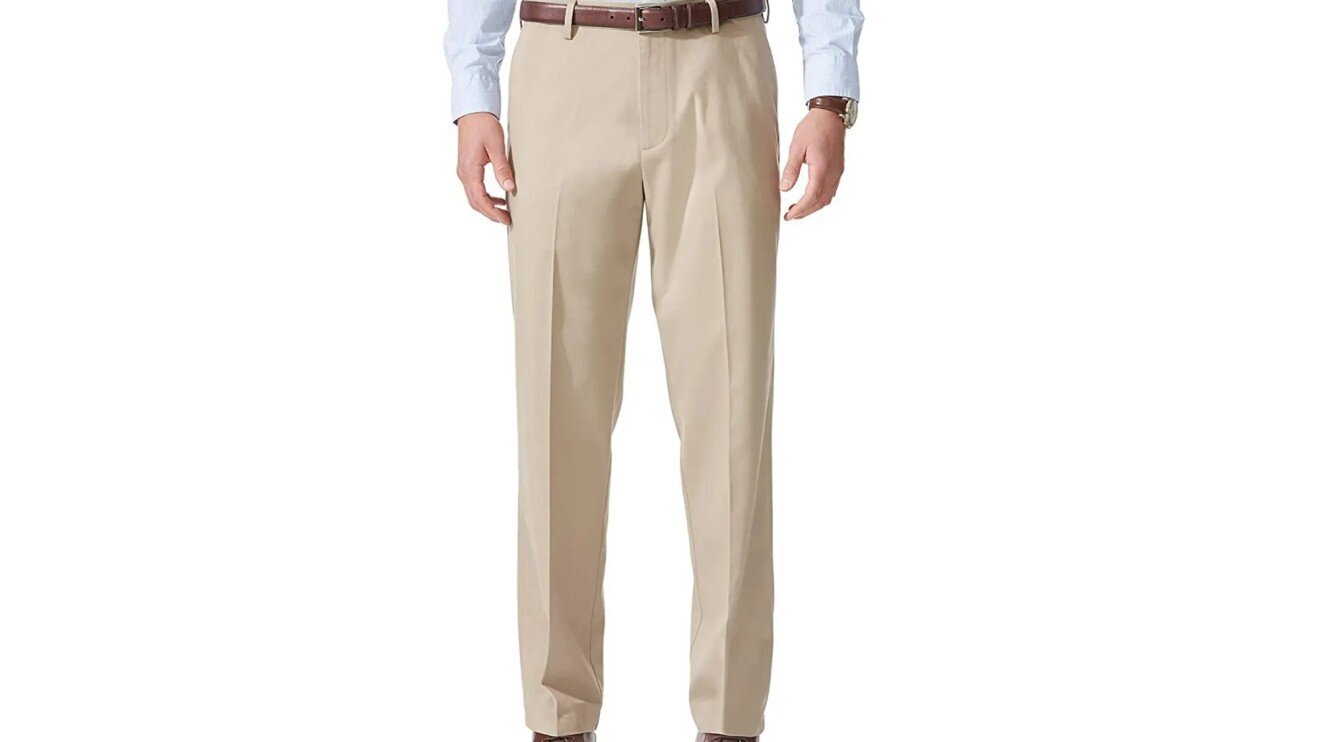
Slacks (from the English slacks) were a type of men’s trousers that, in the 1990s, were associated with elegance and a business style, especially popular among the new middle class of post-Soviet Russia.
Definition and Features
Slacks are a type of trousers characterized by a looser cut than classic formal trousers, while still keeping an elegant look. Unlike jeans or sweatpants, slacks are made from higher-quality materials — wool, cotton blended with synthetic fibers, linen, or mixed fabrics.
Differences from Other Types of Trousers
Slacks vs. Classic Trousers
- Cut: Slacks have a looser cut through the hips and waist
- Fit: Less form-fitting, comfortable for everyday wear
- Style: Less formal, suited to business casual
Slacks vs. Jeans
- Material: Made from more «refined» fabrics
- Purpose: Better suited to office wear and semi-formal events
- Care: Require more delicate handling
Slacks in the Context of 1990s Russia
In the early 1990s, slacks became a symbol of Western lifestyle and financial well-being. For many Russians only just becoming acquainted with world fashion after decades of shortages, buying a quality pair of slacks was a sign of belonging to a new social class — entrepreneurs, businessmen, people connected to foreign business.
«Three pairs of slacks, light, loose-cut, just right for summer» — a purchase like that in 1993 spoke not only to good taste but to the buyer’s financial standing.
Features of Summer Slacks
The summer slacks mentioned in the text had their own characteristic features:
- Fabric: Light materials — linen, cotton, blended fabrics with added viscose
- Color palette: Light tones — beige, light gray, white, sand
- Cut: Loose, unrestrictive, well-ventilated
- Details: Often unlined, with a minimal number of seams
Terminology
The terms differ across English-speaking countries:
- US and Canada: «slacks» for casual trousers, «trousers» for more formal wear
- United Kingdom: «trousers» as the general term, «slacks» used less often
- Australia: both terms are used interchangeably
This note is based on historical sources and reflects the realities of fashion and social change in early-1990s Russia.