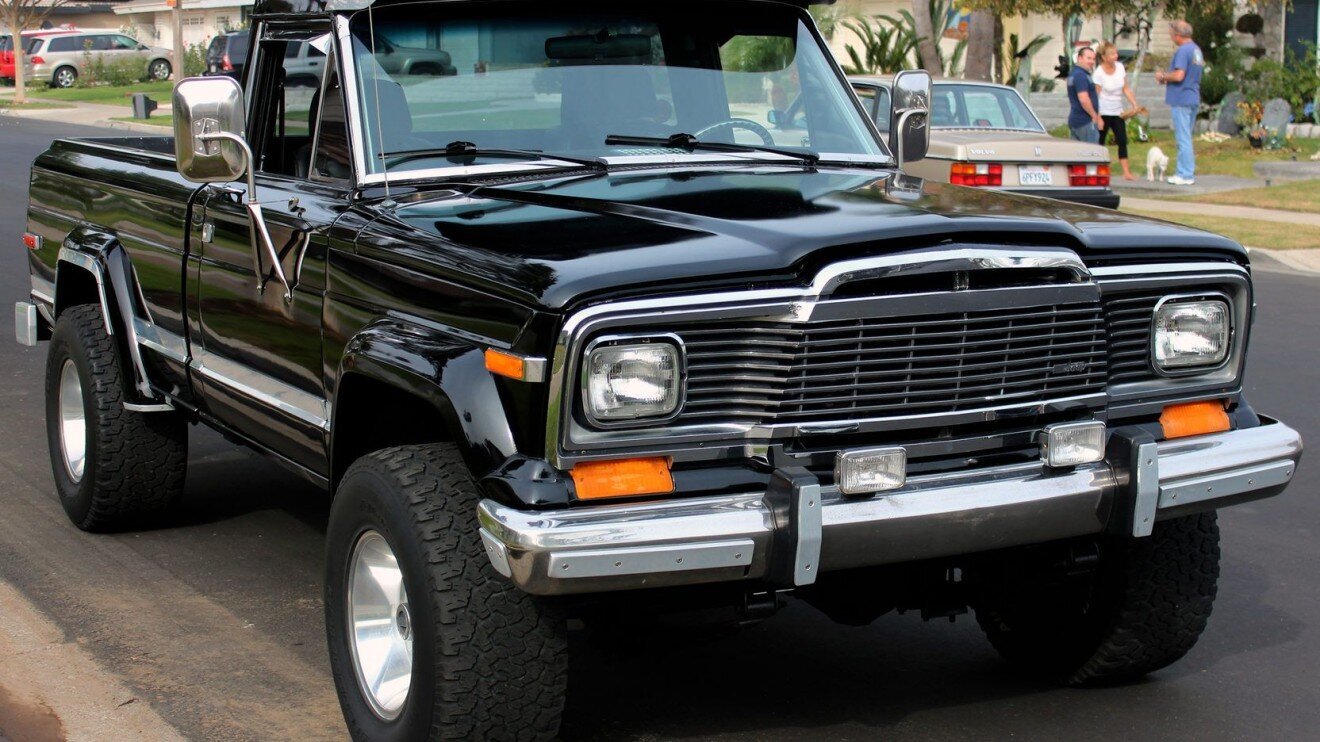
The reference to SUVs and pickup trucks as the preferred vehicles of American drivers accurately reflects U.S. car culture in the mid-1990s, when the novel is set.
What Is an SUV?
SUV (Sport Utility Vehicle) is a vehicle type descended from off-roaders but used mainly for city driving. The term came into common use starting in 1982, and the abbreviation stuck by 1988.
Under official U.S. classification, SUVs fall into the «light truck» category alongside pickups and minivans — large vehicles with raised ground clearance, built for rough terrain but in practice mostly driven around town.
Pickups in American Culture
A pickup truck is a light truck with an open cargo bed. American production began more than a century ago, and pickups quickly became a symbol of American individualism and entrepreneurship.
Ford, Dodge, and Chevrolet launched mass production of pickups back in the 1910s. Until the 1970s they were seen as strictly utilitarian vehicles for farmers and small business, but gradually entered mass culture alongside blue jeans and country music.
Why Americans Prefer SUVs and Pickups
Historical Reasons
America was, from the start, a country of individualists and entrepreneurs. Practical vehicles with cargo capacity suited farmers, traders, and small businessmen perfectly. Generations of Americans grew up seeing these vehicles everywhere, which made them part of the national identity.
Practical Considerations
High American mobility, a well-developed road network, and a favorable climate all favor large vehicles. Full-size pickups and SUVs can carry heavy loads, tow trailers, and haul RVs. For suburban residents, they’re indispensable for moves and trips.
Availability and Infrastructure
Over a century of development, the U.S. pickup and SUV market matured into something settled: a wide model range, developed road infrastructure, and easy parking make owning a big vehicle painless. Americans often buy such vehicles not only for practical reasons but as a status symbol.
The Situation in Russia
Unlike in the U.S., pickups never caught on widely in Russia. Contributing factors included a harsh climate (rear-wheel-drive pickups handle poorly in winter), a tradition of collective farming, and the dominance of full-fledged trucks like the GAZelle in the small-commercial-transport niche.