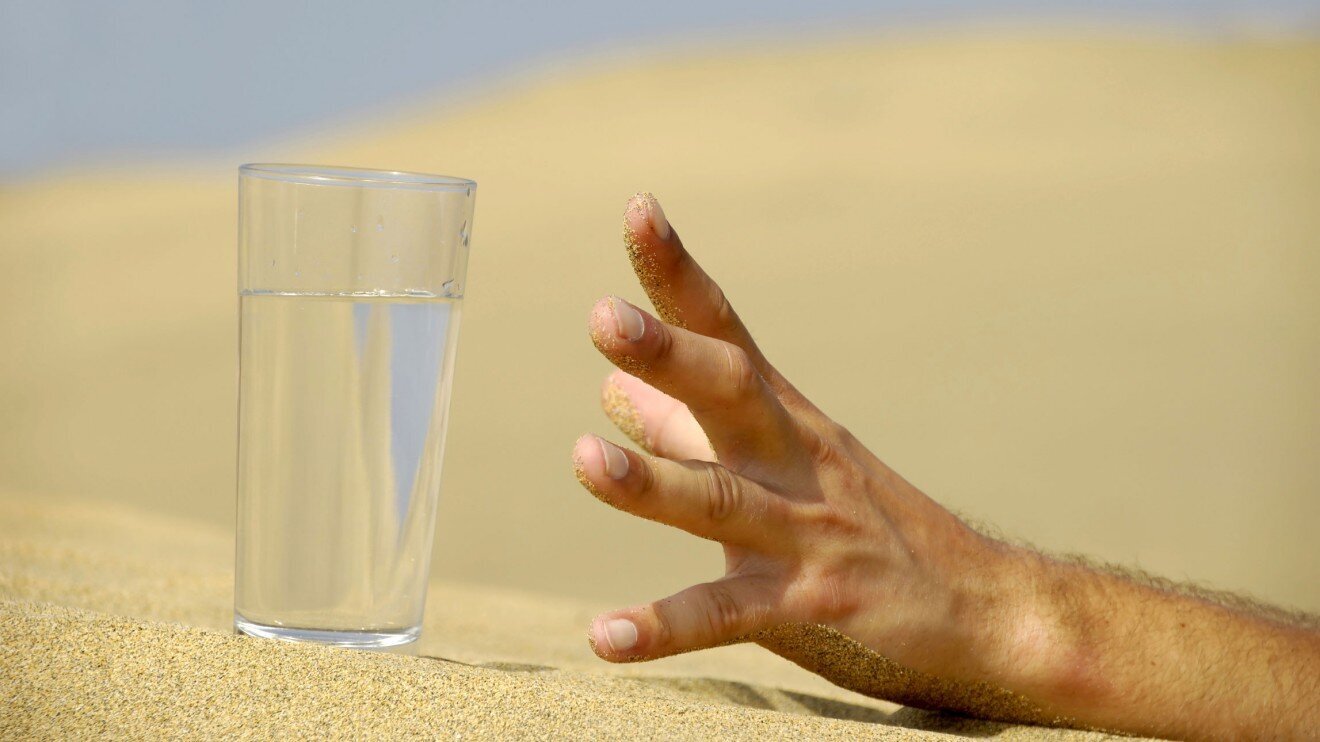
Death from thirst is a condition caused by severe dehydration of the body. Dehydration disrupts the work of vital body systems, which ultimately leads to death. Let’s look at how this condition develops and what factors speed it up.
Causes of Death from Thirst
The main cause is a lack of water in the body, which upsets the fluid balance needed to keep cells and organs functioning normally. Thirst can be caused by the following factors:
- No access to drinking water.
- Heat or excessive sweating (for example, in the desert or during physical activity).
- Illnesses that cause excessive fluid loss (such as diarrhea or vomiting).
- Injuries or burns, in which the body loses a lot of fluid.
What Happens to the Body?
-
First stage (24 to 48 hours)
- The amount of fluid in the blood decreases.
- The sensation of thirst increases.
- Headaches appear, along with dry mouth and reduced salivation.
- Urine output decreases and turns dark yellow.
-
Second stage (48–72 hours)
- Organs begin to malfunction from lack of oxygen and nutrients.
- Weakness and confusion develop.
- Tachycardia (rapid heartbeat) and hypotension (low blood pressure) appear.
- Kidney damage may begin.
-
Third stage (72–120 hours and beyond)
- Circulating blood volume drops sharply.
- The brain stops functioning normally, causing delirium and hallucinations.
- The body loses the ability to sustain vital functions.
- Death occurs.
How Quickly Does Death Occur?
The time it takes to die of thirst depends on a number of factors:
- Ambient temperature. In hot conditions, death can occur within 3–5 days; in cooler conditions, within 7–10 days.
- The person’s physical condition. Healthy people can hold out longer than those who are weakened or ill.
- Access to food. Without water but with food, the body breaks down faster, since digesting food requires additional fluid.
Subjective Sensations
Throughout all the stages, a person experiences:
- Intense thirst, dryness in the mouth and throat.
- Reduced salivation and dry mucous membranes.
- Confusion, weakness, and dizziness.
- A gradual decline in pain sensitivity in the later stages.
Prevention and First Aid
To avoid dying of thirst, it’s important to:
- Drink water regularly. The average intake is 2–3 liters a day, more in high heat or with physical exertion.
- Avoid overheating. Wear light-colored clothing, use headgear.
- Look for alternative water sources. In emergencies, you can use dew, rainwater, plant leaves, or water filters.
If someone is dehydrated, you should:
- Start giving them water immediately, in small amounts.
- Replenish electrolytes (for example, with saline solutions).
- Get them to a medical facility.
Conclusion
Death from thirst is an agonizing process tied to the complete dehydration of the body. It can occur within a few days, depending on conditions and the person’s state of health. The tragedy can be prevented by maintaining the body’s water balance and avoiding extreme situations with no access to water.