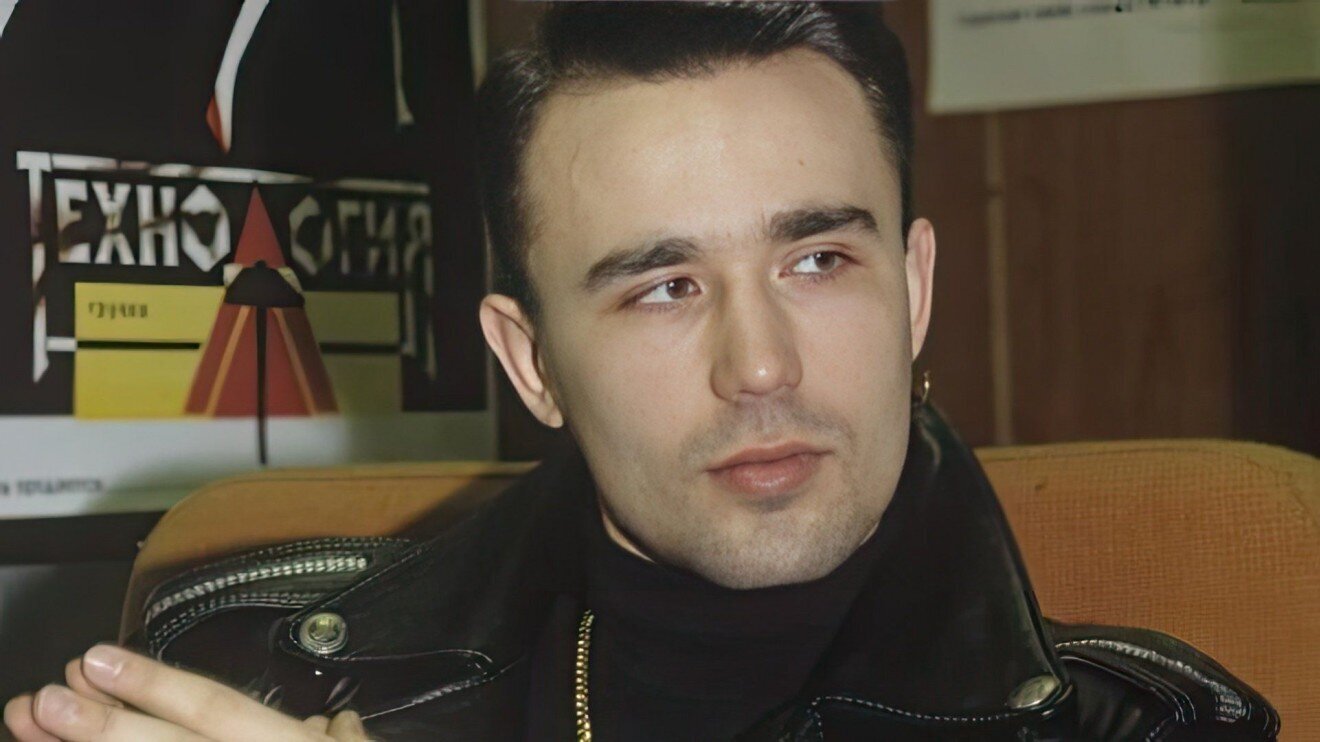
Bogdan Petrovich Titomir (born March 16, 1967) is a Soviet and Russian rap performer who became one of the most vivid figures in Russian pop music of the early 1990s. By 1993, when the novel is set, his star had begun to fade — which the character's ironic nickname reflects.
The rise and fall of "Russia's first rapper"
Titomir began his career as part of the exotic pop duo "Car-Man," formed in October 1989 with Sergei Lemokh. The duo became a genuine phenomenon of late-Soviet pop music thanks to hits like "Paris, Paris," "London, Goodbye!" and "Cio-Cio-San." Their look — leather motorcycle jackets and "pyramid" jeans in the Depeche Mode style — became iconic among young people of the era.
After the duo split in April 1991, Titomir launched a solo career, signing a contract worth roughly a million dollars with producer Sergei Lisovsky. His rap track "Do As I Do" (1991) became a genuine "anthem of a generation," as MuzOboz host Ivan Demidov called it. The track, filmed at a factory by video director Mikhail Khleborodov, cemented Titomir's image as "Russia's first rapper."
Peak fame (1991-1993)
- The album "High Energy" (1992)
- The album "High Energy II" (1993)
- Solo concerts at the Olimpiysky arena
- His catchphrase "The people eat it up" on Parfyonov's program (1993)
"Titan Baikonur" — a reference to his final triumph
The nickname "Titan Baikonur" carries a double meaning. On one hand, it refers to Titomir's final performance as part of "Car-Man" at the Baikonur Cosmodrome on April 12, 1991, marking Cosmonautics Day, where he performed the legendary song "Paris, Paris." It was a symbolic close to the "Car-Man" era and the start of his solo career.
On the other hand, the word "Titan" sounds ironic in the context of 1993 — by then, Titomir was no longer the "titan" of Russian pop he'd been at the start of the decade. After releasing the album "The Greatest Love" in 1995, the artist went through a decline in popularity.
In 1996, after the presidential election, he moved to Miami, where he lived for about three and a half years, producing Brooklyn rappers and singer Maria Vishnevskaya. His years of mass popularity were behind him — now he was associated more with nostalgia for the early 1990s.
The contrast the character draws between "Russian pop for the village" and "urban imports" reflects the real situation of the mid-1990s, when the domestic pop stars of the early decade came to be seen as dated, next to the Western hits flooding Russian radio and television.