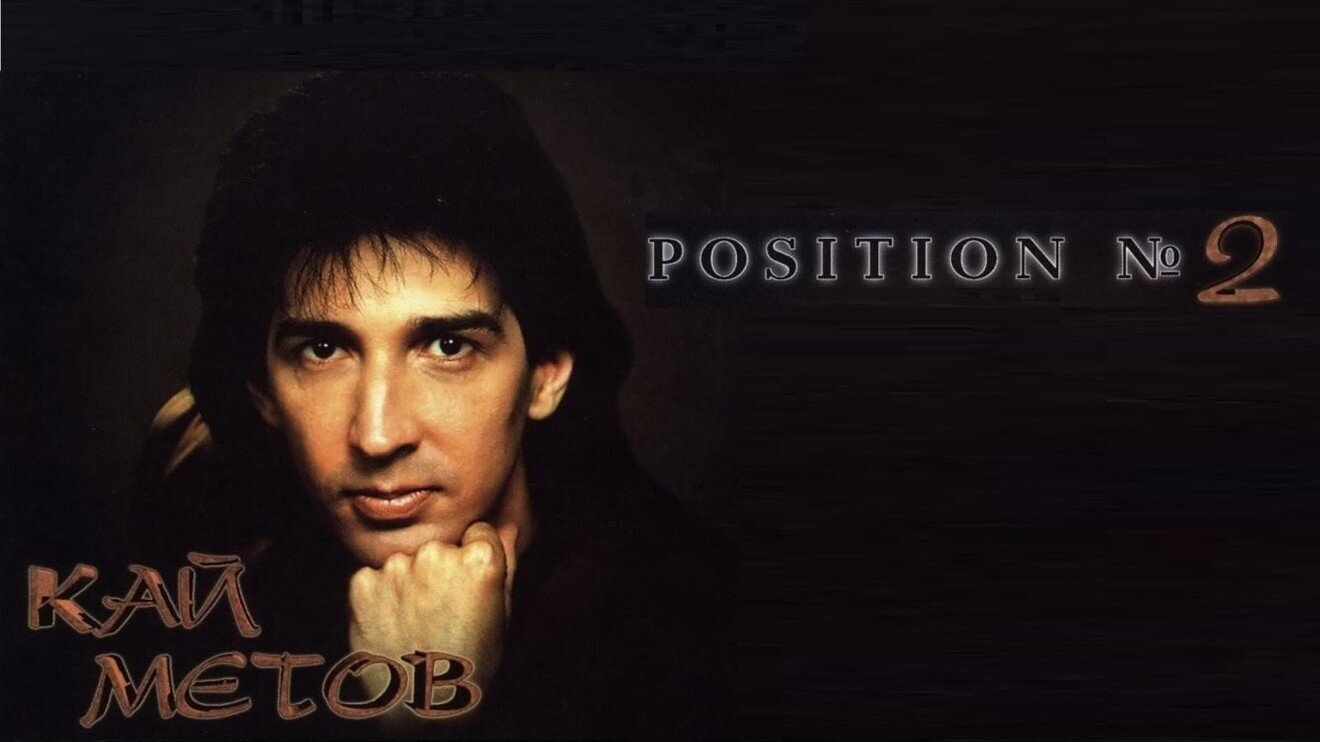
The character's mention of the "trendy new 'Position Number Two'" and the observation that "no such video existed" precisely captures the musical landscape of 1993.
The song's history and its author
Kairat Yerdenovich Metov, known as Kai Metov, was born September 19, 1964, in Karaganda. After classical musical training on violin at the Alma-Ata Republic Music School and later at the Central Music School of the Moscow Conservatory, Metov began his professional music career following his army service (1982-1984).
Metov recorded his first original songs in 1991 ("Mama! I Want to Be a Pioneer," "Broken Glass"), but real fame came with his debut album "Position No. 2," released in 1993. The album's title track became the singer's signature hit, defining his career from then on.
The song's distinguishing features
"Position No. 2" is a unique phenomenon in Russian-language pop — an original Russian-language song incorporating the English phrases position number one and position number two. The lyrics open with the characteristic lines:
Position number one: I'm resting alone.
Position number two: I want you.
The wordplay around "position numbers" in the lyrics has no real basis in any actual source on sexual positions, though most listeners perceive a sexual subtext as the song's main meaning. The songwriter himself always avoided commenting on this directly.
Why there was no video in 1993
The music video for "Position No. 2" wasn't filmed and released until 1994 — a year after the album came out. It was the video that made the song truly popular, turning it into Kai Metov's signature hit. Over the following year or two, the video was played heavily on music TV channels. In the mid-1990s, the system for distributing music videos worked very differently than it does today. Videos were shown mainly on television, in dedicated programs, while home video cassettes more often held feature films, concert recordings, or compilations of major Western artists' videos.
How the song was received
Within professional pop-music circles, the song was initially met with a fairly cool reception. Composer Vyacheslav Dobrynin later admitted he changed his view of Metov's work after recognizing his skill as a pianist and realizing that the provocative content was a kind of artistic joke that "the public latched onto."
Thirty years after its creation, in 2023, Kai Metov reflected on his signature hit's complicated fate: "This song has a rather complicated fate: everyone loves it, but in public it only ever gets criticized."
Context in 1993
By 1993, "Position No. 2" was already well known to Russian listeners and played regularly on the radio and on cassette tapes. The song became one of the symbols of the early post-Soviet pop era, when artists experimented with form and content, often shocking audiences with unexpected choices. The character's reference to the track as "trendy new" precisely captures its status at the time — the song was fresh and popular, but hadn't yet become the classic of Russian pop it's regarded as today.