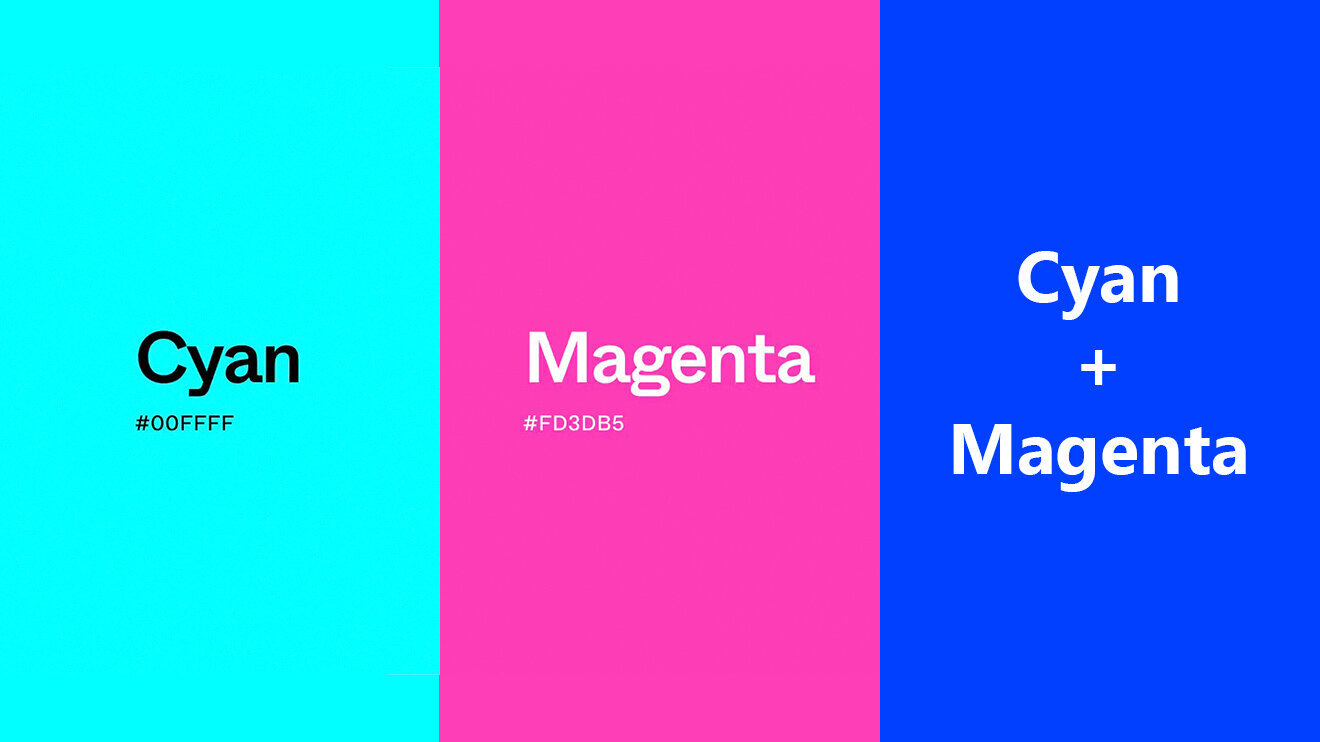
Cyan is a shade of blue that sits between blue and green on the color spectrum. It’s often associated with nature, water, and sky. Culturally, it symbolizes calm, freshness, and purity.
Magenta is a vivid purplish-red that sits between red and blue on the spectrum. This color is associated with creativity, passion, and energy. Culturally, it symbolizes strength, originality, and vivid individuality.
- Symbolism:
- In Eastern cultures, cyan can be associated with the energy of water and harmony.
- In color psychology, this shade is often linked to mental clarity, creative ideas, and a meditative state.
- Magenta, in Eastern traditions, is often associated with spirituality and enlightenment, especially in Buddhist culture, where it’s considered the color of transformation and higher consciousness.
- In Art and Design:
- Cyan is often used to convey a sense of space, transparency, and light.
- Artists use this color to create vivid, contrasting images, especially paired with orange or red.
- Magenta is widely used in art to create dramatic effects and emotional tension. Its intensity makes it an ideal tool for highlighting key elements of a composition and creating visual focal points.
- In Contemporary Digital Art:
- Cyan gained popularity thanks to the RGB model, where it’s one of the primary complementary colors (to red).
- It’s widely used in interfaces, graphic design, and animation to grab attention or create emphasis.
- In the digital world, magenta holds a special place as one of the primary colors in the RGB model (complementary to green). Its brightness and expressiveness make it indispensable in web design for creating eye-catching interfaces and highlighting key elements.
Producing Blue:
- Cyan is one of the four base colors in the CMYK model. It serves as the foundation for creating various shades of blue when combined with other colors.
- Magenta is the CMYK system’s second base color, and mixing it with cyan in the right proportions produces a rich sky blue. The ideal ratio for a vivid sky blue is 80-90% cyan and 10-20% magenta.
- Mixing Technique:
- Combining cyan with magenta produces a rich purple.
- For a vivid sky blue, the optimal ratio is 80-90% cyan to 10-20% magenta. This combination gives the blue brightness and depth without drifting into the purple range. The ratio can vary depending on the desired shade: the more magenta, the warmer and deeper the blue becomes.
- Technical Role:
- Using cyan in CMYK allows for accurate image reproduction, especially when printing photographs and illustrations.
- This color is often used in background elements or to highlight details in layouts.
- Using magenta is critically important for accurately reproducing warm tones and creating natural skin tones in printing. It’s also used to adjust and enrich other colors — adding a small amount of magenta to cyan produces a livelier, more natural blue, avoiding excessive coldness.
- How It Looks on Paper:
- Printed cyan is especially striking on glossy white paper, where it looks brighter and more saturated. On matte surfaces it can look somewhat muted.
- Magenta on paper stands out for its intensity and its ability to stay vivid even when diluted. On glossy finishes it makes a particularly striking impression thanks to its reflective qualities, while on matte surfaces it takes on a rich, velvety depth.
In short, getting a rich sky blue comes down to the right ratio of cyan and magenta, with cyan dominant (80-90%) and magenta (10-20%) added for depth and vibrancy. That balance avoids both the excessive coldness of pure cyan and an unwanted drift into purple from too much magenta.