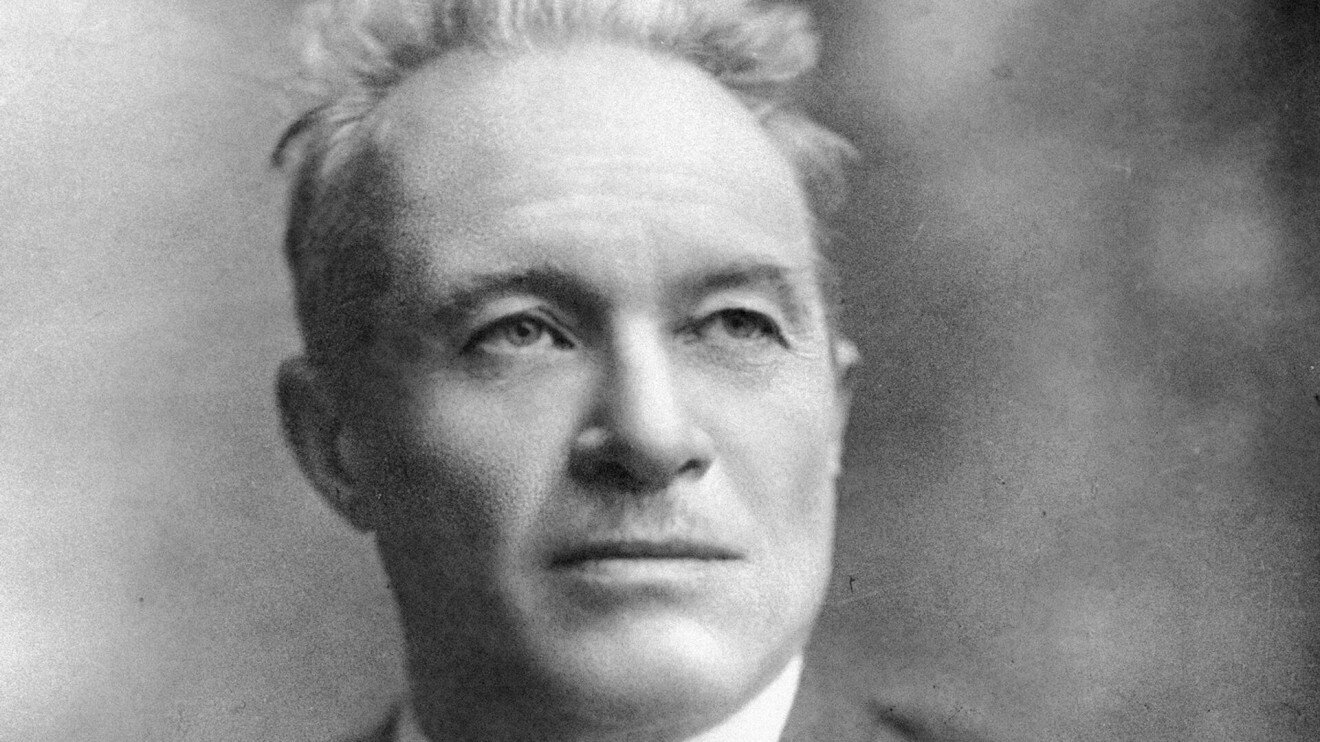
The phrase "sprawled out like Tsyurupa in the Sovnarkom" refers to one of the most enduring legends of the Soviet era — the story of how People's Commissar for Food Alexander Dmitrievich Tsyurupa fainted from hunger right in the middle of a Council of People's Commissars meeting.
Alexander Dmitrievich Tsyurupa (1870–1928) was a prominent Bolshevik who held key posts in the Soviet state. Born into a poor, large family in the town of Alyoshki in Tauride Governorate, he lived in poverty after his father's death. He entered revolutionary activity early — expelled from the Kherson Agricultural School in 1893 after an arrest, and repeatedly subjected to repression and exile.
In 1917, Tsyurupa became one of the key figures in Bolshevik food policy. It was he who, in October 1917, organized trains carrying grain to starving Petrograd, and on May 8, 1918, proposed introducing a "food dictatorship." As People's Commissar for Food of the RSFSR (1917–1921), Tsyurupa was one of the chief architects of prodrazvyorstka and the grain-requisitioning detachments — harsh measures for seizing grain from peasants.
After the civil war, Tsyurupa held top government posts: deputy chairman of the Sovnarkom, chairman of the USSR State Planning Committee (Gosplan), and People's Commissar for Foreign and Domestic Trade. He belonged to the inner circle of the Soviet elite and was a member of the Central Committee of the All-Union Communist Party.
The legend of the "hunger faint"
The story of Tsyurupa fainting from hunger during a Sovnarkom meeting became a classic example of Bolshevik austerity and self-sacrifice. It gained particular popularity after the release of Mikhail Romm's film "Lenin in 1918" (1939), in which the character of Comrade Vasily (based on Tsyurupa), having just delivered a trainload of requisitioned grain, faints from hunger right in Lenin's office.
The image of a food commissar starving himself out of solidarity with the people fit perfectly into Soviet mythology about selfless leaders. The story became a textbook example, still used today to illustrate the self-sacrifice of Bolshevik leaders.
The historical truth
Archival documents, however, paint an entirely different picture. In late 1920, a commission of the RCP(b) Central Committee and the All-Russian Central Executive Committee, led by M. Muranov, investigated the privileges of those living in the Kremlin. It turned out that 50 state leaders and their families lived in quite comfortable conditions.
According to the documents, the Tsyurupa family, in February 1921, regularly received seven meals a day at the Sovnarkom cafeteria — more than anyone else. The Kremlin ration included meat, fish, cereal, pasta, potatoes, butter, and salo. In November 1920, Tsyurupa received a substantial food package from the All-Russian Central Executive Committee's warehouse: 20 kg of bread, 8 kg of meat, 1.2 kg of coffee, 3.4 kg of cheese, 22 cans of preserves, and 4 kg of apples.
What's more, in April 1921 Tsyurupa left for a seven-month course of treatment in Germany — a luxury out of reach for ordinary Soviet citizens. The Muranov commission concluded that the unchecked distribution of food to Kremlin leaders violated communist morality.
The real reason for the fainting
Tsyurupa most likely did faint during meetings, but the cause was health problems, not hunger. He had a weak heart, smoked heavily, and was gradually declining. In 1928, Tsyurupa died of heart failure in Crimea, where he'd gone for treatment.
So the expression "sprawled out like Tsyurupa in the Sovnarkom," in the mouth of a 1990s character, takes on an ironic edge — it refers to a man who, contrary to legend, lived in comfort and plenty while holding high posts in the Soviet hierarchy.