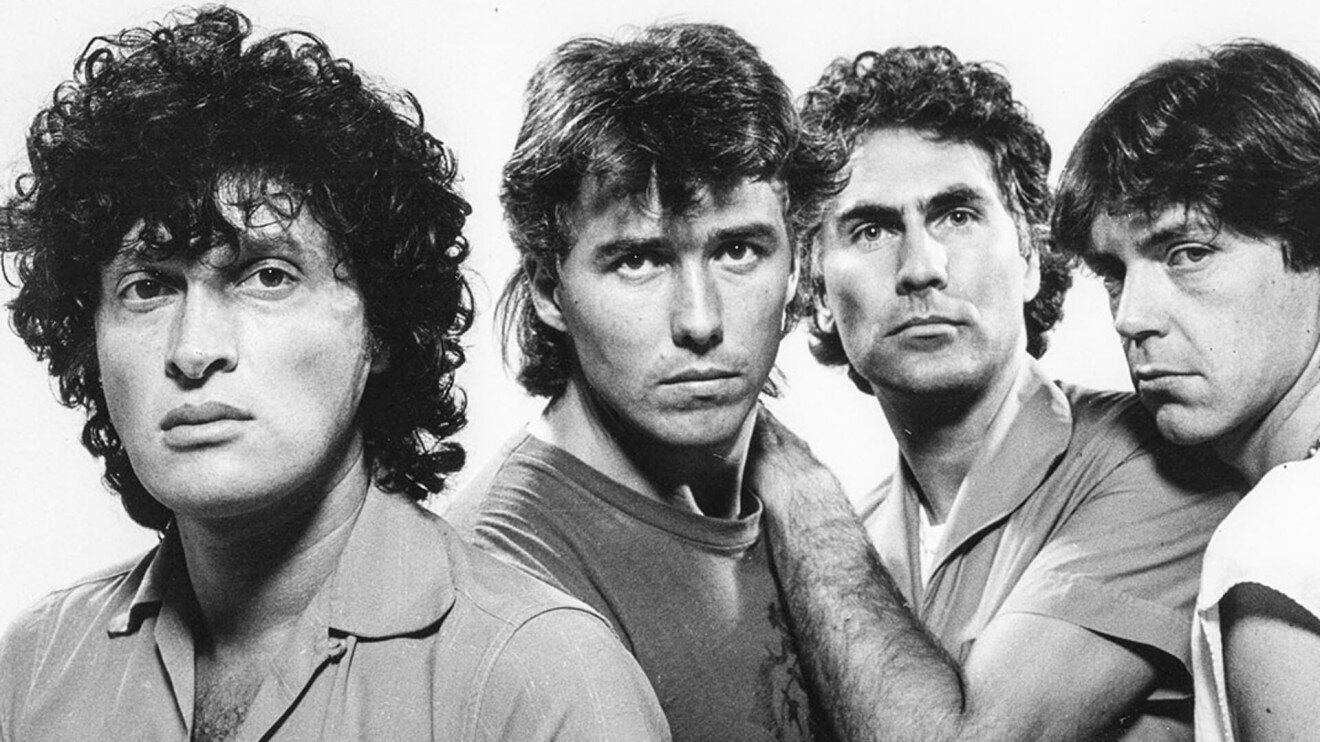
«Twilight Zone» is a cult song by the Dutch rock band Golden Earring, their best-known hit in the US and one of the emblematic videos of 1980s MTV.
About Golden Earring
Golden Earring is a legendary Dutch rock band, founded in 1961 in The Hague under the name The Tornados. The band was formed by 13-year-old George Kooymans and his 15-year-old neighbor Rinus Gerritsen. The name was changed to Golden Earrings after it turned out The Tornados was already taken by another group.
By 1970 the band’s classic lineup had taken shape and stayed unchanged until 2021: Rinus Gerritsen (bass and keyboards), George Kooymans (vocals and guitar), Barry Hay (vocals, guitar, flute, and saxophone), and Cesar Zuiderwijk (drums). That kind of lineup stability was rare in rock music and did much to shape the band’s distinctive sound.
Golden Earring’s first international success came in 1973 with the hit «Radar Love,» which reached No. 13 on the American charts and went gold. Real fame in the US, however, only came in 1982.
The making of «Twilight Zone»
«Twilight Zone» was written by the band’s guitarist, George Kooymans, and appeared on the 1982 album Cut. Contrary to popular belief, the song wasn’t inspired by the famous television series «The Twilight Zone,» but by Robert Ludlum’s espionage thriller The Bourne Identity. Kooymans was captivated by the atmosphere of spy intrigue and wrote a track that captures the tension and paranoia of the world of secret agents.
The song features a complex vocal arrangement: lead vocals are split between Kooymans and Barry Hay. In the first verse each sings half (Kooymans first, then Hay); in the second verse Hay leads with Kooymans backing him; and Kooymans handles the choruses. Hay also delivers spoken-word lines in the intro and first verse.
The groundbreaking music video
The song owes its real fame to the music video, directed by Dutch filmmaker Dick Maas. It was one of the first videos in history to feature a full cinematic storyline with choreographed elements. The plot casts Barry Hay as a spy captured by three agents, played by the rest of the band.
The video stood out for its high production values and cinematic feel, both innovative for the time. The European version included a scene with a nude woman, which was cut for the MTV broadcast. The visuals repeatedly echoed the imagery from the Cut album cover – a jack of diamonds torn apart by a bullet, symbolizing the life of a renegade spy.
The «agents’» costumes were especially memorable – black military-style bodysuits with peaked caps, evoking a totalitarian regime. These images became iconic and instantly recognizable.
Success on MTV and the charts
«Twilight Zone» became Golden Earring’s second international hit and their only song to crack the top 10 of the Billboard Hot 100. The track also topped the Billboard Rock Top Tracks chart. The video spent 27 weeks on the American charts, a record for the band.
The song’s success owed much to heavy rotation of the video on the newly launched MTV. It became one of the defining clips of MTV’s early years and helped the channel establish its aesthetic. Dick Maas’s cinematic approach to music-video direction influenced the development of the genre and helped launch his career as a successful film director.
After «Twilight Zone»’s success, Golden Earring undertook a major tour of the US, Canada, and Europe. MTV even commissioned the band to film a concert movie of the tour’s final «homecoming» show in the Netherlands, released in 1984 as Live from The Twilight Zone.
Legacy
In the 1990s the song was included in Rhino Records’ New Wave Hits of the ’80s compilation series, and the video appeared on a VHS compilation. «Twilight Zone» remains Golden Earring’s best-known song outside the Netherlands and one of the emblematic tracks of 1980s music, a testament to how MTV reshaped the music industry and culture.