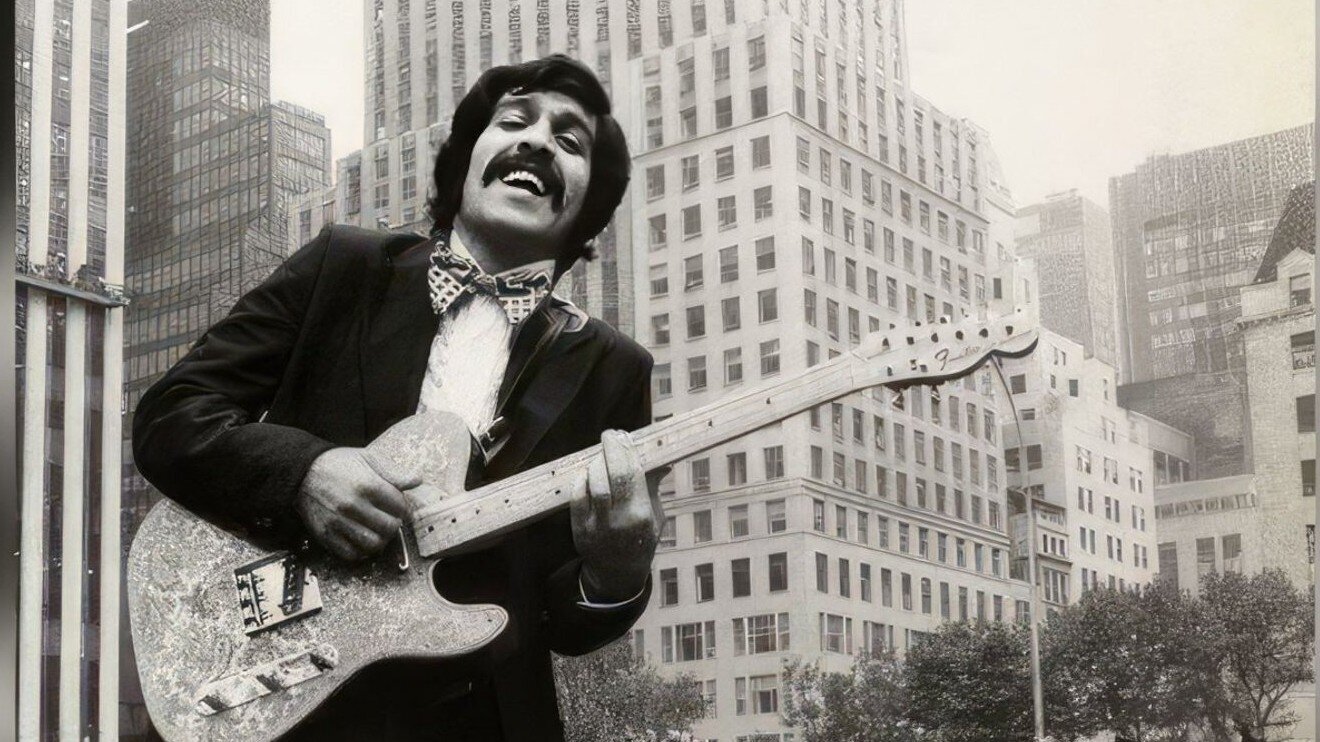
The word «balagan» (a noisy sideshow or carnival booth), used to describe New York nightlife in the novel, is no accident. It’s a direct nod to the famous song and album of the same name by Willy Tokarev, «V Shumnom Balagane» («In the Noisy Balagan,» 1981), which brought the Soviet émigré fame in Russian-speaking circles across America.
«In the Noisy Balagan» as a Symbol of Emigre Life
The album «In the Noisy Balagan,» released in 1981, marked a turning point in Willy Tokarev’s career. Where his 1979 debut record, «Life Is Always Beautiful,» went largely unnoticed, this second album brought him recognition among Russian-speaking émigrés in the U.S. The album’s title became a kind of manifesto for émigré life — life «in the noisy balagan» of American society, where a Russian person found themselves caught between two worlds.
The word «balagan» took on a special meaning in Tokarev’s work. It’s not simply a fairground amusement or a theatrical show in the traditional sense, but a metaphor for the whole of American reality as seen through the eyes of a Russian émigré. The balagan is both the brightness of American life and its superficiality — the carnival atmosphere Soviet people found themselves having to survive once they landed overseas.
Willy Tokarev’s Biography: From the Caucasus to America
Early Years and Musical Training
Willy Ivanovich Tokarev (born Vilen) was born November 11, 1934, on the Chernyshov farmstead in the Shovgenovsky district of the Adygea Autonomous Region. His ancestors came from the Kuban Cossacks, a background that left its mark on his whole life and body of work.
In 1945, the Tokarev family moved to Kaspiysk in Dagestan. Still a teenager, in 1948, fourteen-year-old Willy made his first sea voyage, working as a stoker on a ship. This early independence and pull toward travel foreshadowed his later emigration.
After service in a signal corps unit, Tokarev moved to Leningrad, where he received serious musical training, graduating from the music college attached to the Rimsky-Korsakov Leningrad Conservatory, majoring in double bass. That training became the foundation of his professional musical career.
Musical Career in the USSR
During and after his studies, Tokarev worked actively in various musical ensembles. He played in Anatoly Kroll’s orchestra, in Jean Tatlyan’s symphonic jazz ensemble, and in Boris Rychkov’s ensemble, and accompanied singer Gyulli Chokheli. Especially notable was his work in Alexander Bronevitsky’s ensemble Druzhba, alongside the legendary Edita Piekha.
Already in the Soviet period, Tokarev had begun writing his own songs, composing both music and lyrics. He wrote the song «Who’s to Blame?,» performed by Anatoly Korolyov, and the song «Rain» for Edita Piekha. Tokarev also worked in the Leningrad Radio and Television orchestra under David Goloshchyokin.
But persecution of jazz in the USSR forced Tokarev to leave for Murmansk, where he became a performer of his own songs. It was there, in 1973, that his hit «Murmanchanochka» appeared, becoming popular across the whole Kola Peninsula. Together with local co-writer Vladimir Yartsev, he recorded the song «Apatity — a Polar Town,» which became an unofficial anthem of the town of Apatity.
Emigration to the U.S.: The Legend Begins
The Early Years in America
In 1974, at age 40, Willy Tokarev emigrated to the U.S. with only $100 to his name. The Tolstoy Foundation took him in for two or three weeks; its director was Alexandra Tolstaya, daughter of the great writer Leo Tolstoy. This symbolic patronage from a representative of the Russian cultural elite marked a fitting start to Tokarev’s American chapter.
The first years in America were extremely hard. With poor English, Tokarev tried his hand at countless jobs: courier, bakery cleaner, sorting a millionaire’s Russian-language library, newspaper delivery man. Learning English from American newspapers, he completed a nursing-assistant course, learned to drive, and started working as a taxi driver. During his time driving cabs, he was robbed four times, and once, on Christmas, was nearly killed.
The Road to Fame Through Music
Despite all the hardship, Tokarev never gave up music. He played a balalaika he’d bought at a Fifth Avenue souvenir shop for $50, performed at the legendary Carnegie Hall, and sang in restaurants and nightclubs. Whatever he earned driving a cab, he spent recording records, writing songs in his spare time.
In the 1980s, Tokarev worked at the Russian restaurants Sadko, Primorsky, and Odessa, accompanied by pianist Irina Ola. In New York’s Russian-speaking community, he was nicknamed «the honorary Jew of Brighton» — the neighborhood densely populated by Soviet Jewish émigrés.
His Creative Work in America
His Own Label and Albums
Willy Tokarev founded his own record label, «One Man Band,» on which he recorded roughly twenty albums. The label became an important cultural institution for the Russian-speaking diaspora in the U.S., offering a way to preserve and develop the Russian song tradition on American soil.
The 1981 album «In the Noisy Balagan» became not just a piece of music but a cultural manifesto. Tokarev managed to capture, in his songs, the particular worldview of a Soviet émigré caught in the kaleidoscope of American life. His work became the voice of an entire generation of people who’d left the USSR and were trying to find their place in a new world.
Influence on Russian Culture in the U.S.
Tokarev’s work had a significant influence on shaping the Russian-speaking cultural milieu in the U.S. His songs became the soundtrack of Soviet émigré life, reflecting their joys and sorrows, hopes and disappointments. The metaphor of the «noisy balagan» firmly entered the vocabulary of Russian-speaking Americans as a way of describing American reality.
Return to Russia
First Tours of the USSR
In 1989, Willy Tokarev came to the USSR for the first time in 15 years, with concerts. Well-known impresario Viktor Shulman played a major role in organizing the tour. Seventy concerts across the Soviet Union were a huge success. Soviet audiences greeted their countryman — who’d managed to conquer America while remaining Russian at heart — with enthusiasm.
Tokarev’s popularity in the USSR was phenomenal. His songs, long known only from cassette-tape recordings, were now being performed from official stages. Soviet TV aired the biographical film «Here I Am, Grown Rich, Sir, and I’ve Come to the USSR,» whose title became a catchphrase.
Life in Russia
In the 1990s, Willy Tokarev moved permanently to Moscow. He first lived on Zubovsky Boulevard, then moved into the famous high-rise on Kotelnicheskaya Embankment, where he opened his own recording studio. That studio became a gathering place for many musicians and creative figures.
Tokarev took an active part in the social and political life of the new Russia. He mixed with stars like Alla Pugacheva and Iosif Kobzon, and was friends with cosmonaut Vitaly Sevastyanov. He wasn’t shy about his ties to the criminal world, performing in prisons and penal colonies. He knew the legendary Vyacheslav Ivankov («Yaponchik»), who in America had protected the singer from Italian-mafia racketeers.
His Work as a Reflection of an Era
The Genre of Russian Chanson
Willy Tokarev became one of the founders of the genre of Russian chanson in its modern sense. His work united the traditions of the Russian urban song, criminal-underworld folklore, and his own American experience. Tokarev’s songs stood out for their sincerity, vitality, and a particular intonation that resonated with the Russian soul, no matter where a listener happened to be.
A hallmark of Tokarev’s work was his ability to fuse the high and the low, the lyrical and the everyday, the Russian and the American. His songs became a chronicle of the era, capturing the experience of an entire generation that lived through radical changes in their lives.
Cultural Significance
Willy Tokarev’s work holds particular cultural significance as a phenomenon that united Russian and American cultural traditions. His experience of emigration and later return became symbolic for many Russians of the late 20th century. The song «In the Noisy Balagan» and the whole album of that name remain important documents of an era, reflecting the complex processes of cultural adaptation and the preservation of national identity.
Later Years and Legacy
In the 2000s, Tokarev appeared in films, playing himself: «The Captain’s Children,» «The Investigation Is Conducted by ZnaToKi: The Arbitrator,» «The Oligarch,» «Day Watch.» In 2014, he organized a large-scale concert tour through cities in Russia, America, Brazil, and the Baltic states.
Tokarev was a regular participant in the «Chanson of the Year» award and the «Ekh, Razgulyai!» musical marathon. In 2006, he was made an honorary resident of Moscow’s Tagansky District. Right up until his final days, he remained creatively active, taking part in TV projects and giving concerts.
Willy Tokarev died August 4, 2019, at the age of 84, from cancer. He was buried at Kalitnikovskoye Cemetery in Moscow. He left behind a rich creative legacy and a large family, including children and grandchildren, some of whom continue the family’s musical traditions.
Conclusion: «Balagan» as a Cultural Metaphor
Using the word «balagan» to describe New York nightlife in the novel is a deep cultural reference to Willy Tokarev’s work. The term carries not just the sense of a bright, noisy spectacle, but more complex connotations tied to the experience of cultural borderlands, of living between worlds — characteristic of the émigré experience.
Tokarev’s «noisy balagan» became a metaphor for describing American reality through Russian eyes — bright, energetic, mesmerizing, but at the same time alien and superficial. That metaphor has firmly entered Russian-language cultural discourse and continues to be used by writers and commentators to describe Western, and especially American, civilization.
Willy Tokarev’s work remains an important cultural legacy, documenting the complex processes of the 20th century — emigration, cultural adaptation, the preservation of national identity amid radical shifts in circumstance. His songs, and the concept of the «noisy balagan» in particular, continue to resonate in contemporary Russian culture as a way of understanding the relationship between Russia and the West.