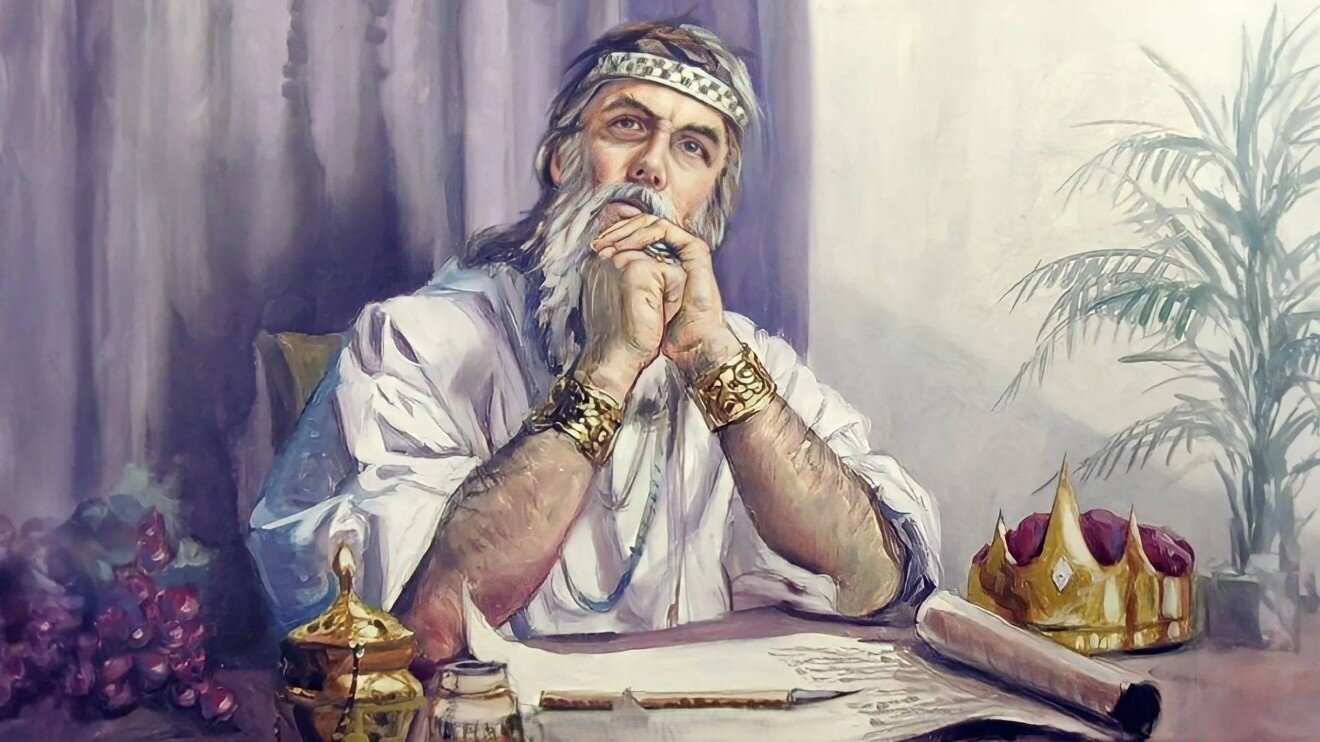
Vanity and a chasing after the wind is a phrase from the biblical Book of Ecclesiastes, traditionally attributed to King Solomon. In the original it reads “vanity of vanities, all is vanity and a chasing after the wind” (or, in some translations, “vexation of spirit”). It is one of the book’s central ideas, appearing as early as the first chapter: “Vanity of vanities, saith the Preacher, vanity of vanities; all is vanity. What profit hath a man of all his labour which he taketh under the sun?” (Ecclesiastes 1:2–3).
The Book of Ecclesiastes, part of the Old Testament, is a philosophical meditation on the meaning of human life. Its author, who calls himself “Qoheleth” (meaning “Preacher” or “one who convenes an assembly”), questions the value of earthly goods, wisdom, labor, and even life itself, concluding that all things are fleeting and futile. Yet by the book’s end he nonetheless finds meaning in the fear of God and the keeping of His commandments.
Where older English translations use “vanity,” modern translations often render the word as “meaninglessness,” “futility,” or “a mere breath.” The original Hebrew word is “hevel” (הֶבֶל), literally meaning “vapor,” “breath,” or “mist” — something ephemeral and quick to vanish.
King Solomon
Solomon (Hebrew: שְׁלֹמֹה, Shlomo) was the third king of Israel, who according to biblical chronology reigned roughly from 965 to 928 BCE, the son of King David and Bathsheba. The name “Solomon” derives from the Hebrew root “shalom” (peace), reflecting the peaceful character of his reign.
The biblical texts (chiefly the First Book of Kings and the Second Book of Chronicles) portray Solomon as the wisest of men, to whom God granted “a wise and understanding heart” after Solomon asked for that gift instead of wealth or long life. His famous judgment between two women disputing over a single child became a symbol of wise justice.
Under Solomon, the kingdom of Israel reached the height of its power and prosperity. He built the First Temple in Jerusalem — Judaism’s central shrine — along with a magnificent royal palace and numerous other structures. His court was renowned for its splendor, and his trade routes extended to distant lands.
Tradition credits Solomon as the author of three biblical books: Proverbs, Ecclesiastes, and the Song of Songs. Legend also holds that his extraordinary wisdom allowed him to understand the language of animals and command spirits (jinn).
The biblical narrative does not idealize Solomon, however. His reign had its dark sides: heavy taxation, the use of forced labor, and numerous foreign wives (the text mentions 700 wives and 300 concubines), under whose influence he strayed from strict monotheism and allowed pagan cults into Jerusalem.
After Solomon’s death, his vast kingdom split into two states: the northern Kingdom of Israel and the southern Kingdom of Judah, marking the end of the golden age of Jewish statehood.
In Jewish, Christian, and Islamic tradition (where he is known as Suleiman), Solomon is revered as the embodiment of wisdom and just rule. His image has had an enormous influence on world culture and art, and the phrase “the wisdom of Solomon” has become proverbial.