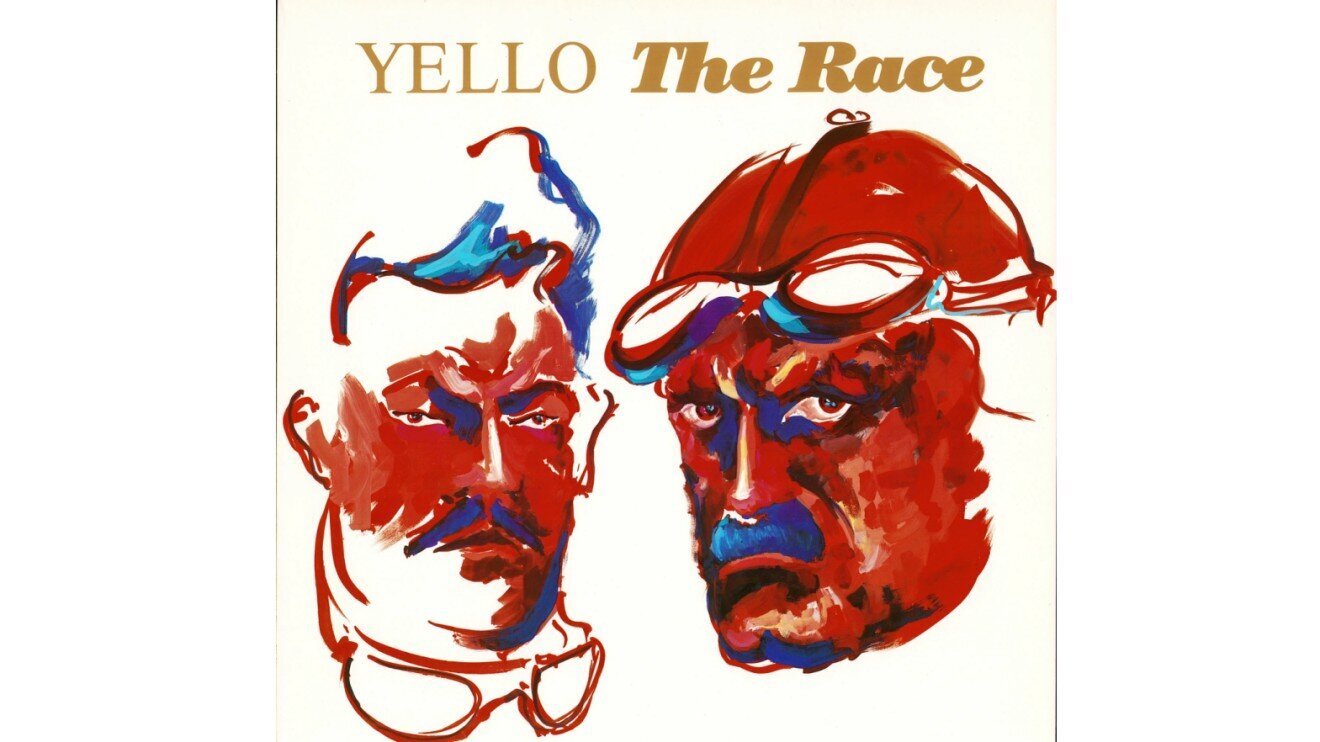
An electronic track by the Swiss duo Yello that became one of the most recognizable songs of the late 1980s and achieved cult status thanks to its distinctive sound and extensive use across media.
Creation and release
«The Race» was released on April 11, 1988, as the lead single from the album «Flag» on the Fontana label. The track became a commercial breakthrough for the Swiss electronic duo, reaching No. 7 on the UK Singles Chart in August 1988 – the band’s only UK top-10 hit.
The track was released in various formats: 7-inch and 12-inch vinyl, CD, and cassette. A limited edition included a remix by Paul Dakeyne. In 1989 the track was remixed by Carl Cyril, producing promo versions on 12-inch singles paired with versions of «Blazing Saddles» by Emilio Pasqez.
Musical features
«The Race» showcases Yello’s signature style – intricate rhythmic structures built from original samples, and Dieter Meier’s characteristic deep vocals. The track is built around the imitation of racing car engines and a racetrack atmosphere, creating a sense of speed and tension.
Boris Blank, the duo’s music producer, drew on his vast sample library – thousands of original sounds he had recorded and processed himself. Almost every instrument in the track was sampled and reworked, producing a unique sound unlike anything else in existing music.
The music video and visual identity
A music video was made for the song, directed by Dieter Meier himself. The video presented an abstract race using archival footage and was released in the CD-Video format – a relatively new medium at the time.
In 1989 the company RockAmerica organized a video-remix contest on Yello’s behalf, «The Race (Video Remix Contest),» inviting entrants to create their own video version of the hit. Winners Jeff Consiglio and Vincent Zegna received the grand prize, and their remix was officially released.
Commercial use and cultural influence
The track found wide use as background music for various media projects. «The Race» was used as trailer music for the sports channel Eurosport and as the theme for the American TV show «It’s Academic.»
An early demo from the «Flag» sessions became the soundtrack for the British film «Nuns on the Run» (1990), where it played during chase scenes, fitting perfectly with the track’s driving energy.
An interesting side note is the track’s popularity among American marching bands – since its release, «The Race» has been a frequent choice for marching bands across the US.
Remixes and reissues
The history of «The Race» is rich with remixes and reissues:
- 1992 – the single was reissued alongside the release of the compilation «Essential Yello»
- 1999 – a new remix appeared on the «Eccentrix Remixes» compilation, following the release of the album «Pocket Universe»
- 2003 – remixes by Tomcraft appeared on the single «Planet Dada» from the album «The Eye»
- 2007 – «The Race II» was created for a DHL/Formula 1 promotional campaign and made available as a free download
Yello: a brief history
Yello was formed in Zurich in 1979. The core of the group consisted of Boris Blank (keyboards, sampling, percussion) and Carlos Perón (tape work). They were joined by Dieter Meier – a millionaire investor and professional gambler who became the band’s vocalist and lyricist.
The name «Yello» was coined as a play on Meier’s phrase «a yelled Hello.» The band’s first release, the single «I.T. Splash,» came out in 1979.
Key milestones
The debut album «Solid Pleasure» was released in November 1980 and included the original short version of «Bostich,» later expanded into a dance-club hit in 1981.
In 1983, right after the release of the album «You Gotta Say Yes to Another Excess,» Carlos Perón left the band to pursue a solo career, and Yello became a duo.
The fourth studio album, «Stella» (1985), became the first album by a Swiss band to reach No. 1 on the Swiss charts. It also made the German top 10 and went gold. The track «Oh Yeah,» from that album, brought the band worldwide fame after its appearance in the film «Ferris Bueller’s Day Off» (1986).
Musical style and innovation
Yello’s sound is defined by unusual musical samples, a strong rhythmic focus, and Dieter Meier’s dark vocals. The band rarely samples pre-existing recorded music – nearly every instrument was sampled and reworked by Boris Blank himself.
Over the years Blank built an original sample library of thousands of named and catalogued sounds. This approach let the band create a unique sound impossible to mistake for any other act.
Legacy and influence
By the time «The Race» was released, Yello had already established itself as a pioneer of electronic music. The track became one of the most recognizable of its era, showcasing the possibilities of electronic sampling and programming.
In 1995 a tribute album, «Hands on Yello,» was released, featuring remixes by artists such as Moby, the Orb, Carl Craig, Carl Cox, the Grid, and WestBam, confirming the band’s influence on the development of electronic music.
In 2005 the band reissued its early albums, including «Flag,» as part of the «Yello Remaster Series,» with bonus tracks. That same year saw the release of the documentary «Electro Pop Made in Switzerland,» directed by Anka Schmid.
Technical legacy
«The Race» showcased the possibilities of digital sampling at a time when the technology was still in its early stages. The track became a model for how electronic music could create cinematic imagery without relying on traditional instruments.
Boris Blank’s sound design work on the track laid groundwork for the development of techno and electronic dance music. His approach to sampling – building original sounds rather than relying on ready-made recordings – became a standard followed by many later electronic producers.
Conclusion
«The Race» remains one of the most influential compositions in the history of electronic music. The track demonstrated how modern technology could build fundamentally new soundscapes while retaining melody and commercial appeal.
Yello’s work, and «The Race» in particular, charted a path for electronic music’s journey from experimental art to mass culture. The track continues to inspire musicians today, remaining a classic example of an innovative approach to making music.
In the context of the late 1980s, «The Race» sounded like the future – futuristic and technological, yet accessible to a broad audience all the same. That balance between experimentation and popularity became the calling card not just of this track, but of Yello’s work as a whole.