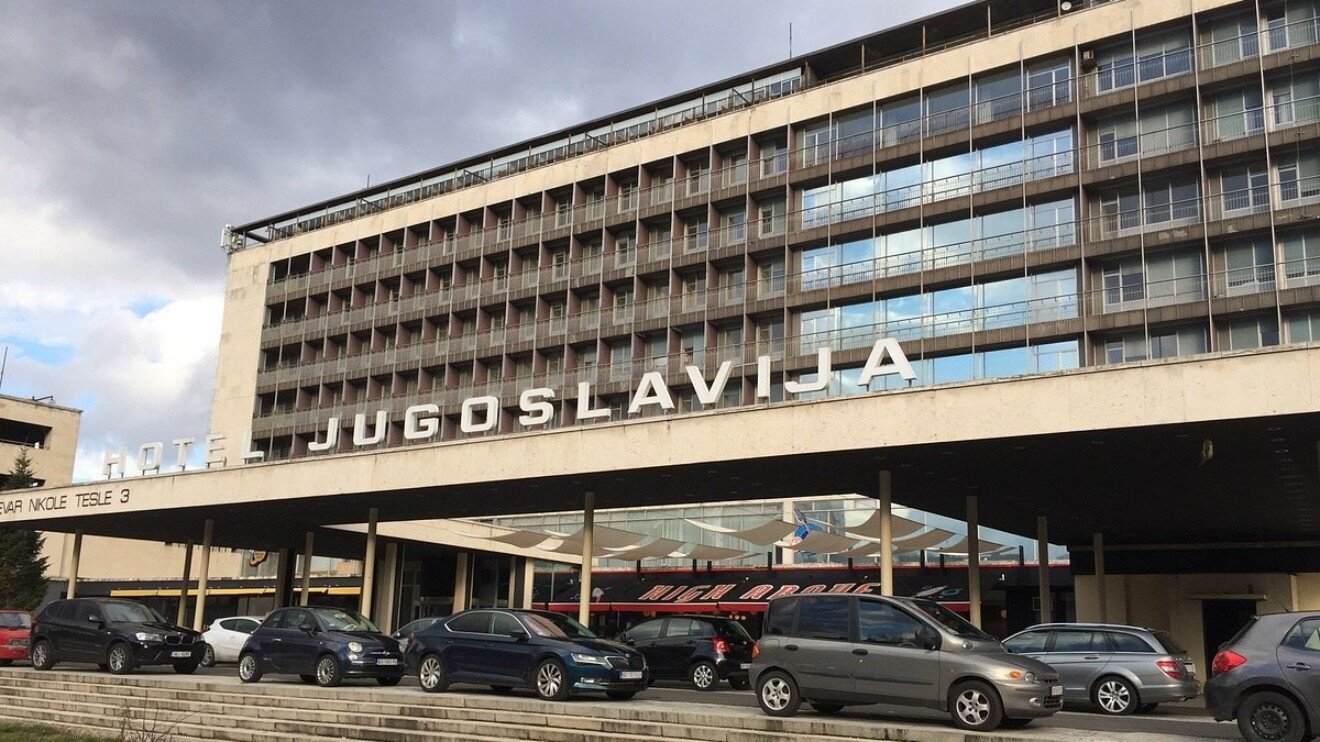
By 1993, the consequences of the global geopolitical upheaval that had taken place on the territory of the former Yugoslavia had become visible. Though the conflicts there might have seemed distant, their echo reached Russia too, affecting politics, the economy, and even everyday life. To immerse the reader more deeply in the atmosphere of the time, we offer a detailed historical excursion into the events known as the Yugoslav Wars (1991–2001).
The Yugoslav Wars were not a single conflict, but a complex of interrelated ethnic clashes, wars of independence, and insurgencies that engulfed the Socialist Federal Republic of Yugoslavia (SFRY) over the course of a decade, from 1991 to 2001. These conflicts were both a cause and a consequence of the breakup of Yugoslavia into six independent states: Slovenia, Croatia, Bosnia and Herzegovina, Montenegro, Serbia, and Macedonia (now North Macedonia).
The roots of these conflicts lie in unresolved tension between ethnic groups within the republics, fed by decades of hidden contradictions and intensified after the death of Josip Broz Tito in 1980.
The preconditions for Yugoslavia's breakup
The SFRY, built on the principles of "proletarian internationalism" and an ethno-territorial federation under Tito's sole dictatorship, faced a crisis of central authority after his death. The office of president was abolished, and collective leadership quickly lost authority.
Starting in the 1960s, a struggle intensified within the League of Communists of Yugoslavia (SKJ) between reformists, advocating expanded federalism, and hardliners, calling for greater centralization.
In 1971–1972, attempts by reformist movements in Slovenia, Croatia, and Serbia to gain strength were harshly suppressed by Tito. The "Croatian Spring," the "liberals" in Serbia, the Slovenian "technocrats," and reformists in Macedonia and Bosnia and Herzegovina were all crushed.
The 1974 SFRY Constitution created a so-called "system of checks and balances," intended to balance national aspirations. Thus, the Serb population in Croatia and Bosnia was meant to counterbalance Croatian and Bosnian national movements, while the autonomous provinces of Kosovo and Vojvodina within Serbia were meant to restrain Serbian nationalism.
After Tito's death in 1980, however, this system proved fragile. Already by the spring of 1981, amid a severe economic crisis, tensions between Albanians and Serbs in Kosovo flared up.
In 1986, the publication of the "Memorandum of the Serbian Academy of Sciences and Arts (SANU)" in the Belgrade newspaper "Večernje Novosti" became a turning point. This document, criticized by the authorities but widely circulated, became a manifesto of Serbian nationalists. It undermined the ethnopolitical and ideological balance of the country, leading to mass rallies "in defense of Kosovo" across Serbia.
The leader of Serbia's Communists, Slobodan Milošević, skillfully used this popular movement to dismantle the autonomous entities within Serbia. In October 1988, under pressure from crowds, the government of Vojvodina resigned, followed by the authorities of Kosovo, who were replaced by politicians loyal to Milošević. Similar events took place in Montenegro in January 1989.
At the same time, in Slovenia, which felt itself more developed and European, discontent with the central government was growing. The "Ljubljana Four" trial in 1988, in which dissidents and an army sergeant were arrested for attempting to publish a scandalous article, sparked mass protests and strengthened the opposition movement. In 1989, the Slovenian Democratic Union was established, and the "May Declaration" demanded the creation of a "sovereign state of the Slovenian people." In September 1989, the Slovenian parliament amended the constitution, enshrining Slovenia's right to self-determination up to and including secession. In July 1990, the Declaration of Sovereignty of Slovenia was adopted, and on December 23, 1990, in a referendum, 88.5% of voters supported Slovenia's independence.
At the same time, on June 28, 1989, at the celebration of the 600th anniversary of the Battle of Kosovo, Slobodan Milošević delivered a speech in which, without ruling out armed conflict, he affirmed the idea that Kosovo was an inseparable part of Serbia. In Croatia, at a celebration marking the same 600th anniversary, questions about the position of Serbs were also raised, which Croatian authorities regarded as a manifestation of nationalism, leading to the arrest of Serb public figures.
In August 1989, the Croatian Sabor passed a language law that made no mention of the Serbian language. Ethnonationalism was becoming a convenient means of political mobilization for all sides.
The 14th (extraordinary) Congress of the SKJ, on January 22, 1990, marked the end of the unified party. The delegations of Slovenia, Croatia, Bosnia and Herzegovina, and Macedonia walked out before it concluded. The republican organizations of the SKJ became independent parties.
In the first multi-party elections in 1990, the opposition won a majority in Macedonia. In Bosnia and Herzegovina, nationalist parties won — the Muslim Party of Democratic Action, the Serb Democratic Party, and the Croatian Democratic Union. Only in Montenegro and Serbia did the successors of the Communist parties retain power.
The situation in Croatia was aggravated by nationalist measures taken by the republican government: changing the Serbo-Croatian language to Croatian, banning the Cyrillic script, removing texts on Serbian history and Serbian writers from school curricula, forcing Serbs in state institutions to sign "loyalty sheets" and dismissing those who refused, and numerous attacks by Croatian extremists on the Serbian Orthodox Church.
The movements of national minorities, especially Kosovo Albanians and the Serbs of the Knin region in Croatia, increasingly shifted from demands for autonomy to demands for secession. A harbinger of the violence to come was a brutal mass brawl between Serbian and Croatian fans at a football match in Zagreb in May 1990.
On July 25, 1990, at a congress of the Serb Democratic Party in the town of Srb, the Serb Sabor and the Serb National Council were formed, and a declaration of sovereignty and autonomy for the Serb people was adopted. On August 16, 1990, the Serb National Council decided to hold a referendum on the autonomy of Serbs in Croatia, which the Croatian authorities declared illegal. On August 17, 1990, Croatian special forces attempted to seize weapons from reservists of the local militia in Serb areas, which triggered numerous barricades and the patrolling of settlements by militiamen. In the referendum, an overwhelming majority voted in favor of Serb autonomy.
On December 21, 1990, the Serb Autonomous Region of Krajina was proclaimed in Knin.
The start of the conflicts and their escalation
At the start of the conflict, the sides tried to resolve their differences through political means and economic leverage (Serbia cutting off electricity to Slovenia, a boycott of Slovenian goods in Serbia). Gradually, however, the population began to arm itself, using territorial-defense stockpiles and illegal purchases abroad.
In early March 1991, after Serbs were dismissed from Croatia's Ministry of Internal Affairs, Serb police officers seized a police station, leading to an assault on the town of Pakrac by Croatian special forces. Units of the Yugoslav People's Army (JNA) were brought in to prevent further clashes.
On March 31, 1991, a clash occurred between Serb territorial defense forces and Croatian police in the area of Plitvice Lakes National Park, in which two people were killed.
The result of these events was the declaration of independence by Slovenia and Croatia. In June-July 1991, armed clashes began in Slovenia between the JNA and self-defense forces. That same year, the war in Croatia began, in which, besides the regular army, the population also took part, forming its own "paramilitary units," self-proclaimed ethno-territorial entities, and expelling residents of "other" nationalities.
In 1992, the war in Bosnia and Herzegovina began as well, becoming the bloodiest and most complex of all the Yugoslav conflicts. The seceding republics declared independence, which led to clashes stemming from unresolved tensions between ethnic minorities in the new countries.
The role of the Yugoslav People's Army and outside powers
In the early stages of the breakup, the JNA tried to preserve Yugoslavia's unity, but fell increasingly under the influence of Slobodan Milošević, whose government made use of Serbian nationalism. As a result, the JNA began to lose members of other nationalities, and effectively became a fighting force made up only of Serbs and Montenegrins.
According to a 1994 UN report, the Serb side was not seeking to restore Yugoslavia, but was pursuing the goal of creating a "Greater Serbia" from parts of Croatia and Bosnia. There were other irredentist movements as well, such as "Greater Albania" (abandoned after international diplomacy) and "Greater Croatia" (abandoned in 1994).
The Yugoslav Wars, often called one of the deadliest armed conflicts in Europe since the Second World War, were accompanied by numerous war crimes, including genocide, crimes against humanity, ethnic cleansing, and mass rape. The Bosnian genocide was the first event in Europe since World War II to be officially classified as genocide. The International Criminal Tribunal for the former Yugoslavia (ICTY) was established in The Hague to prosecute those responsible.
According to various estimates, between 130,000 and 140,000 people died as a result of the Yugoslav Wars. The decade of conflict led to a massive humanitarian crisis and a refugee crisis.
Life under sanctions: Yugoslavia that year
By late that year, when the novel's hero might have found himself in Belgrade, Serbia and Montenegro (the country, shrunk to these two republics, was still called Yugoslavia) were under UN sanctions for supporting the Bosnian Serbs. These sanctions were imposed by UN Security Council Resolution No. 757 (1992), and amounted to a complete economic and transport blockade. All trade operations were banned, along with the use of Yugoslav ships and aircraft, business contacts, and financial transactions with individuals and legal entities from Yugoslavia. Yugoslav currency funds abroad were frozen, restrictions were placed on flights and landings by Yugoslav aircraft, diplomatic missions were reduced in size, Yugoslav representatives were barred from participating in sporting events abroad, and scientific, technical, and cultural cooperation was halted.
Under these conditions, life in Belgrade was extremely difficult. Hyperinflation that autumn reached 100% a day. This meant prices doubled daily. Local dinars lost value instantly, and people tried to get rid of them as quickly as possible, exchanging them for a stable currency, mainly German marks. The exchange took place through "black-market money changers" on the streets, since the official rate was unfavorable. The main rule — by the end of the day, you shouldn't have any dinars left in hand.
Billions and millions of dinars were worth nothing, and informal names for banknotes were used to simplify calculations: "the girl" (50 million), "the boy" (100 million), "the little red one" (a billion dinars). In November that year, a redenomination was carried out — one new dinar was set equal to one million old ones (six zeros were struck off) — but this only eased the situation briefly, and within a few weeks the millions were back.
Belgraders survived mainly on food parcels from relatives in the villages, since Serbia was a predominantly rural country. A sack of cornmeal, beans, and a bottle of slivovitz were a common sight in every family.
Transport links were severely hampered by the blockade. Planes did not fly, and trains ran rarely and along complicated routes. Rides on city transport were often free for students, who could tell the ticket inspector they had no money, and other passengers would back them up. Amid hyperinflation, even train tickets, though rising in price, did not rise as fast as goods, which meant that if you guessed the "favorable day," you could buy them at an extremely low price in terms of marks or dollars.
The consequences for Russia in 1993
In 1993, when the novel takes place, Russia itself was living through difficult times after the turbulent early 1990s. The breakup of Yugoslavia and the conflicts that followed had several important dimensions for Russia:
- Geopolitical influence: The breakup of Yugoslavia and NATO's intervention (in 1999, after the events of the novel, but its harbingers were already felt) became a significant precedent, causing concern in Russia, which saw it as an expansion of Western influence and a violation of international law. In particular, the US-led military operation in Kosovo in 1999, carried out without a UN mandate, provoked sharp rejection in Moscow, and was interpreted as aggression.
- Economic ties: Historically, Russia and Yugoslavia had close economic ties. The sanctions against Yugoslavia and the wars disrupted these ties, which, while not catastrophic for the Russian economy, added to its overall economic difficulties.
- Public opinion: Russian society held strong sympathies for Serbia, as a fellow Slavic people. Events in Yugoslavia were widely covered by the Russian media, provoking an emotional response and shaping a particular attitude toward the West.
- Crime and migration: The breakup of states and wars are always accompanied by flows of refugees and rising crime. Although direct migration from Yugoslavia to Russia was not substantial, the very fact of a state's uncontrolled disintegration and subsequent instability could be perceived in Russia as a cautionary tale.
- Political rhetoric: The Yugoslav case was actively used in Russian political rhetoric as an example of Western "double standards" and the danger of outside interference in the internal affairs of sovereign states.
Thus, for Roman Peskov and those around him, events in Yugoslavia, though unfolding thousands of kilometers away, were part of the overall picture of the world in 1993. It was a world where old alliances were collapsing, new conflicts were flaring up, and economic stability remained fleeting. These events formed the backdrop against which the personal dramas and adventures of your novel's characters unfolded, adding depth and realism to the depiction of the era.