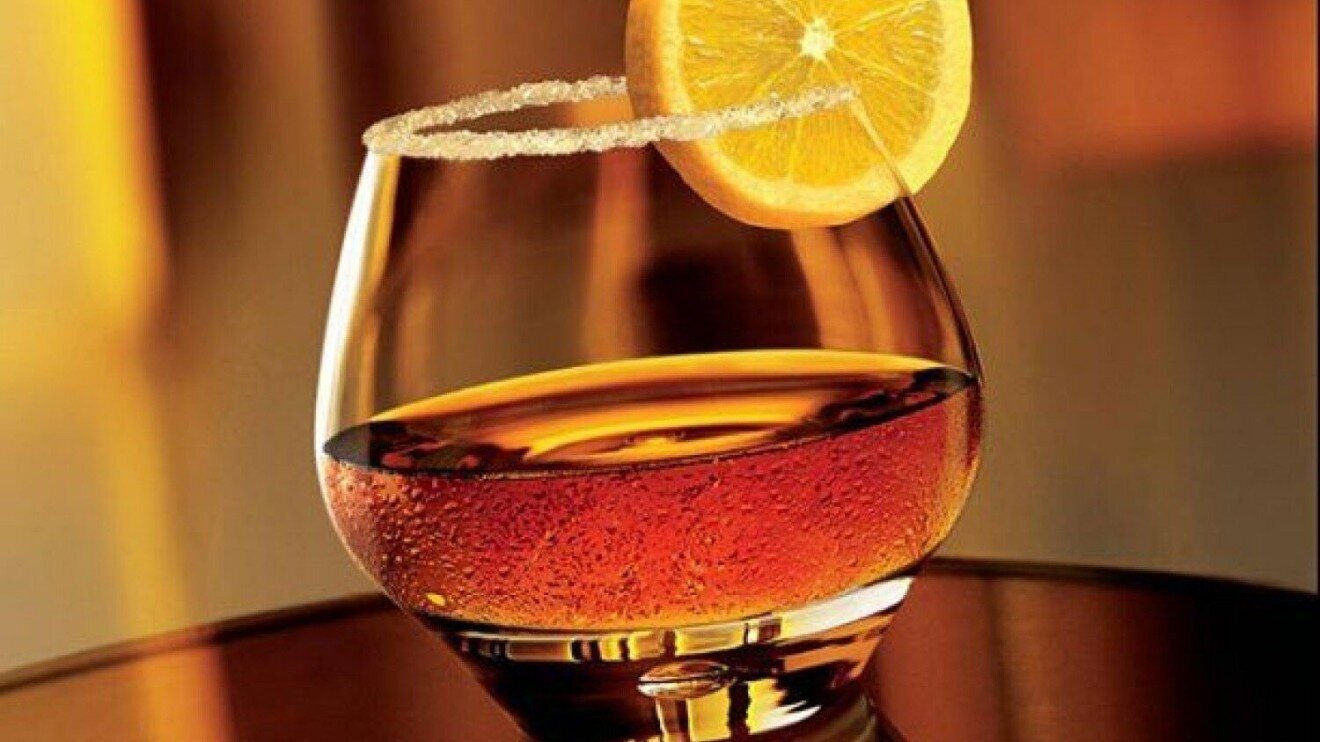
The pairing of cognac with lemon, so familiar at the Russian table, has deep historical roots and is linked to the names of Russian emperors. The «Nikolashka» – a lemon slice dusted with powdered sugar and ground coffee – has become an inseparable part of Russian drinking culture.
Origin of the name and the legends behind it
The name «Nikolashka» (also «Nikolyashka») comes from the name of a Russian emperor, though sources disagree on exactly which Nicholas started the tradition. Some versions point to Nicholas I (1796–1855), others to Nicholas II (1868–1918).
According to the most widespread legend, Emperor Nicholas I once tried genuine French cognac, which struck him as quite strong. The only thing at hand was a wedge of lemon, which the tsar used as a chaser. He went on to chase cognac with lemon many times after that and, on one occasion, offered it to those around him. Since then, the practice of chasing strong drinks with lemon took hold in Russian society.
An alternative version credits the invention of the garnish to the palace kitchen of Nicholas II. Supposedly it was there that they determined lemon, dusted with sugar and ground coffee, best set off a cognac’s bouquet.
Disguised as a tea ritual
One intriguing version of the tradition’s origin is tied to Nicholas II’s family life. According to this legend, the emperor liked to indulge in cognac in the mornings, but his wife, Alexandra Feodorovna, firmly disapproved of such a «breakfast.» To avoid arousing his wife’s suspicion, Nicholas II would pour brandy into a teacup and chase it with lemon dusted with sugar. From the outside it looked like an ordinary morning tea with lemon.
This version explains why the tradition took the exact form it did – imitating a tea ritual required precisely lemon with sugar, while adding coffee gave the garnish a more refined appearance.
Ways of preparing the Nikolashka
There are several classic ways to prepare this garnish:
The classic version
Powdered sugar and coffee are sprinkled onto the lemon round separately, in a half-moon pattern. This method is considered the traditional and most common one. The lemon is sliced into rounds 3–5 mm thick, with powdered sugar sprinkled on one half of the round and finely ground coffee on the other.
The mixed version
The lemon slice is sprinkled with a uniform mixture of powdered sugar and coffee in a 1:1 ratio. This method is simpler to prepare but less visually refined.
Alternative versions
Instead of powdered sugar and coffee, some use:
- Black or red caviar – for especially festive occasions
- Chocolate shavings instead of coffee
- The «hussar sandwich» – two pieces of cheese with a lemon slice sandwiched between them
Its practical purpose
The combination of sour, sweet, and bitter flavors in the Nikolashka serves several practical functions:
Softening the taste
Lemon, with its sharp acidity, effectively neutralizes the burn of strong alcohol. Powdered sugar softens the lemon’s tartness, and the coffee adds bitterness, creating a balanced flavor profile.
Masking poor quality
As experts note, lemon has a very intense flavor that overwhelms subtle taste nuances. That makes this garnish especially well suited to cheap cognacs and brandies of dubious quality – the bright flavors of lemon and coffee mask the drink’s shortcomings.
Resetting the palate
The lemon’s acidity, «burning the tongue, dulls sensation, both the pleasant and the unpleasant kind.» This helps one keep drinking strong alcohol without excessive discomfort.
Which drinks it suits
The Nikolashka is traditionally served alongside various strong drinks:
Vodka
Combining sour, sweet, and bitter flavors, the Nikolashka makes a good pairing for vodka. It works most effectively with vodka precisely because vodka has no strong flavor of its own that needs to be «covered up.»
Lower-quality cognac
For ordinary, inexpensive cognacs and brandies, the Nikolashka is a perfect fit. If the cognac isn’t very good, chase it with whatever you like – the drink’s quality won’t let you appreciate its bouquet anyway.
Homemade infusions
The garnish also pairs well with various strong homemade infusions, moonshine, and other drinks above 40 proof.
The medical angle
From a medical standpoint, pairing cognac with lemon poses no danger to a healthy person. As gastroenterologists note, «combining cognac with lemon isn’t dangerous and doesn’t affect digestion.»
What’s more, lemon may even offer some benefit:
- Vitamin C in the lemon supports the immune system
- Its acidity stimulates the production of gastric juice
- Caffeine in the ground coffee has a stimulating effect
Criticism from connoisseurs
Despite its popularity in Russia and the CIS, the tradition of chasing cognac with lemon draws sharp criticism from sommeliers and connoisseurs of fine spirits.
The European view
The French consider it bad form to chase cognac with lemon, since it deadens the taste buds. In France, cognac’s homeland, such a pairing is seen as an act of barbarism against a noble spirit.
French tradition calls for the rule of the three C’s: Cognac, Café, Cigare (cognac, coffee, cigar). These are considered the classic accompaniments that don’t spoil the drink’s flavor.
Arguments against it
Critics of the tradition offer the following arguments:
- Blocked receptors: citrus blocks the taste receptors, preventing you from experiencing the cognac’s true flavor
- Drowning out subtle notes: food masks the delicate nuances of a fine spirit
- Disrupted balance: lemon’s sharp flavor overwhelms the refined range of notes in a good cognac
Quality as the deciding factor
The main criterion for whether a Nikolashka is appropriate is the quality of the cognac being served:
For cheap cognacs
If you’re about to drink an inexpensive cognac, brandy, or a cognac-style drink of dubious origin, the Nikolashka is exactly what’s called for. The bright flavors of lemon, sugar, and coffee effectively mask the shortcomings of cheap alcohol.
For quality spirits
Aged cognacs over ten years old should be drunk without any garnish at all, so as to fully appreciate their bouquet. A good aged cognac isn’t chased like that – it’s not vodka or tequila.
Alternative pairings for cognac
For those who want to move away from the lemon tradition, there are many alternative options:
Classic European pairings
- Nuts (other than peanuts) – walnuts, almonds, hazelnuts
- Hard cheeses – parmesan, cheddar, gouda
- Olives
- Dark chocolate with at least 70% cocoa content
Fruit
Fruits grown in the same region as the grapes used to make the cognac are an ideal match:
- Pears and apples
- Grapes
- Peaches (especially popular in Armenia)
- Strawberries
Delicacies
- Black caviar – a classic for a lavish table
- Pâtés made from fowl or game
- Salmon and other red fish
Rules for serving
A few simple rules should be followed when serving a Nikolashka:
Temperature
The lemon should be chilled, but not frozen. The ideal temperature is around 4°C (39°F).
Slicing
The lemon is cut into rounds 3–5 mm thick. Slices too thin will fall apart under the weight of the topping; slices too thick are awkward to eat.
The topping
The powdered sugar and coffee should be finely ground. Coarse particles will scatter and make a mess.
Presentation
A glass of cognac is served alongside several lemon rounds on a separate small plate, letting guests choose how much garnish to take for themselves.
Historical significance
The tradition of chasing cognac with lemon has become an important part of Russian table culture. It shows how a foreign drink was adapted to local tastes and customs.
The Nikolashka symbolizes the Russian approach to drinking – practical, aimed at comfort and enjoyment rather than ceremony. Unlike the European tradition of slowly savoring small measures of a fine spirit, the Russian tradition called for a more generous feast with a wide array of accompaniments.
Modern perceptions
In today’s Russia, attitudes toward the Nikolashka remain mixed. On one hand, it’s a recognized classic of the Russian table; on the other, a growing culture of quality-alcohol appreciation is prompting a rethink of the old traditions.
Many modern cognac connoisseurs prefer to follow international standards and drink quality spirits without any garnish. But for the mass consumption of inexpensive cognac-style drinks, the Nikolashka remains a popular choice.
Conclusion
The Nikolashka is more than just a garnish. It is a cultural phenomenon reflecting features of the Russian mentality and approach to the table. Whatever criticism it draws from connoisseurs, the tradition has taken firm root in Russian culture and lives on.
The main rule in choosing a cognac garnish remains unchanged: the quality of the drink determines the appropriateness of the accompaniment. For a cheap cognac, the Nikolashka is an excellent choice; for a fine aged spirit, it’s better to settle for a glass of mineral water and a good cigar.
The story of the Nikolashka is a reminder that culinary traditions are a living process, in which practicality often wins out over dogma, and folk wisdom finds its own path to perfection.