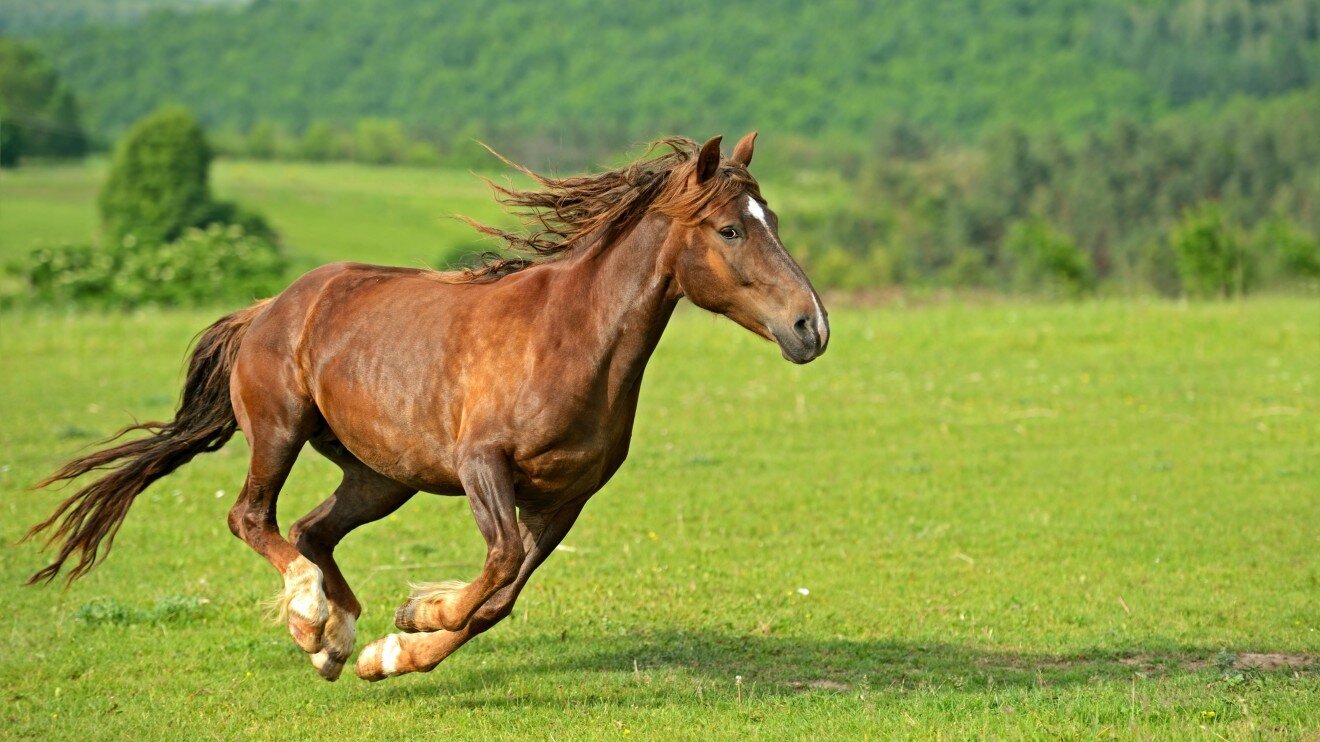
Gaits (dated term) (French allure, "gait, running") are the types of a horse's movement: walk, trot, canter, and amble. Gaits are divided into natural and artificial.
"Full gallop, three crosses" is an expression denoting the fastest horse gait (a full gallop). The term was originally used in the lexicon of coachmen and the postal service of the Russian Empire in the 18th-19th centuries.
The expression's origin ties to the system of post stations, where special roadside markers indicated the maximum permitted travel speed — three crosses. At that speed, the horse ran flat out, covering the distance as fast as possible.
In modern equestrian sport, "full gallop, three crosses" corresponds to the fastest of the gaits — a full-out gallop, at which a horse can reach speeds of up to 60 km/h. An ordinary canter reaches 40-45 km/h.
The main horse gaits, in increasing order of speed:
- Walk (4-7 km/h)
- Trot (8-20 km/h)
- Canter (20-45 km/h)
- Full gallop (40-60 km/h) — corresponds to the expression "full gallop, three crosses"
In modern colloquial speech, the expression "full gallop, three crosses" is used metaphorically to mean very fast movement, haste, headlong running. That's the sense it carries in the context of the novel — the hero, hurried along by Zhorik, quickly covers the distance from the building to the bus stop, moving at maximum possible speed.
The expression has become part of the set phrases of the Russian language and is often found in literary fiction as a vivid image of hurried movement.