Calmly he smoked his pipe out to the end,
Calmly he wiped the smile from his face.
"Company, front and center! Officers, forward!"
With dry, even steps the commander walks.
And the words fall into line, standing tall:
"We weigh anchor at eight. Course — due east.
Whoever has a wife, children, a brother —
Write to them: we are not coming back.
But there'll be a fine game of skittles instead."
And the senior man answered: "Aye, Captain!"
And the boldest and youngest among them
Looked at the sun above the water.
"Does it matter," he said, "where?
It's even more peaceful, lying in the water."
Dawn tapped out its message to the admiral's ears:
"Order carried out. No survivors."
If only men could be forged into nails from people like these:
There would be no stronger nails in the world.
Historical background
"The Ballad of the Nails" is a landmark poem of Russian Soviet poetry, written by Nikolai Semyonovich Tikhonov (1896–1979) in 1919, at the height of the Russian Civil War. The work is devoted to the heroism of Red commanders and became one of the first examples of revolutionary Romantic poetry, celebrating the resilience and courage of the era's new heroes.
The poem was first published in the collection "Orda" ("The Horde," 1922), but had already gained wide fame before its official publication, spreading orally through literary circles in Petrograd. Its closing lines became a proverbial expression, embodying an unbending will and steadfastness of human character.
The author and his context
Nikolai Tikhonov began his career as a poet of Proletkult, but very quickly moved beyond that movement. His early poetry, including "The Ballad of the Nails," was shaped by his experience of the First World War (where Tikhonov served in a hussar regiment) and the revolutionary events of 1917.
At the time he wrote the poem, Tikhonov was close to the literary group "The Serapion Brothers," which brought together young writers of various aesthetic leanings. Notably, despite its Romantic revolutionary pathos, Tikhonov's poetry of this period differs from official propagandist literature — his verses are more personal and expressive.
Timeline
- 1896 — N.S. Tikhonov is born
- 1914-1917 — military service
- 1918-1921 — participation in the Civil War
- 1919 — "The Ballad of the Nails" is written
- 1922 — published in the collection "Orda"
- 1979 — N.S. Tikhonov dies
Artistic features
Short in length, the poem takes the form of a ballad — a lyric-epic genre traditionally narrating dramatic events. Tikhonov reshapes the genre, filling it with revolutionary symbolism and creating the image of a new hero for a new age.
The poem is marked by:
- A terse, forceful style
- The use of masculine rhyme, underscoring firmness and resolve
- Vivid metaphor (comparing people to nails)
- A harsh tone, fitting for wartime
The poem's central metaphor — comparing people to nails — is multilayered. It simultaneously conveys a sense of:
- Physical and moral strength
- Functional necessity (nails hold structures together)
- A readiness for self-sacrifice (like a nail driven into wood)
Cultural influence
Lines from "The Ballad of the Nails" became one of the symbols of the Soviet era, widely quoted in literature, journalism, and official rhetoric. The poem entered the school literature curriculum and remained there until the end of the Soviet period.
The poem's imagery influenced the development of Soviet poetry in the 1920s, contributing to the formation of a heroic-Romantic strand in literature. Paradoxically, the vivid metaphor of "people as nails" later acquired additional shades of meaning, sometimes interpreted as a symbol of the depersonalization of the individual under a totalitarian state.
In contemporary culture, quotes from "The Ballad of the Nails" continue to be used to describe exceptional steadfastness and strength of spirit, even as the poem's ideological context is now understood as strictly historical.
A fun fact
"The Ballad of the Nails" was originally part of a longer work. Tikhonov later trimmed the text, keeping only its most expressive lines, which made the poem even more concentrated and aphoristic.
A theory
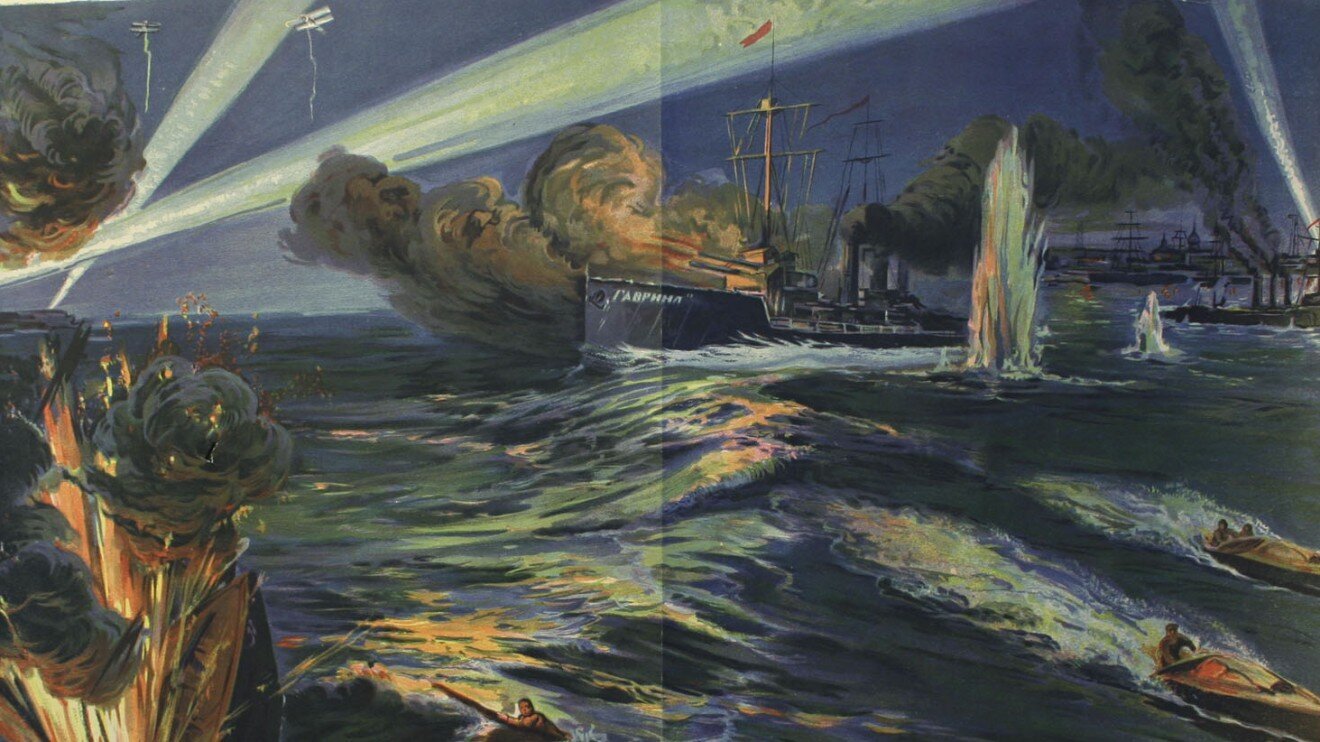
The dates the author gave under "The Ballad" in its first edition, 1919–1921, point to the actual event the poem describes. Tikhonov, then still a recent hussar, wrote these verses under the impression of a daring, near-suicidal attack — something akin to a cavalry charge — carried out by torpedo boats commanded by young English lieutenants, contemporaries of Tikhonov's own age, against the inner roadstead of Kronstadt on the night of August 18–19, 1919. Leading that night attack, with a crew he had personally hand-picked from unmarried volunteers, was Lieutenant Augustus (Gus) Agar...