The novel's protagonist mentioning "bandar-logs" and the "chief baboon" is a vivid example of how literary imagery seeps into everyday speech, especially among young people in the 1990s.
Kipling's Bandar-log
The Bandar-log (Hindi बन्दर-लोग) are a fictional monkey people from Rudyard Kipling's "The Jungle Book." The writer described them as creatures who "are always meaning to have a leader, and laws and customs of their own, but they never do, because their memory does not hold good from one day to the next."
In the story "Kaa's Hunting," the Bandar-log kidnap Mowgli after noticing his resemblance to monkeys. They constantly repeat: "We are great! We are free! We are wonderful!" — which only makes Mowgli laugh. In Kipling's world, the attitude toward the Bandar-log paralleled the treatment of the pariah caste in India — they were the outcasts of the jungle.
Critical interpretations
Literary scholars have interpreted the image of the Bandar-log in various ways. Yuri Lotman saw them as a contrast to the organized behavior of the jungle's other animals. Alexander Dolinin called them "irresponsible demagogues of a democratic bent." Martin Fido believed that in the Bandar-log, Kipling satirically portrayed intellectuals — "monkeys who play with dubious ideas but achieve nothing themselves."
Baboons and troop hierarchy
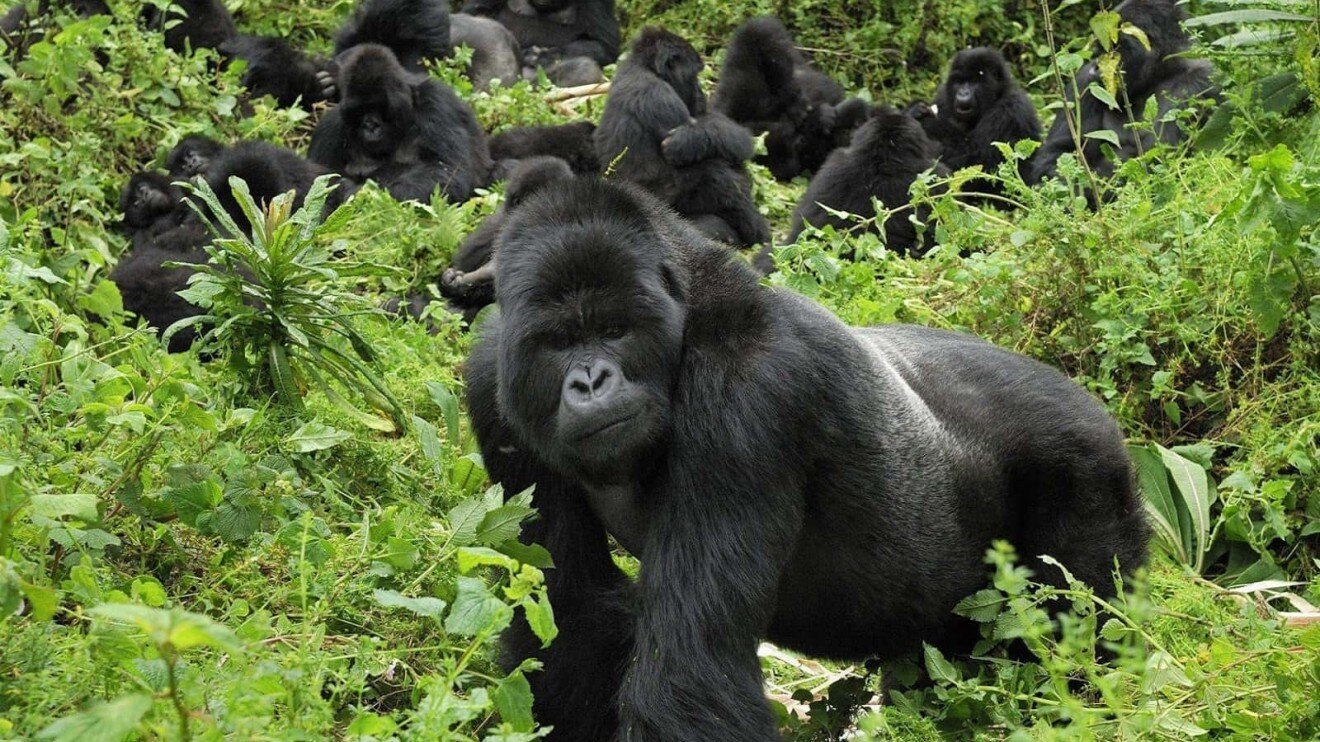
The comparison of young people to baboons (yellow baboons) in the novel is especially precise. Baboons are primates with highly developed social relationships, living in large troops of up to 80 individuals. Their communities display a pronounced hierarchy, dominated by several adult males.
In a baboon troop, alpha males stick together and come to each other's aid in the face of danger. The composition of the leading group tends to remain stable over many years. Other members of the troop constantly reaffirm a high-status individual's rank through specific gestures of submission.
"A new male arriving in an unfamiliar troop must find his place within a complex system of kinship and friendship ties"
Alpha status in the animal world
In ethology, the term "alpha" denotes the highest-ranking individuals in a social group. Alphas generally get preferential access to food and mating opportunities. Status can be achieved through physical strength and aggression, through social effort and alliance-building, or it can be inherited.
Among primates, alpha status is especially complex. Common chimpanzees use strength, intelligence, and political alliances alike to establish and maintain it. Alpha males who rely solely on intimidation and aggression often provoke resentment and can be overthrown by coalitions.
A metaphor in the context of the 1990s
Comparing a group of young people to "bandar-logs" and "baboons," in a novel set in 1993, reflects the typical irony of educated young people of the time. Using zoological and literary allusions to describe social behavior was characteristic of the intelligentsia in the post-Soviet period.
The line "the males are working out who's the chief baboon, the females are fluffing their tails" precisely captures an observation of typical behavior patterns in groups of young people: young men displaying status, young women drawing attention to themselves.
Cultural context: In 2011, Vladimir Putin quoted the phrase "Come to me, bandar-logs," referring to opposition-minded citizens, which made the word one of the most widely discussed in Russian media.