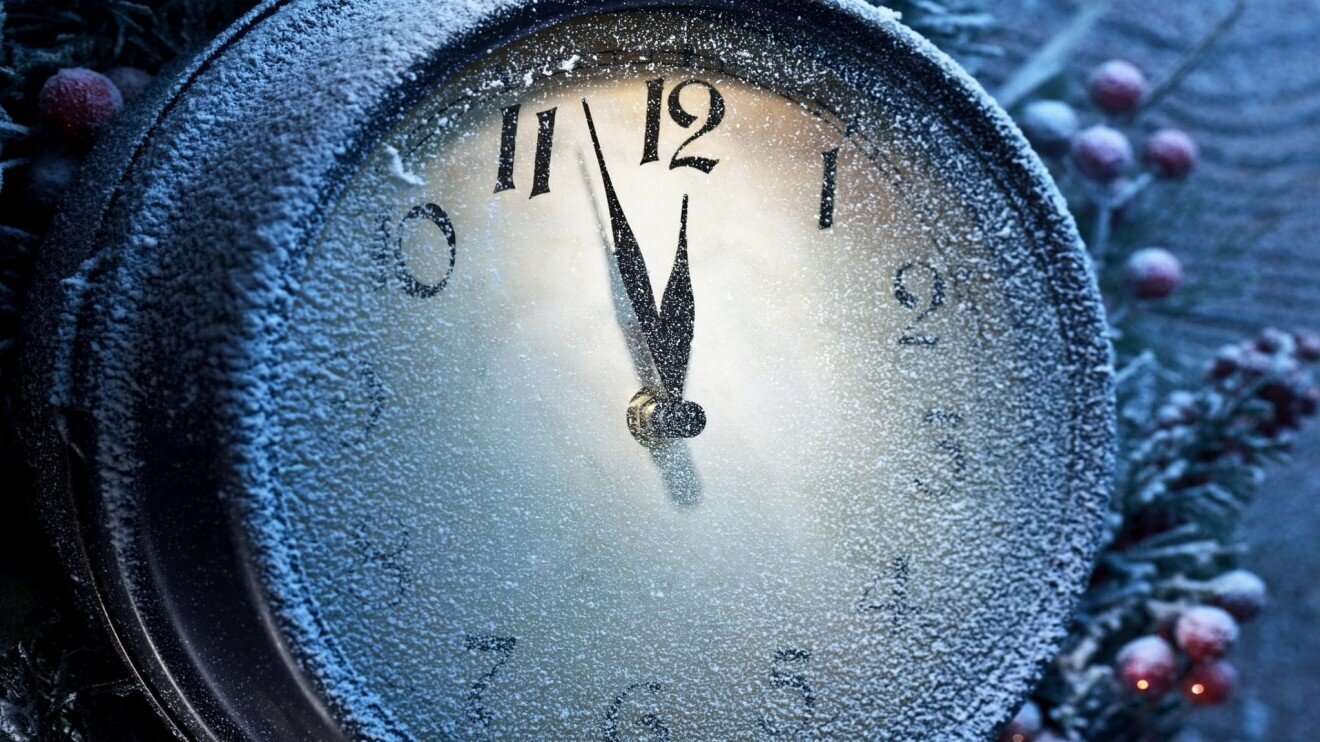
Vera's line, "We start celebrating at nine, Novosibirsk time, that's where I was born!" reflects an interesting tradition common in 1990s Russia among people who'd moved to Moscow from other regions.
Russia's time zones in 1993
In 1993, Russia had a complicated system of timekeeping inherited from the USSR. "Decree time" was in effect — standard zone time plus one hour, introduced back in 1930. On top of that, the country had practiced seasonal daylight-saving time changes since 1981.
In 1993, Novosibirsk was in the MSK+3 time zone (Moscow time plus 3 hours). This meant that when it turned midnight on January 1 in Moscow, it was already 3 a.m. of the new year in Novosibirsk. Even so, many transplants preferred to ring in the New Year according to their hometown's clock.
The psychology of "double" celebration
The tradition of ringing in the New Year on one's hometown time had deep psychological roots. For many migrants, it was a way of staying connected to their homeland — especially meaningful amid the social upheaval of the early 1990s.
This approach allowed people to:
- Feel a spiritual closeness to their home region
- Create a sense of a "double holiday" — first on hometown time, then on Moscow time
- Maintain family traditions, especially if relatives had stayed behind in another region
Old New Year as a continuation of the tradition
Beyond celebrating on the time of various cities, Russia had (and still has) a tradition of "Old New Year" — an unofficial holiday on the night of January 13-14 by the Gregorian calendar.
This holiday arose from Russia's switch from the Julian to the Gregorian calendar in 1918. The difference between the two calendars, in the 20th century, was 13 days. Though the country officially adopted the new style, many continued marking holidays by the old calendar as well.
"Old New Year is a holiday for those who didn't get enough time to talk with friends on New Year's Eve," people joked.
The social context of the 1990s
Amid the collapse of the USSR and mass internal migration, the tradition of celebrating on "hometown" time took on special significance. Many families found themselves scattered across different time zones, and syncing up their celebrations became a way to feel united.
Television of the era reinforced this tradition too: New Year's broadcasts often showed the New Year arriving in different regions of the country, from the Far East all the way to Kaliningrad.
The tradition today
This tradition partly survives today, though it's less common than in the 1990s. Modern communication technology makes it easy to coordinate celebrations with relatives in other regions, and the stabilization of migration patterns has softened the nostalgic edge of the practice.
Even so, many Russians still fondly recall the days when the New Year could be rung in several times in a single night — on hometown time, on Moscow time, and then again by the old calendar in January.