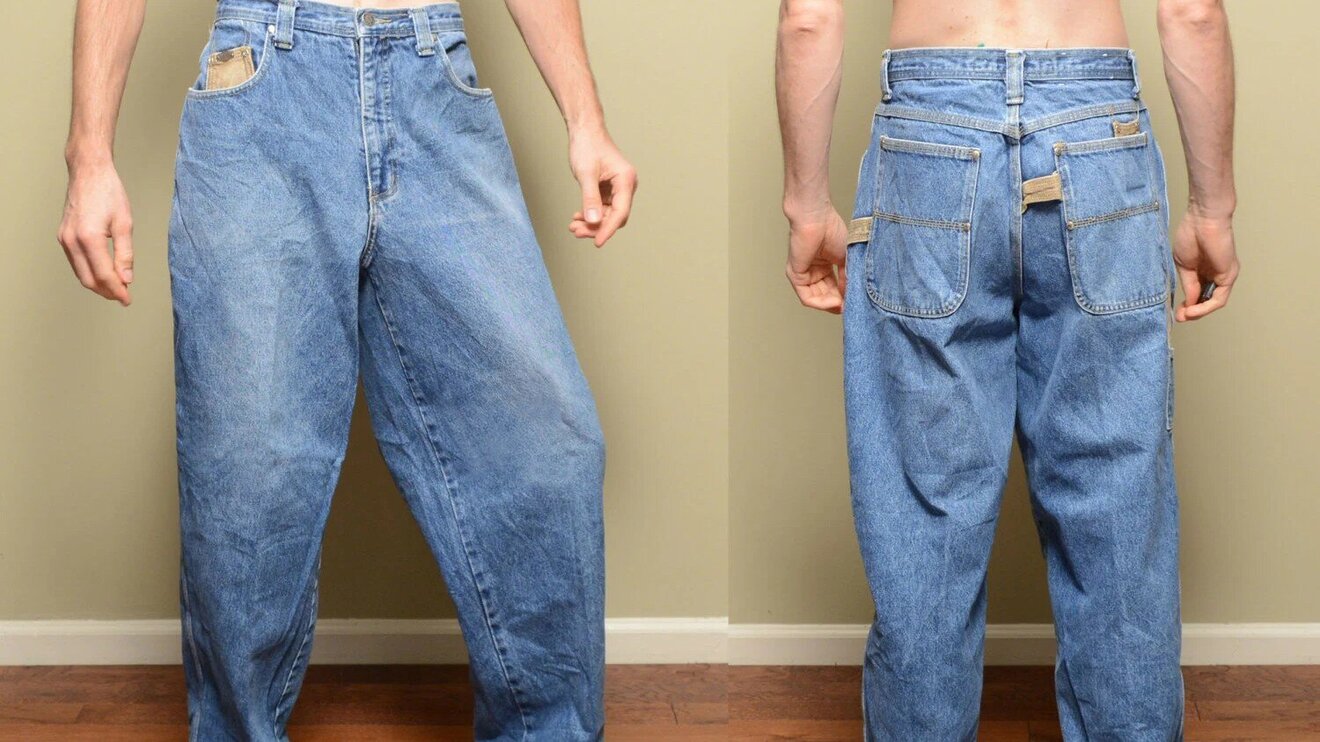
In the late 1980s and early 1990s, an unusual fashion swept Soviet streets — jeans with a raised waistline and a distinctive widening from the hip down, popularly nicknamed «pyramids». This distinctive phenomenon became a signature look of the perestroika era.
Origins of the phenomenon
The style emerged as a hybrid of several trends:
- The influence of Western disco fashions of the 1970s.
- An adaptation of American "parachute-cut" jeans.
- Soviet manufacturing quirks.
The first examples were sewn in the experimental workshops of denim factories in the Baltics (Riga, Tallinn) and Leningrad, using the heavy twill-weave denim fabric available at the time.
Distinctive features
- A raised waistline (up to 10 cm above natural waist height).
- A sharp widening from the hip down to the hem.
- A mandatory wide belt (often contrasting in color).
- Deep side pockets.
- A distinctive "stretch" effect from the heavy fabric.
Social context
"Pyramids" became a symbol of:
- Fashion's accessibility amid shortages.
- Protest against traditional notions of style.
- Self-expression for the youth of a changing era.
The style found particular popularity among:
- Students and the creative young crowd.
- Regulars at the first discotheques.
- Members of underground subcultures.