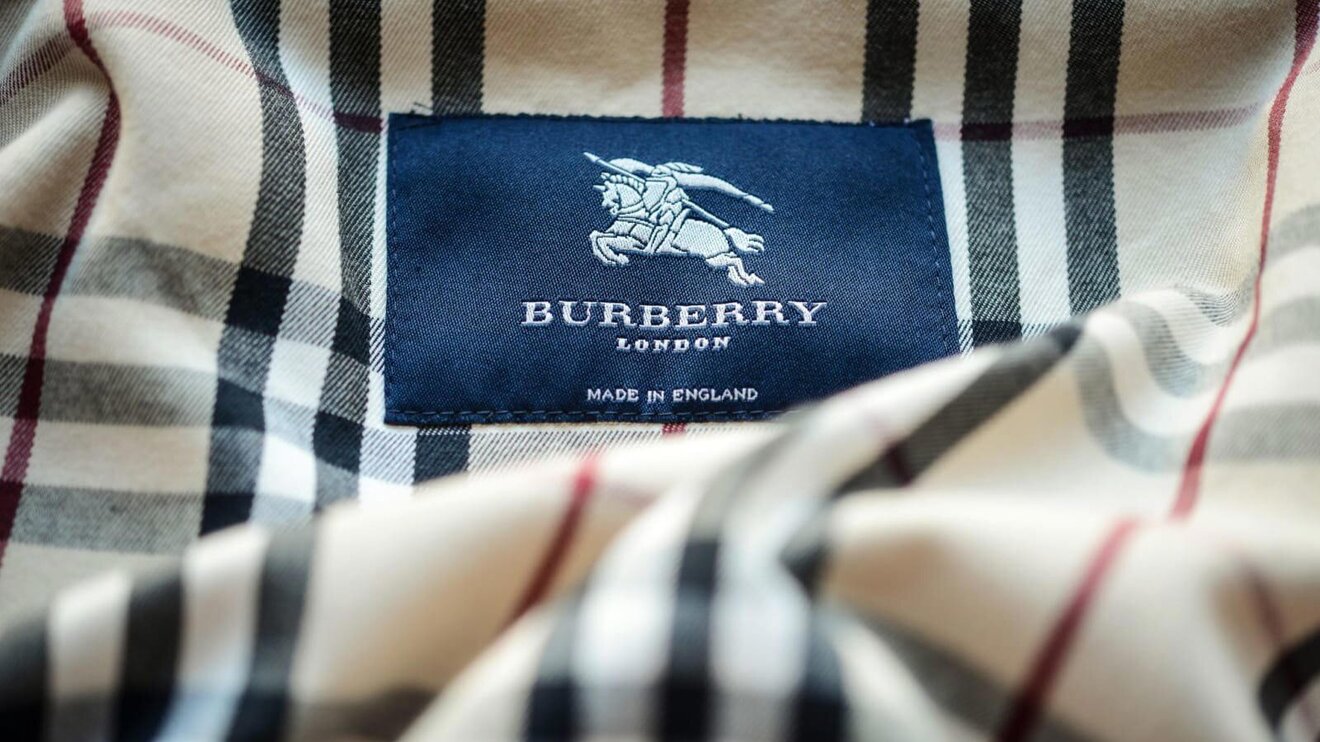
Burberry Group plc is a British luxury fashion house founded in 1856 by Thomas Burberry, headquartered in London, England. The company specializes in designing and manufacturing ready-to-wear clothing, including its famous trench coats, leather goods, and footwear.
Founding history
The company was founded in 1856, when 21-year-old Thomas Burberry, a former draper’s apprentice, opened his own shop in Basingstoke, Hampshire, England. By 1870 the business had established itself, focusing on clothing designed for the outdoors and sport.
Groundbreaking innovations
Gabardine (1879)
In 1879 Burberry introduced gabardine – a revolutionary fabric that became the brand’s calling card. It’s a tough, water-resistant, yet breathable fabric, in which the yarn is treated with a water-repellent finish before weaving. That technical innovation delivered unmatched protection against the elements.
The trench coat (1914–1918)
During the First World War the company adapted its designs for military use, creating the legendary trench coat. British officers wore it in the trenches, which is how it got its name. After the war the trench coat caught on with civilians and became an iconic wardrobe staple.
Signature style
The Equestrian Knight logo (1901)
In 1901 the Burberry Equestrian Knight logo was designed, featuring the Latin word «Prorsum,» meaning «forward.» The logo was registered as a trademark in 1909.
The Burberry check (1920s)
The famous Burberry check has been in use since the 1920s, originally as a trench-coat lining. The pattern became one of the brand’s most recognizable elements and a symbol of British style.
Explorers and aviators
Burberry dressed some of the era’s most notable explorers and aviators:
- Roald Amundsen (1911) – the first person to reach the South Pole
- Ernest Shackleton – leader of the 1914 expedition to cross Antarctica
- George Mallory (1924) – wore a Burberry gabardine jacket during his attempt on Everest
- Mrs. Victor Bruce (1930) – for her round-the-world flight and flight to Japan
Sporting culture
In the 1920s, sisters Betty and Nancy Debenham, celebrated motorcyclists, wore Burberry trench coats for travel and racing. They recommended the clothing in their 1928 book, «Motor-cycling for Women.»
Corporate structure
Burberry remained an independent family company until 1955, when it was acquired by Great Universal Stores (GUS). The company is listed on the London Stock Exchange and is a member of the FTSE 250.
Licensing strategy
In the 1970s and 1980s, Burberry struck agreements with manufacturers around the world to produce goods complementing its core British collection: suits, trousers, shirts, sportswear, and accessories for men, women, and children. These products, developed under strict oversight from the London headquarters, were sold through independent retailers and Burberry’s own boutiques.
Quality and craftsmanship
Burberry maintains the highest standards of quality, blending traditional British craftsmanship with modern technology. Particular attention is paid to construction details, material quality, and the durability of finished garments.
Product range
Core categories
- Trench coats and outerwear
- Suits and business attire
- Casualwear
- Shirts and polos
- Shorts and trousers
Accessories
- Leather goods
- Scarves and handkerchiefs
- Bags and luggage
- Footwear
- Fragrances
A status symbol
By the late twentieth century, Burberry had become a symbol of success and good taste. Wearing the brand signaled the owner’s high social standing, an appreciation of quality, and an allegiance to classic British style.
Global presence
Burberry maintains an extensive retail network across the world’s major cities, and works with select premium dealers. The brand is carried in high-end department stores and dedicated boutiques.
Interesting fact
By 1997, Burberry was already a recognized symbol of British elegance and quality. Shorts and polos from the brand were considered a model of casual luxury – effortless indulgence for people of impeccable taste.
Key facts
Founded: 1856
Founder: Thomas Burberry
Headquarters: London, England
Type: Public company
Exchange: London Stock Exchange
Index: FTSE 250
Specialty: Luxury fashion
Key innovations
- 1879 Gabardine
- 1901 The Equestrian Knight logo
- 1914–18 The trench coat
- 1920s The signature check
Famous wearers
- • Roald Amundsen
- • Ernest Shackleton
- • George Mallory
- • The Debenham sisters
- • Mrs. Victor Bruce
Legacy and influence
Burberry is more than a fashion label – it’s a cultural institution that has defined the standards of British style for a century and a half. The company has struck a balance between tradition and innovation, creating products that are both functional and elegant.
Choosing Burberry means choosing time-tested quality, classic style, and membership in the culture of British elegance. Every piece from the brand carries a rich history of innovation, craftsmanship, and impeccable taste.