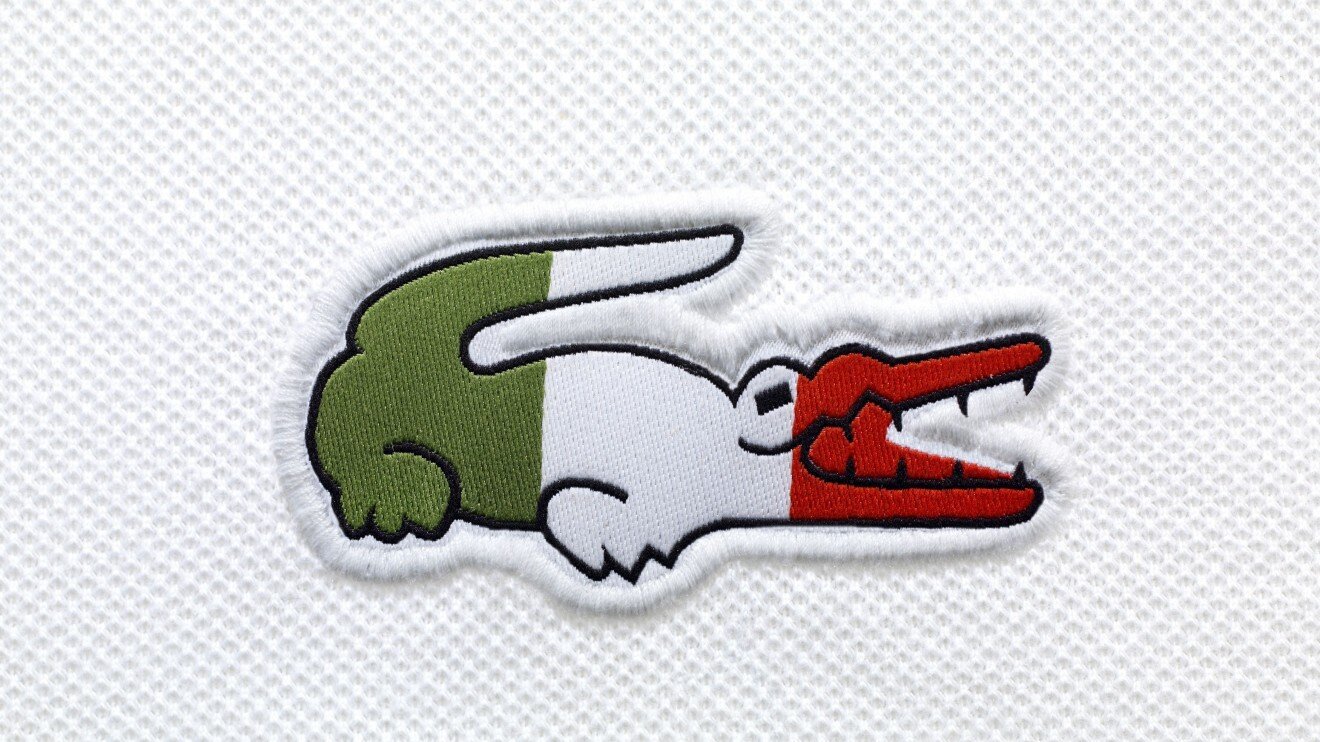
The French company Lacoste S.A. is one of the most recognizable brands in the world of sportswear, symbolized by a green crocodile. Founded in 1933 by tennis player René Lacoste, the company revolutionized sportswear and became synonymous with elegance and quality.
Origins and the crocodile legend
Lacoste’s story began with an unusual bet. René Lacoste, an outstanding French tennis player, wagered his team captain a crocodile-skin suitcase, staking it on his own victory in a match. The American press dubbed him «the Crocodile» after the episode, and French fans later made the nickname stick, thanks to his tenacity and tightfisted grip on the court.
René Lacoste was more than a talented athlete – he was an innovator. He designed a revolutionary tennis shirt to replace the traditional long-sleeved white shirts and neckties. The new shirt was made of breathable knit fabric, had short sleeves, and a small collar, providing comfort during play.
Founding the company
In 1933 René Lacoste teamed up with businessman André Gillier, owner of France’s largest knitwear manufacturer. Together they founded the company «La Chemise Lacoste» and began mass-producing the revolutionary tennis shirt, embroidered on the chest with the now-famous crocodile logo.
Growing the brand
After the tennis shirt’s success, the company gradually broadened its range. By the late 1930s Lacoste was producing not just sportswear but casual clothing for leisure as well. The famous polo shirt became a symbol of elegant sporting style.
Production nearly halted during the Second World War, but the company recovered quickly once it ended. In the 1950s Lacoste signed a licensing agreement with the American company Izod to manufacture and sell clothing in the US under the «Izod Lacoste» label.
The golden era and international expansion
The 1960s and 1970s were a period of explosive growth for Lacoste. The brand became popular far beyond tennis courts, turning into a symbol of prestige and good taste. Lacoste polo shirts were worn not just by athletes but by high society, actors, and musicians.
During this period the company actively expanded its range, adding athletic footwear, accessories, and gear for other sports. The distinctive crocodile became one of the most recognizable logos in the world.
Product lineup
Core categories
- Polo shirts
- Sportswear
- Casualwear
- Footwear
- Accessories
Additional goods
- Eyewear
- Fragrances
- Leather goods
- Watches
- Towels
Brand philosophy
Lacoste has always positioned itself as a brand that blends athletic function with elegance. The company’s core principles include quality materials, attention to detail, and a commitment to sporting tradition. The famous crocodile symbolizes not just the brand’s founder, but qualities such as tenacity, strength, and elegance.
The company has always emphasized that its clothing suits both active leisure and everyday wear. This approach let Lacoste carve out a unique niche between sportswear and luxury brands.
Technology and innovation
Lacoste was an innovative company from the very start. René Lacoste didn’t just create a new type of sports shirt – he continually refined manufacturing technology. The company was among the first to use synthetic materials in sportswear, improving ventilation and comfort.
Particular attention was paid to the quality of the knit fabric. The signature polo shirts were made from a special pique knit that ensured breathability and held its shape through repeated washing.
Sports sponsorship
Its ties to the world of sport have always been central to Lacoste’s strategy. The company sponsored many outstanding tennis players across different eras. Beyond tennis, the brand also actively supported golf and other sports.
Sports sponsorship helped Lacoste maintain its prestige and its association with high achievement. Many famous athletes became more than just spokespeople – they were active participants in developing new products.
Cultural influence
Lacoste has had a significant impact on fashion and lifestyle. The polo shirt became a classic wardrobe staple, a symbol of «preppy» style and elegant sportswear. The brand was associated with tennis clubs, yacht clubs, and high-society country clubs.
In popular culture, Lacoste is often cited as a symbol of status and good taste. The crocodile on the chest became a mark of belonging to a particular social circle and lifestyle.
International presence
By the 1990s, Lacoste had become a genuinely international brand, with offices and manufacturing facilities in countries around the world. The brand was especially successful in the US, where the polo shirt became an inseparable part of American casual style.
Lacoste made active use of licensing, allowing partners in different countries to manufacture and sell products under the parent company’s oversight. This allowed the brand to expand rapidly while keeping quality under control.
Retail strategy
Lacoste built an extensive retail network, including its own boutiques as well as a presence in leading department stores. The company chose its partners carefully, aiming to preserve the brand’s prestigious image.
Lacoste’s branded boutiques were known for elegant design and created an atmosphere of sporting luxury. Particular attention was paid to product presentation and a high standard of customer service.
Brand management
The Lacoste family always played a central role in running the company. After the founder’s death, his sons carried the business forward, staying true to their father’s principles. The company tightly controlled the use of its logo and trademark, waging an active fight against counterfeits.
Managing the brand meant not just protecting intellectual property but preserving a certain level of exclusivity. Lacoste never chased the mass market, preferring to remain a premium brand.
Competition and market positioning
In the sportswear-fashion market, Lacoste competed with brands such as Ralph Lauren, Tommy Hilfiger, and other makers of premium sportswear. Lacoste’s distinctiveness lay in blending sporting heritage with elegance and French flair.
The company occupied a special niche between mass-market sports brands and luxury fashion houses. That positioning let Lacoste appeal to a broad audience while preserving its prestige and exclusivity.
Quality and manufacturing
Lacoste always emphasized the quality of its products. The company used only high-grade materials and tightly controlled its manufacturing process. The famous polo shirts were made from a special cotton knit that ensured durability and comfort.
Production was organized so that every item met high quality standards – from the choice of materials to the precision of the stitching, the quality of the hardware, and, of course, the flawless embroidery of the famous crocodile.
Conclusion
By the mid-1990s, Lacoste had firmly established itself as one of the world’s leading brands in sports fashion. The company successfully blended sporting heritage with elegance, creating products suited to both active leisure and everyday wear.
The Lacoste brand became a symbol of a particular lifestyle – active, elegant, and successful. The crocodile on the chest of a polo shirt became one of the most recognizable logos in the world, symbolizing quality, style, and membership in a select circle.
The story of Lacoste is a story of successfully combining athletic innovation, quality, and marketing. The company created not just clothing but an entire lifestyle, one that has remained relevant and in demand for decades.
Lacoste continues to be a symbol of French elegance and athletic chic, blending tradition and modernity in every garment.